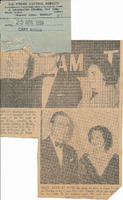
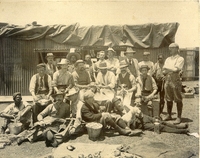
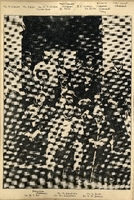
Untitled photograph from a newspaper clipping showing a group of seventeen men in Pretoria (most likely members of the Reform Committee) accused of having participated in the Jameson Raid. On the photograph are Mr. V. Clemart, Dr. Hillier, Mr. W.E. Hosken, Major Tremeer, E.P. Soloman, H.C. Hull, Adv. Auret, Captain Mein, Dr. Brodie, Dr. Davies, (Fred) Gray, Mr Donaldson, Mr. H. Bettelheim, Mr. A. Brown, Mr. H.S. Bell, Mr. Max Langerman, Mr. S.W. Jameson.
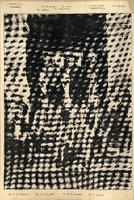
Untitled photograph from a newspaper clipping showing a group of twelve men in Pretoria (most likely members of the Reform Committee) accused of having participated in the Jameson Raid. On the photograph are W.N. Becher, Col. Bettington, Dr. Sauer, Advocate Auret, Mr. Spencer, Mr. Mullins, Mr. Hutchinson, Captain Davies, Mr. C.L. Anderson, Mr. A.L. Lawley, Mr. H.B. Marsahll, Mr. C. Butters.
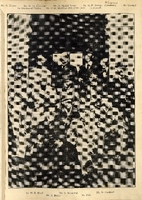
Untitled photograph from a newspaper clipping showing a group of fourteen men in Pretoria (most likely members of the Reform Committee) accused of having participated in the Jameson Raid. On the photograph are Mr. R. Fricker, Mr. W. St. John Carr, Mr. A. Mackie Niven, Mr. H.F. Strange, Mr B. Lazarus, Mr. Garland, Sir Drummond Dunbar, Mr. F.H. Hamilton (Ed. of the Star), an unnamed man, Mr. W.B. Head, Mr. S. Mosenthal, Mr. W. Goddard, Mr. A. Bailey, Mr. Hull.
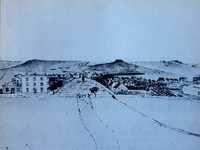
Facebook post (dated 22 February 2021) by Gareth Angelbeck: "A reproduction of a pen-and-ink sketch by W. Guybon Atherstone from the steps of the Drostdy looking down High Street, dated 3 May 1830. The three-storied building at the corner of High Street (now Major Frasiers) is known to have been built by Pieter Retief. All subsequent illustrations show it with two stories only, and the alteration must have taken place several decades before the advent of photography. The sketch also shows an open water furrow, leading from the bottom right corner to the top of High Street. This was the public water supply of the town in 1830, which was led to open tanks at various points in the town. Colonel Graham's mimosa tree is shown, in the middle of High Street, a short distance from St. George's Church (later, the Cathedral). This tree, marking the traditional spot where the decision to found Grahamstown was made on 14 August 1812, was destroyed in a gale in 1844. (Ref- Grahamstown in Early Photographs, F van der Riet, David Philip pub, CT, 1974)."