Item sets
-
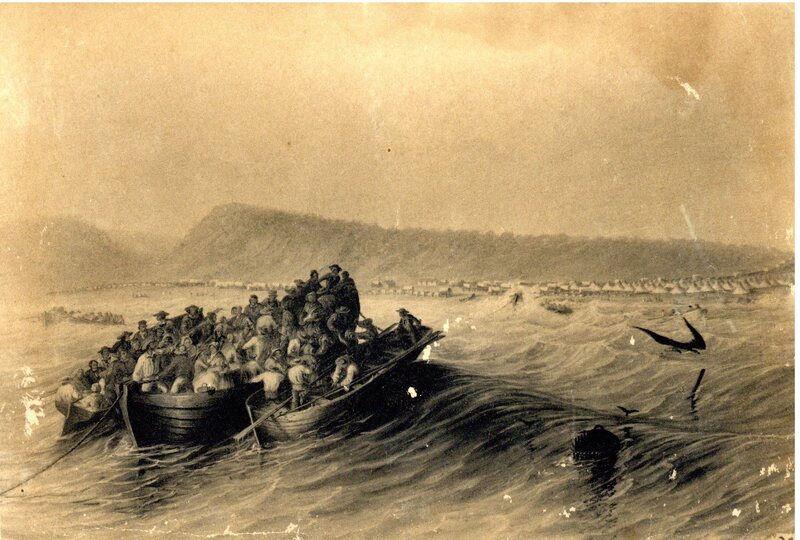
1820--Settlers
The 1820-Settlers collection is a digitized thematic grouping within the Frontier Collection of the Cory Library and Historical Archives, documenting the arrival, settlement, and early lives of British settlers who landed at Algoa Bay (now Port Elizabeth) and established communities in the Eastern Cape of South Africa beginning in 1820. The collection includes maps, portraits, printed programmes, topographical plans, and photographs that reflect key aspects of settler experience, town development, military engagements, family histories, and settlement patterns in Albany and surrounding regions. Representative materials include images of settler arrival, early town plans and surveys, portraits of individuals, and printed material relating to centenary celebrations of the settlement. This collection supports research into colonial frontier history, contact with Indigenous communities, town formation, and the legacy of settler societies in South African history. -
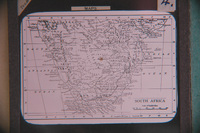
1910 - pre-1994 Map Collection
This digital collection comprises 119 historical maps housed in the Cory Library for Humanities Research at Rhodes University, dating from 1910 up to the early 1990s. The maps encompass a wide range of geographical and thematic materials, including urban plans, railway networks, regional studies, survey charts, and specialised maps used for planning and statistical purposes. Key map types include standard railway maps of South Africa, municipal plans (such as early Grahamstown and Port Alfred layouts), topographic and aeronautical charts, and maps associated with academic theses and regional planning documents. The maps reflect major socio-economic, infrastructural, and administrative developments in South Africa and its Eastern Cape region over eight decades. They are invaluable resources for researchers working in urban history, transportation history, regional planning, colonial and post-colonial studies, and environmental change. This collection supports investigation into historical spatial relationships, transportation networks, and settlement patterns across different periods of the 20th century. -
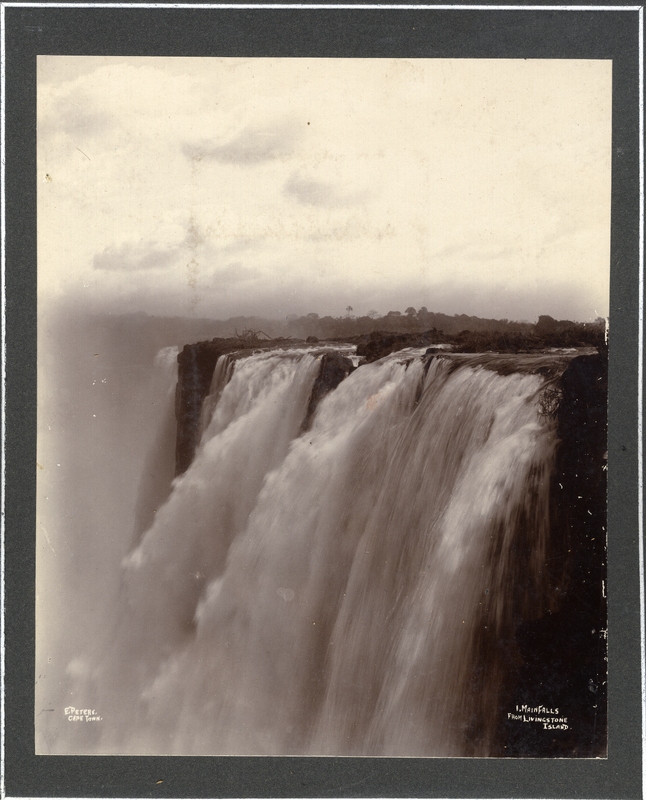
A series of photographs
A series of photographs, original in an album by E. Peters, art photographer of Cape Town. The bulk of the photos are of scenes at and around the Victoria Falls. Other subjects covered are: (a) Bulawayo - the Rhodes and Willoughby's buildings, the main street, Rhodes Statue, Chamber of Mines building and public library, Government House, Bulawayo and Rhodesian Clubs, the Matabele Memorial, the Indaba tree, (b) Zambesi River scenes, (c) Livingstone - Clarke's Hotel, the French Mission, Main Street, (d) B.S.A. Company Native Police "Barotse Band", (e) W. Tower's camp, (f) Matopos - Rhodes' Grave and Fullers Hotel, (g) Shangani Memorial, (h) Kimberley - Siege and Police Memorials and Alexanders Fontein. Cape Town, E.Peters, c.1905, Gold Fields of South Africa Ltd. (donor) -
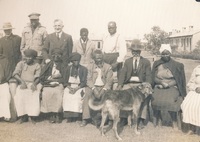
Adolph Schauder Collection
The Adolph Schauder Collection provides a glimpse into the public service and social impact of Adolph Schauder (1880–1968), a prominent figure in Port Elizabeth civic life who served as a City Councillor for 40 years and Mayor from 1940 to 1942. The material's primary focus is Schauder's lifelong dedication to mass housing and slum clearance, which earned him the title “Father of Housing” in Port Elizabeth. The collection documents his instrumental role in building over 30,000 houses for all races and the establishment of sub-economic housing schemes, such as Schauderville (named after him) and McNamee Village. Archival records related to Schauder's legacy—including administrative files, photographs, and personal papers—are held by various South African institutions, such as the Port Elizabeth Jewish Museum and the National Archives and Records Service. The collection is a source for researchers studying local government, social policy, Jewish community history, and urban development in mid-20th-century Port Elizabeth, reflecting his service on the Municipal Housing Committee and the National Housing and Planning Commission. -
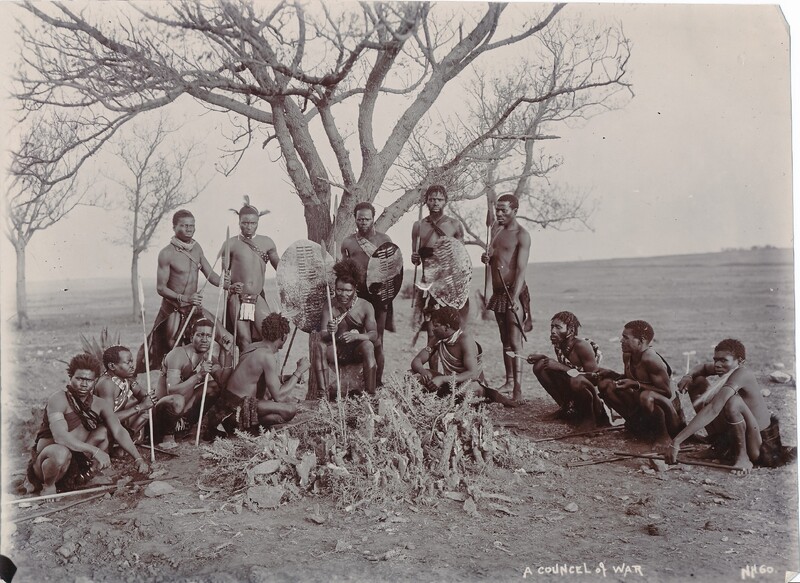
African Heritage Collections
The African Heritage Collections preserve and celebrate Africa’s rich historical and cultural legacy. The collections bring together genealogies of clans, tribes, and nations; images of Africans, including chiefs, kings, and rulers; and creative works by African poets and writers. They offer valuable insights into African leadership, lineage, and artistic expression, and support learning, teaching, and research into Africa’s past and present. -
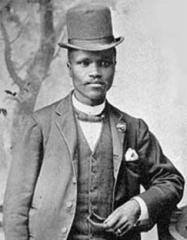
African Literary and Intellectual Works Collection
The Works by African Poets, Writers, and Intellectuals collection is a digitised archival grouping from the Cory Library and Historical Archives at Rhodes University, highlighting the literary, intellectual, and cultural contributions of African authors and thinkers preserved in the library’s holdings. Situated within the African Heritage Collections, this item set brings together materials that reflect creative expression, literary production, and intellectual discourse from prominent African poets, writers, and scholars. The collection encompasses sub-collections and individual item groups such as works and related archival material by authors including Henry Masila Ndawo, Malcolm Everitt Mlungiseleli Nyoka, pieces associated with the S.E.K. Mqhayi Collection, and materials linked to jazz-era cultural figure Todd Matshikiza (including parts of a King Kong thematic grouping). Collectively, these materials document a range of literary voices and intellectual traditions from the African continent, with a particular focus on South Africa, spanning poetry, prose, correspondence, manuscript materials, and related cultural artefacts. By foregrounding African creative and intellectual heritage, this collection supports research in literature, cultural studies, history, and African studies. -
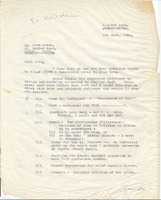
Alan Paton Letters to Todd Matshikiza
The Alan Paton Letters to Todd Matshikiza item set is a digitised archival group of correspondence between South African author and anti-apartheid activist Alan Paton and jazz musician/composer Todd Matshikiza, held within the African Heritage Collections at the Cory Library for Humanities Research. This set comprises five letters exchanged during the early 1960s, including both outgoing letters from Paton to Matshikiza and an incoming letter to Paton regarding the musical Mkhumbane and associated artistic collaborations. The letters shed light on creative collaboration, cultural production, and artistic networks in South Africa during a transformative period of social and political history. They are valuable for research into South African literature, music, theatre, cross-cultural communication, and heritage. -
Albany Rugby Football Club Collection
The Albany Rugby Football Club Collection offers a distinct photographic record of a key community sports club, capturing decades of rugby heritage in the Eastern Cape. It serves both as a sporting archive and as a cultural resource, illustrating how local rugby clubs nurtured talent, fostered community ties, and contributed to the social fabric of Grahamstown/Makhanda throughout the 20th century. -
Alice, Eastern Cape, South Africa
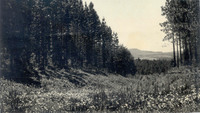
The Alice (Eastern Cape) Collection is a thematic digital grouping within the Cory Library and Historical Archives that documents the historical development of the town of Alice and its surrounding area in the Eastern Cape, South Africa. The collection brings together visual, cartographic, and documentary materials illustrating Alice’s origins as a frontier settlement, its growth as an administrative and educational centre, and its role within the broader colonial and mission landscape of the Eastern Cape. Materials in this collection reflect key aspects of Alice’s history, including settler and missionary activity, frontier conflict and military presence, town planning and infrastructure, and the social and cultural life of the area. The collection also provides contextual insight into Alice’s close associations with nearby mission institutions and later educational establishments, making it a valuable resource for research into local history, frontier studies, colonial urban development, and Eastern Cape heritage. -
Anti-Apartheid Movement and Acts of Defiance
The Anti-Apartheid Movement and Acts of Defiance item set is a curated collection of seven digitised primary sources held by the Cory Library for Humanities Research at Rhodes University. This set brings together pamphlets, newsletters, inventories, and correspondence that reflect resistance to apartheid and civic actions within South Africa, particularly relating to grassroots organisations and political pressure groups active in the 1980s. Included are materials documenting criticisms of state actions, commentary on youth political mobilisation, inventories of activism-related archival collections (e.g., the Rosemary Smith Collection), and letters from civil society actors such as IDASA and the Black Sash. These items illustrate a range of responses to apartheid policies and provide insight into public dissent, civil society networks, and the mobilisation of activists and organisations during a period of intensifying struggle against the apartheid regime. -
Apartheid, the Struggle and the People
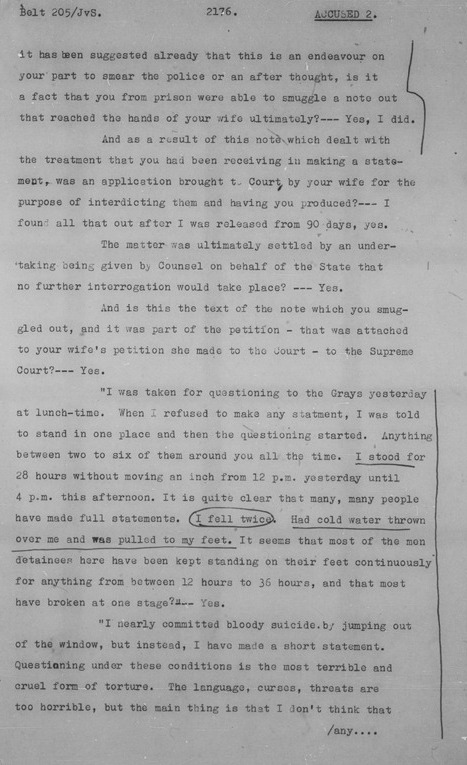
The Apartheid, the Struggle, and the People collection is a multifaceted archival assemblage at the Cory Library that documents the lived experience of systemic oppression and the organized resistance movements within the Eastern Cape. Unlike official state records, this collection prioritizes the voices of the marginalized, featuring a wealth of "ephemeral" history—pamphlets, underground newsletters, and personal testimonies. -
Apartheid - Legal Frameworks
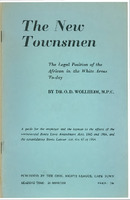
The Apartheid – Legal Frameworks item set is a digitised archival grouping within the Cory Library and Historical Archives at Rhodes University. This set brings together primary legal and analytical sources that document aspects of South Africa’s apartheid legal regime and its legislative foundations. The item set includes two key documents that elucidate state policies and laws underpinning racial segregation and control during the apartheid era. -
-
A.P.A. Chubb Collection (1936-1938)
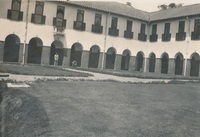
The A.P.A. Chubb Collection comprises photographs collected by A.P.A. Chubb of buildings, sports, and student activities from 1936 to 1938 at the then Rhodes University College in Grahamstown. A.P.A. Chubb, then residing in East London, donated this collection to the Cory Library at Rhodes University in April 1992. -
Arthur Marsh Collection
The Arthur Marsh Collection provides a rich primary account of hunting and fishing culture in Southern Africa during the mid-20th century. While Marsh was publicly known as Port Elizabeth’s "Sausage King," his private records reveal a life dedicated to pursuing big game and coastal angling. The collection is particularly significant for its detailed documentation of hunting expeditions throughout the Eastern Cape and broader Southern African interior. It includes photographic records of trophies, campsites, and the natural landscapes of a bygone era, alongside personal narratives of life in the bush. These papers serve as a unique intersection of commercial success and the colonial tradition of the "sporting life," offering a window into the recreational habits and environmental interactions of the period’s merchant class. -
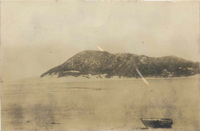
Bathurst, Eastern Cape, South Africa
The Bathurst, Eastern Cape, South Africa collection is a curated set of digitised historical resources held by the Cory Library and Historical Archives at Rhodes University. It documents the town of Bathurst in the Eastern Cape province of South Africa, including visual and cartographic materials that illustrate the town’s landscape, architecture, and historical development within the broader context of Eastern Cape frontier history. The items span the early settlement and colonial periods, including aerial views, architectural photographs (such as those of St. John’s Church, built in 1832), historical plans and maps of the town, and images of notable local features like Round Hill and old settler houses. This collection contributes to understanding the patterns of settlement, religious and civic infrastructure, and geographical context of a key 19th century colonial town on the Albany frontier. The collection sits within the Frontier Collection and contributes to research on settler town development, local history, and material culture in the Eastern Cape. -
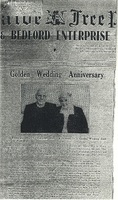
Bedford, Eastern Cape, South Africa
The Bedford, Eastern Cape, South Africa collection is a digitised archival resource from the Cory Library and Historical Archives at Rhodes University documenting the town of Bedford in the Eastern Cape province of South Africa. This collection forms part of The Frontier Collection and specifically relates to the development of settler towns established during the colonial era in the Eastern Cape. It contains visual and contextual material that reflects the historical character, built environment, community life, and geographical setting of Bedford, including at least one key image or item that captures aspects of local activities such as children engaged in school or community life. The collection contributes to research on settler town histories, social and cultural development in the Eastern Cape, and the material heritage of small township communities in colonial and post-colonial South Africa. The digital material is made available under an open Creative Commons license to support historical research, education, and public engagement with regional heritage. -
-
Bishop William Burnett Collection
The Bishop William Burnett Collection is an archival series of 110 digitised documents and letters, primarily consisting of condolence letters addressed to Sheila Burnett on the occasion of the death of her husband, Bill (William) Bendyshe Burnett, who passed away on August 23, 1994. The letters were written by a diverse range of correspondents, including friends, family members, clergy, colleagues, and notable figures in the South African religious and civic communities—among them Rev. Desmond Tutu and other prominent religious leaders. -

Black Sash Collection
A collection of primary source materials documenting the advocacy and humanitarian work of The Black Sash. Key materials include "Sash" magazines, Advice Office national reports, maps of forced removals, educational pamphlets on the 1994 elections, and records of the "vigils" held to protest apartheid legislation. The collection is particularly valuable for its data on the bureaucratic administration of the apartheid state. -
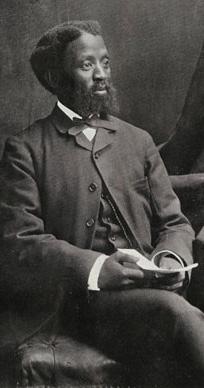
Bokwe, John Knox, 1855-1922
This digital collection comprises selected works associated with John Knox Bokwe (1855–1922), a significant figure in South African intellectual and cultural history, housed within the Cory Library and Historical Archives at Rhodes University. The item set is part of the broader African Heritage Collections, which foregrounds cultural, literary, and historical materials relating to African intellectual and artistic contribution. The collection currently includes two digitized resources that reflect Bokwe’s creative and scholarly output: Amaculo ase Lovedale — A musical work chiefly composed by John Knox Bokwe, with contributions from contemporary African composers and lyricists. Ntsikana: the story of an African convert — A narrative exploring the life and legacy of Ntsikana, compiled from both written sources and oral historical testimony. These items document the intersections of music, literature, and religious history in the late 19th and early 20th-century southern Africa, offering valuable insights into indigenous cultural expression and interpretation during this period. The collection is part of the Cory Library’s mission to preserve African heritage and historical records, particularly in connection with educational, religious, and literary achievements. -
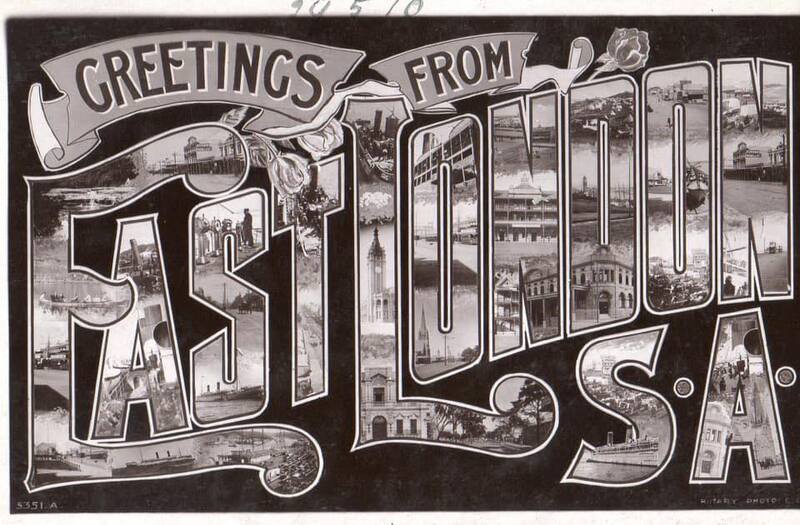
Border History Society Collection
A digital collection of historical photographs and documents documenting the social, architectural, and transport history of the Eastern Cape "Border" region, including East London and Butterworth. -
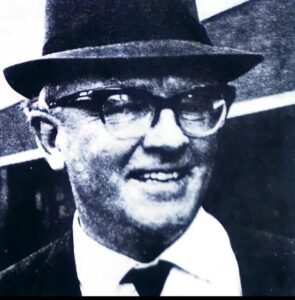
Bram Fischer Collection
This item consists of the formal indictment issued by the Attorney-General of the Transvaal Province against Abram Fischer, charging him with multiple offences including sabotage under the General Law Amendment Act (Act No. 76 of 1962), contraventions of the Suppression of Communism Act (Act No. 44 of 1950, as amended), and charges of fraud, forgery, and uttering under South African statutory law. The document forms part of the prosecution record in one of the most significant political trials of the apartheid era, reflecting the use of security legislation against anti-apartheid activists and legal practitioners. -
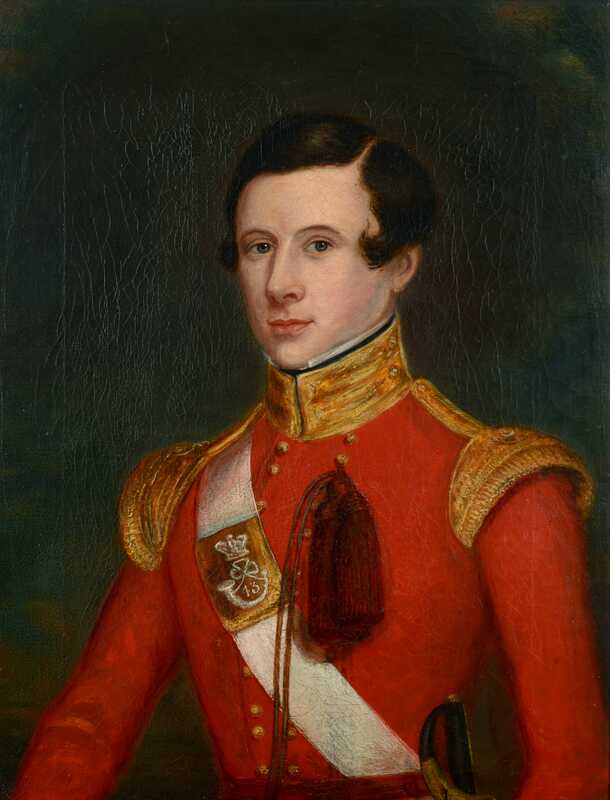
Brenda Nicholls Collection
A curated set of 13 early-to-mid-19th-century paintings, sketches and manuscript items related to colonial frontier and landscape history in Southern Africa. -
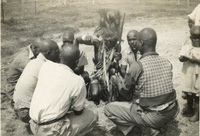
Bubonic plague collection -- Port Elizabeth in 1938
This collection is a specialised photographic and archival set held by the Cory Library for Humanities Research. It documents a critical public health event in South African history: the 1938 outbreak of bubonic plague in Port Elizabeth (now Gqeberha). This collection provides a visual and record-based account of the anti-plague measures and the socio-spatial impact of the 1938 outbreak, particularly affecting the Black and Coloured communities. -
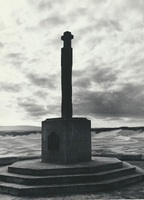
Butler Family Collection
The Butler Family Collection (also known as the Butler Family Photograph Collection) is a digital archive curated by the Cory Library and Historical Archives. It consists of 346 items, primarily photographs and related ephemera. The collection provides a visual record of the Butler family and their social circles, including significant historical and cultural markers in the Eastern Cape. Highlights of the collection include: * Family History: Portraits, wedding photos (such as the 1920 wedding of Harold Butler and Ruth Brown), and candid images of children and relatives. * Community & Organisations: Documentation of youth movements like the Wayfarers, Sunbeams, and Pathfinders in Cradock during the 1930s. *Historical Landscapes: Photographs of regional landmarks, such as the Karel Landman Monument in the Sundays River Valley and views of the Fish River. * Social Documentation: The collection includes photograph albums compiled by Mary Butler, featuring figures like Rev. James Arthur Calata. -
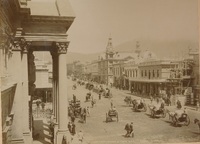
Cape Town Tour, 1891
The Cape Town Tour, 1891 collection comprises 19 digitised photographic views capturing scenes from Cape Town and its environs in 1891. These images record urban and landscape views of the city during the late colonial period, including iconic landmarks such as Table Mountain and Lion’s Head, Parliament House, the Botanical Gardens, and street scenes on Adderley Street. Other subjects include docks, Simon’s Town, bridges over the Liesbeeck River in Mowbray, and dwellings in the Cape Colony. Many of the photographs bear a personal inscription: “To dear Ethel, from Joe, Xmas 1891”, suggesting the album was compiled as a memento of a tour of Cape Town at the close of the 19th century. This collection provides valuable visual documentation of Cape Town’s built environment and social life on the eve of major 20th-century transformations. It illustrates colonial-era photographic practices and offers rich source material for researchers in urban history, visual culture, colonial studies, and South African heritage. -
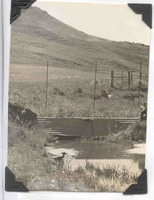
Cathcart, Eastern Cape, South Africa
The Cathcart collection is part of The Frontier Collection held and made accessible by the Cory Library and Historical Archives within the Rhodes University Digital Archives. It documents historical resources relating to Cathcart, a small town in the Eastern Cape, South Africa, within the broader scope of frontier history and the development of settler towns. As part of the Development of Settler Towns series, the collection presents images and archival materials that reflect the town’s historical character and its place in the colonial frontier landscape of the Eastern Cape. Through photographs and other items, researchers gain insight into local built heritage, settlement patterns, and social life. This collection supports historical, social, and cultural research on frontier towns established during the 19th century and contributes to preserving local heritage. -
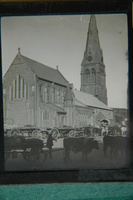
Cathedral of St Michael and St George, Grahamstown
The Cathedral of St Michael and St George, Grahamstown collection is a digitised archival set from the Cory Library and Historical Archives at Rhodes University documenting important visual records of the Cathedral of St Michael and St George in Grahamstown (Makhanda), Eastern Cape, South Africa. This collection, housed within the Cory Churches Collections, comprises 11 historical images—including aerial views of Grahamstown with the cathedral, architectural details of the cathedral’s chancel, and views of High Street and Church Square with the cathedral as focal point. Several photographs capture significant moments in the cathedral’s development, such as the laying of the foundation stone of the chancel by the Governor of the Cape Colony, Sir Henry Loch, in 1890, as well as earlier views of the surrounding urban context. The items reflect the cathedral’s religious, architectural, and civic significance in the colonial and early modern history of Grahamstown, and support research into church history, built heritage, urban development, and social life in the Eastern Cape. -
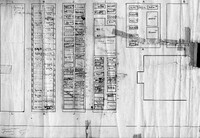
Church of the Province of Southern Africa, Bathurst
The Church of the Province of Southern Africa, Bathurst collection is a digitised archival set from the Cory Library and Historical Archives at Rhodes University, focusing on ecclesiastical heritage in Bathurst, Eastern Cape, South Africa. It is part of the Cory Churches Collections, situated under the broader categorisation of Anglican and Church of the Province of Southern Africa materials. This small but focused collection comprises three digitised items, each depicting or documenting an old plan of the graveyard of St John’s Anglican Church in Bathurst. Through these historical plans, the collection provides insight into the layout, organisation, and spatial history of church burial grounds, reflecting aspects of religious practice, community memory, and local heritage tied to one of Bathurst’s longstanding ecclesiastical institutions. -
Clans, Tribes and Nations
The Clans, Tribes and Nations collection is a digitised archival set from the Cory Library and Historical Archives at Rhodes University, located in Grahamstown (Makhanda), Eastern Cape, South Africa. This collection is part of the African Heritage Collections and comprises items that document records, histories, and genealogical accounts of Xhosa clans and related traditional communities, including materials on groups such as the amaCirha and amaJobe. The items include historical narratives and genealogical texts in both English and Xhosa, reflecting the longstanding cultural traditions, lineage information, and oral histories of these communities. This collection contributes to understanding pre-colonial and historical social structures, clan genealogies, traditional authority, and Indigenous heritage in the Eastern Cape and broader southern African context. It supports research into African ethnography, indigenous history, Xhosa social organisation, and cultural continuity. -
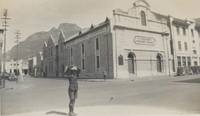
Coloured Methodist School Churches
The Coloured Methodist School Churches collection is a digitised archival collection from the Cory Library and Historical Archives at Rhodes University documenting Methodist church-related schools and community institutions historically associated with the Coloured Methodist community in South Africa. This collection is part of the Cory Churches Collections under the Methodist Church of Southern Africa category and comprises approximately 46 items, predominantly historical photographs and related materials. The images depict a range of church school buildings, activities, and community life including school openings and extensions, mission and church-school structures in locations such as Bellville, Parow, Goodwood, Maitland, Pinelands, and other areas with significant Coloured Methodist educational and religious engagement. Many items document church-school infrastructure from the 1920s through the 1930s, with visual evidence of church-community relations, the role of Methodist education among Coloured populations, and aspects of social life and support networks within the Methodist Church. Items also include community events, youth organisations such as the Boys’ Brigade, and contextual insights into welfare and social conditions. The collection supports research in religious history, education history, Methodist Church activities, and Coloured community heritage in South Africa. -
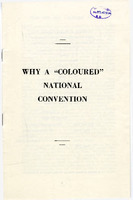
Coloured National Convention Collection, Malmesbury 1961
The Coloured National Convention Collection, Malmesbury 1961 is a digitised archival collection from the Cory Library and Historical Archives at Rhodes University documenting key materials related to the South African Coloured National Convention held in 1961. This collection comprises seven items—including official correspondence, minutes, attendance registers, programmes, committee documents, policy statements, and explanatory texts—that collectively shed light on the organisation, goals, and internal deliberations of the Convention, which brought together Coloured political organisations during the apartheid era. The materials reflect the strategies, ideological discussions, and social context of the Coloured political movement as it sought to articulate its position within the broader struggle against racial discrimination in South Africa. Held in Malmesbury (with connections to the Claremont Civic Centre, Cape Town), the Convention represents an important moment in the history of anti-apartheid political action by Coloured activists. This collection supports research into South African political history, race relations under apartheid, and the organisational history of Coloured political movements. -
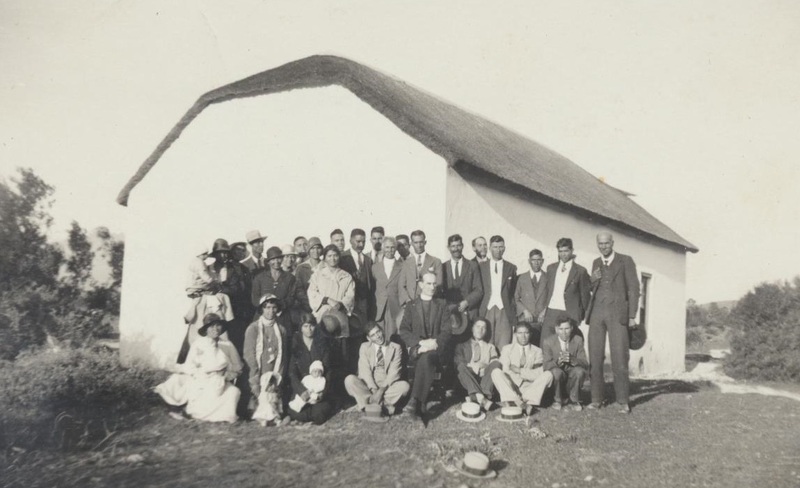
Cory Church Collections
Collection Overview: The Cory Church Collections The Cory Church Collections represent a significant visual and historical record of the ecclesiastical landscape of the Eastern Cape and broader Southern Africa. Housed within the Cory Library for Historical Research, this archival assemblage documents the architectural, social, and missionary footprint of various Christian denominations from the 19th century through the mid-20th century. The collection is primarily composed of photographic prints, negatives, and sketches depicting church buildings—ranging from humble frontier chapels to grand colonial cathedrals—as well as portraits of clergy, missionaries, and congregants who shaped the region's religious history. -
Cory Finding Aids & Selected Inventories
The Cory Finding Aids & Selected Inventories item set brings together a curated group of archival finding aids and collection inventories from the Cory Library for Humanities Research at Rhodes University, Grahamstown, South Africa. These resources provide structured overviews, context, and descriptive information for numerous archival collections held within the Cory Library, ranging from personal papers and family records to institutional archives and specialised collections. These finding aids and inventories help researchers identify and navigate the primary source materials available for study by detailing the scope, content, and organisation of specific collections and archival groupings. -
-
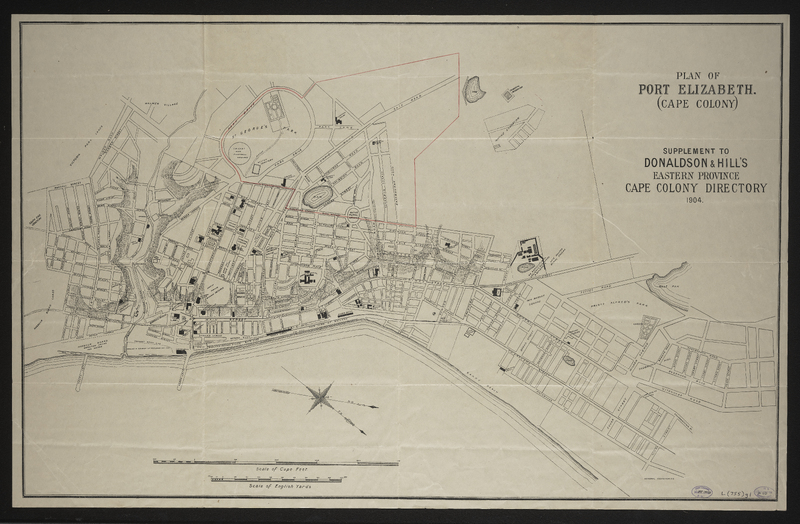
Cory Map Collections
The Cory Map Collections form one of the most comprehensive cartographic repositories in Southern Africa. Curated by the Cory Library for Historical Research at Rhodes University, the collection is a vital resource for understanding the evolving spatial, political, and social boundaries of the Eastern Cape and the broader subcontinent. The maps range from early 16th-century European depictions of the African continent to highly detailed 19th-century military surveys of the Eastern Cape frontier. They document the progress of colonial settlement, the demarcation of mission stations, the layout of frontier forts, and the development of early South African infrastructure like post offices and post-war schools. -
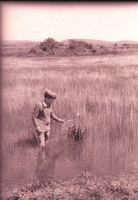
Cradock, Eastern Cape, South Africa
The Cradock, Eastern Cape, South Africa collection is a substantial digitised archival resource from the Cory Library and Historical Archives at Rhodes University documenting the history and material culture of Cradock, a key town in the Eastern Cape province of South Africa. This collection forms part of The Frontier Collection—specifically under The Development of Settler Towns—and includes approximately 197 digitised items comprising historical photographs, maps, plans, engravings, and manuscript images that capture a wide range of social, economic, and built environments in Cradock’s past. The collection contains visual records of early town plans, colonial-era illustrations such as a drawing of an ox-wagon ascending Cradock Pass, scenes of historic events like the aftermath of the Victoria Hotel fire (1904), photographs of local businesses and railway engines, community activities and groups (including Pathfinders and Wayfarers), and mission and church life at St James Mission. These items document urban development, infrastructure, community life, religious and social organisations, and transportation history in Cradock from the 19th century through the early 20th century. -
-
Daantjie Oosthuizen Memorial Lectures
An annual lecture series established in memory of Daniel Charl Stephanus "Daantjie" Oosthuizen (1926–1969), Professor of Philosophy at Rhodes University. The lectures focus on philosophy, ethics, and liberal thought in South Africa. -
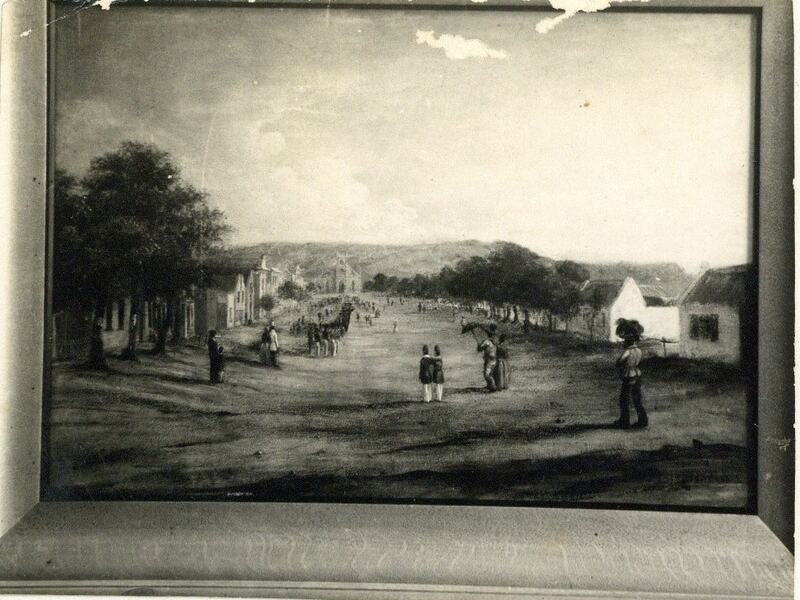
The Development of Settler Towns
The Development of Settler Towns is a major digitised archival collection from the Cory Library and Historical Archives at Rhodes University, forming part of The Frontier Collection. It brings together nearly 468 digitised resources documenting the historical emergence, expansion, and material culture of settler towns across the Eastern Cape, South Africa during the colonial and frontier period. The collection includes sub-sets on towns such as Alice, Bathurst, Bedford, Cathcart, Cradock, East London, Grahamstown, King William’s Town, Port Alfred, Port Elizabeth, Queenstown and others, illustrating a range of urban development patterns, community activities, built environments, maps, plans, and visual materials that reflect the social, economic, and geographic histories of these settlements. As an overarching thematic grouping within the Cory Library’s frontier history holdings, this item set supports comparative and place-based research into settler town origins, colonial infrastructure, demographic change, and regional interactions in the Eastern Cape. -
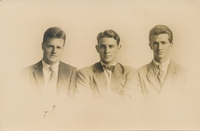
E.C. Workman Rhodes University Collection -- 1922-1925
This item set comprises a digitised collection of photographs documenting aspects of student life, staff, sporting activities, and the built environment at Rhodes University College during the period 1922-1925. Known as the E.C. Workman Rhodes University Collection, the materials provide visual evidence of the early institutional history of Rhodes University and reflect the social and cultural milieu of the university community in the early twentieth century. The collection includes group portraits of academic staff and students, images of university residences such as College House and Botha House, and photographs of student sporting teams, including cricket and tennis teams. Together, these images offer valuable insight into campus life, leisure activities, and institutional identity during a formative period in the university’s development. -
-
-
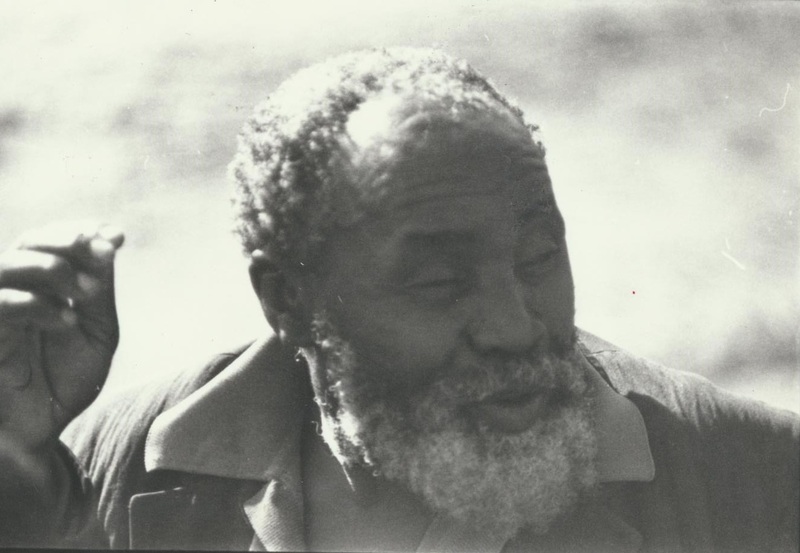
Forced Removals and Evictions
The “Forced Removals and Evictions” item set is a thematic archival grouping within the Cory Library and Historical Archives’ digital collections that focuses on the documentation of forced removals, evictions, and apartheid-era spatial and social displacements in South Africa. This item set forms part of the broader subject area Apartheid, the Struggle and the People, which highlights primary sources related to the socio-political impacts of apartheid policies and resistance movements. -
Frontier Wars Collection
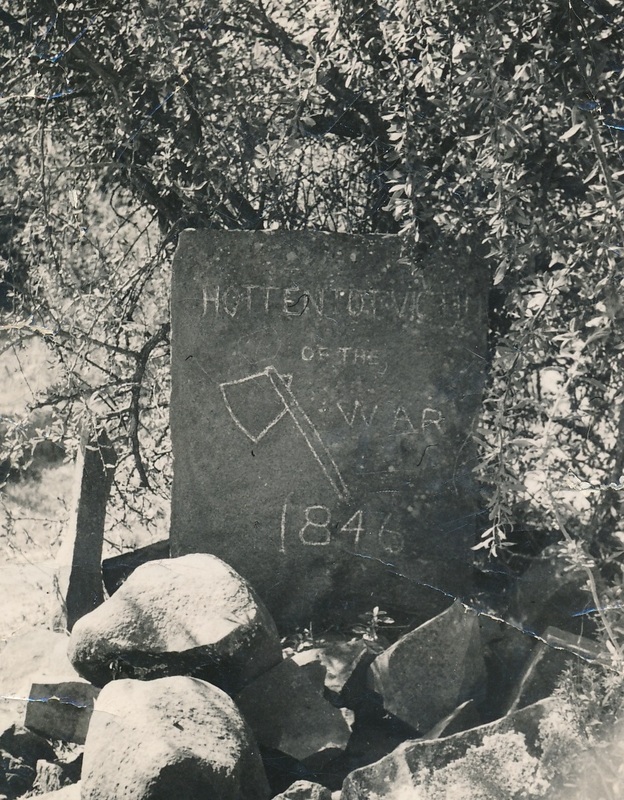
The “The Frontier Wars” item set is a significant thematic collection within the Cory Library and Historical Archives’ digital holdings, documenting the series of conflicts along the Eastern Cape frontier between Indigenous Xhosa groups and colonial forces during the 18th and 19th centuries. These wars — often referred to as the Xhosa Wars in historical literature — were a defining feature of colonial expansion in southern Africa, significantly shaping the region's political, social, and geographic landscape. The collection brings together archival images, maps, and textual records that illuminate aspects of military engagements, frontier settlements, and the broader human experience of conflict on the Eastern Cape frontier. -
Gail Eagle Oriel House Collection
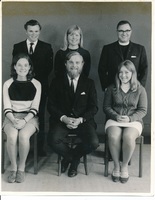
Rhodes University Gail Eagle Collection -- ca. 1960s -
George and Dorothy Randell Collection
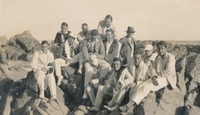
The George and Dorothy Randell Collection comprises personal photographs, including materials related to their time at Rhodes University College in the late 1920s. -
-
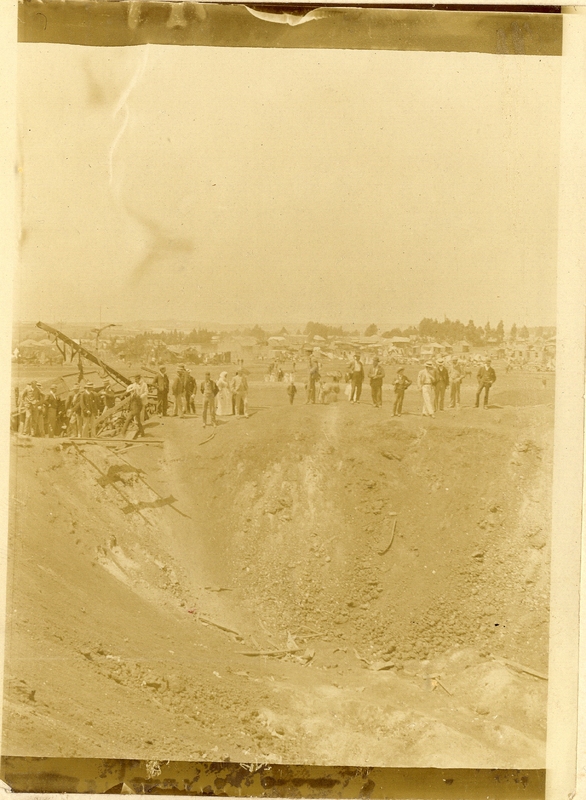
Gold Fields of South Africa Ltd. Collection
The Gold Fields of South Africa Ltd. Collection is one of the most substantial corporate gifts ever received by the Cory Library. Donated in 1976, this vast archive documents the history of the company, which was founded in 1887. The collection is a critical resource for researching the "Randlords," the industrialisation of South Africa, and the development of the Witwatersrand gold mines, including the extensive photographic records that capture the transition of South Africa from an agrarian society to a global mining powerhouse. -
-
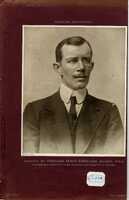
Gold Fields : African Magnates
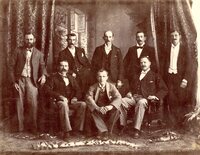
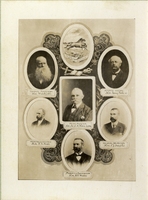
The "African Magnates" series is a set of portraits taken from the publication "African World", published in London in 1903 -
-
-
Gold Fields : Jameson Raid (1895-1896)
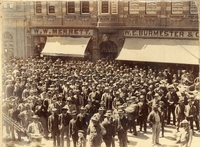
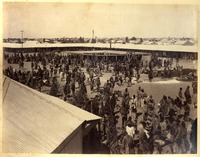
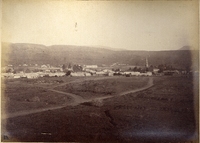
The Jameson’s Raid, 1895–1896 — Photograph Collection comprises photographs relating to events surrounding the Jameson Raid, a late nineteenth-century military expedition in southern Africa. The raid occurred between 29 December 1895 and 2 January 1896 and was led by Dr Leander Starr Jameson, who entered the South African Republic (Transvaal) with a force drawn from British colonial territories. The expedition was intended to support an anticipated uprising by British expatriate residents (Uitlanders) against the government of President Paul Kruger. The uprising did not take place, and Jameson and his men were captured by Boer commandos near Doornkop. The photographs provide visual documentation of people, places, and circumstances associated with the raid and its aftermath, and form part of the historical record of political and military tensions in southern Africa during the period preceding the South African (Anglo-Boer) War of 1899–1902. The collection is owned by Goldfields and is held by the Cory Library for Humanities Research, Rhodes University. -
-
-
-
Gold Fields : Rand Rebellion 1922
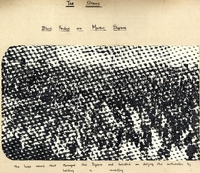
The Rand Rebellion, 1922 (also known as the Rand Revolt or Second Rand Revolt) refers to an armed uprising by white mineworkers in the Witwatersrand region of South Africa in March 1922. The rebellion arose from industrial conflict within the gold-mining industry, as mining companies sought to reduce costs in response to declining gold prices by restructuring labour practices, including the replacement of higher-paid white workers with lower-paid black labour. Following unsuccessful negotiations between mine owners, workers, and the state in February 1922, sections of the white mining workforce organised armed commandos and engaged in violent resistance to government authority. The uprising escalated into widespread clashes between strikers, police, and state forces in areas including Johannesburg, Benoni, Brakpan, Springs, Fordsburg, and Brixton. The Union government, led by Prime Minister General Jan Smuts, declared martial law and deployed the Union Defence Force, artillery, and aircraft of the South African Air Force to suppress the revolt. By mid-March 1922, government forces had regained control, resulting in significant loss of life, mass arrests, and the imprisonment or death of several rebel leaders. The Rand Rebellion had lasting political and social consequences, influencing labour relations, racialised employment policies in the mining sector, and the development of state security responses in South Africa. Materials in this item set document the events, participants, and contexts associated with the rebellion and its suppression. -
Gold Fields : South Africa: Souvenir Album (1898)
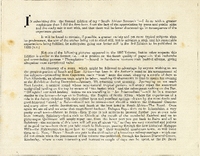
The fifty-two platinotypes--prints made from a photographic process using ferric oxalate in combination with platinum salts deposited directly on the paper (rather than in an emulsion like the silver print process)--are arranged by the photographer following the itinerary of a route proceeding clockwise from Capetown up the eastern coast of South Africa, through Port Elizabeth, Grahamstown, and East London, to Durban, and Pietermaritzburg, and provide views of the churches, parks, harbors, and main streets of these cities. Also included is a portrait of a local "cabby," a Zulu boy, wearing animal horns on his head, with his rickshaw. Continuing up the coast into what is now Mozambique, Middlebrook photographs Delagoa Bay, and the towns of Inhambane, Beira, Chinde, at the mouth of the Zambezi River, and Quelimane. As he crosses west into the Matoppo Hills towards Bulawayo, he records "Mr. Rhodes' Farm Buildings," with a photo of "C.J.R."--Cecil Rhodes--in the entrance of one of his conical "huts". Shots of Kimberley include a bird's eye view of the city from the De Beers Floors, and the Kimberley Sanitorium built by Rhodes. In Johannesburg, Middlebrook records a bird's eye view of the city, the imposing new post office, Commissioner and Pritchard Streets, Joubert Park, the vast produce market, and processing buildings of the Randt Gold Mining Companies. There are also views of Pretoria--including a scene of "Naachtmaal," when Boer farmers and families come to town for church services, and camp out in the town square--and the hills near Barberton, where Sheba G.M. Company mines quartz. Seven of the photographs portray native people, such as Chief Khama of the Batlapins, well-known for his friendship with Livingstone; Zulu men wearing head gear of rickshaw pullers in Durban; Zulu families in front of their homes in Natal, Zululand; an Amaxosa family in Cape Colony (Cape of Good Hope); a Matabele cane seller; a woman from Swaziland in native garb; and an east coast man, known as a Zanzibaree. The final two photographs are steamships: U[nion] S[steam] S[hip] Company's "Briton"; and C[astle] M[ail] P[ackets] Company's "Carisbrook Castle." Late 19th-century South African photographer. The flourishing diamond mines in Kimberley brought hundreds of workers and photographers to the area beginning in 1867. J.E. Middlebrook followed soon thereafter in the early 1870s, and set up his photography studio, The Premier Studio, on West Street West ; he had a second studio in Durban, "Opposite the Club." Middlebrook photographed the landscape, farms, cities, and people of South Africa. -
Gold Fields : South African Views
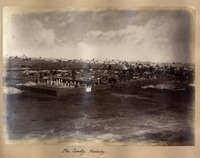
Album of "South African views": [collected by M. Naught?], containing photographs of (a) Cape; (b) Natal; (c) Roads and passes; (d) Africans; (e) Farms; (f) Rivers; (g) Personalities; (h) Ship - Hawarden Castle. [1880-1882]. -
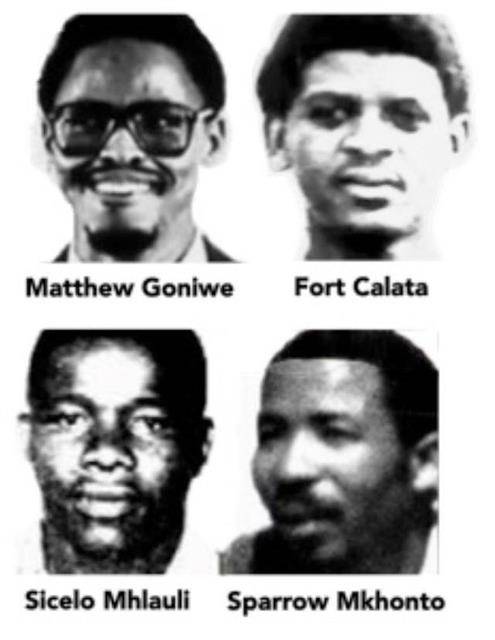
Goniwe Inquest
The “Goniwe Inquest” item set comprises archival records related to the judicial inquest into the murders of Matthew Goniwe, Sparrow Mkonto, Fort Calata, and Sicelo Mhlauli — four anti-apartheid activists collectively known as the Cradock Four — in 1985. These documents are part of the Cory Library and Historical Archives’ holdings on struggles against apartheid and the legal processes that followed state and police violence. The item set comprises three primary records from Inquest No. 626/87, heard in the Regional Court at New Brighton, Port Elizabeth, which detail the proceedings, testimonies, findings, and extensive exhibits associated with the case. Materials encompass the formal record of proceedings and findings, as well as affidavits, correspondence, press materials, police files, photographs, diagrams, and related documents that reconstruct the circumstances surrounding the killings and the subsequent legal inquiry. -
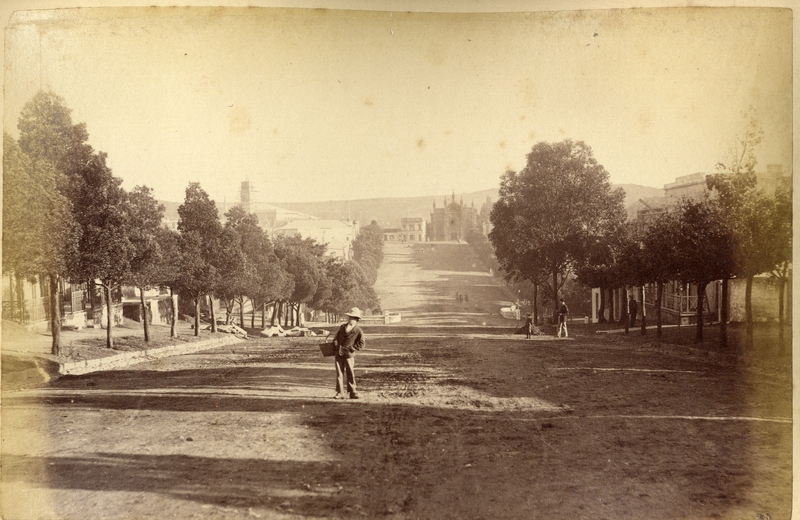
Grahamstown, Eastern Cape, South Africa
A curated digital collection documenting the history of Grahamstown (Makhanda). This set includes historical photographs, maps, architectural plans, and civic records. Key themes include the 1820 Settler heritage, Victorian-era development, local religious institutions, and the socio-political evolution of the town within the Eastern Cape. -
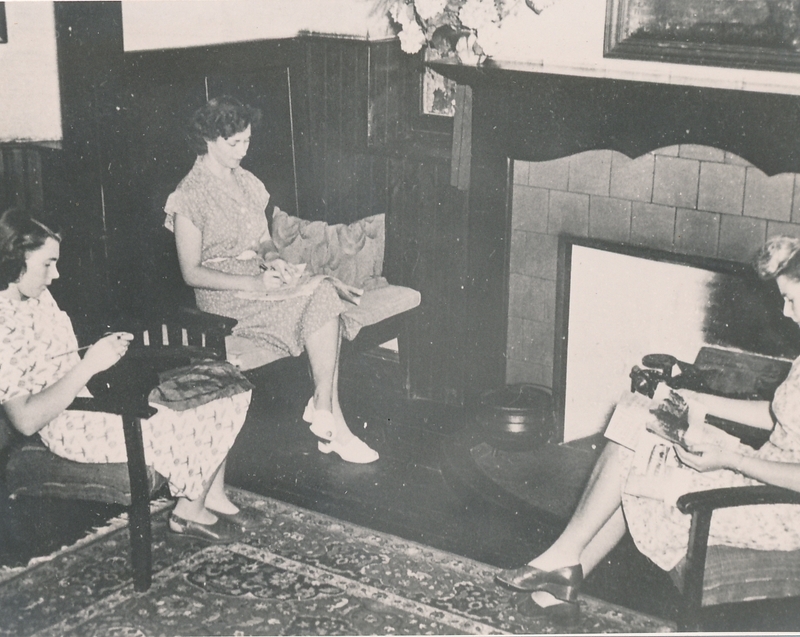
Grahamstown Teachers’ Training College (GTTC) Collections
The Grahamstown Teachers’ Training College (GTTC) Collections preserve the institutional memory of one of South Africa’s most influential teacher-training facilities. Established in 1894 by the Sisters of the Community of the Resurrection of Our Lord, the college played a pivotal role in professionalizing education in the Eastern Cape until its closure and incorporation into Rhodes University in 1975. -
Grahamstown Training College
The “Grahamstown Training College” item set is a photographic and documentary archival grouping within the Cory Library and Historical Archives’ digital collections that captures the history, activities, and community life of the Grahamstown Teachers’ Training College (GTC) in the Eastern Cape, South Africa. Established in 1894, the college operated for 81 years before closing in 1975. It played a key role in preparing primary school teachers for service across South Africa and neighbouring territories, contributing to educational development in the region. -
H.R. Stimson Collection
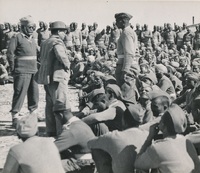
The H.R. Stimson Collection comprises 32 photographic albums and images, preserved by the Cory Library for Humanities Research at Rhodes University. The material largely documents the experiences of Indian Army units and press contingents in the Middle East and Europe during and immediately after World War II (circa 1945). Photographs depict Indian infantry troops in action and in camp, as well as key personnel, including commanding officers and press delegates, and scenes from regions such as Iraq, Palestine, Italy, and Egypt. Subjects include military life on the move, engagements with local populations, interactions with senior commanders, logistical moments such as customs and convoy movements, and the social dynamics of multi-national forces at the end of the war. This collection provides valuable visual documentation of India's military contributions during the Second World War, colonial and wartime mobility, and the cross-cultural dimensions of Allied operations in West Asia and Southern Europe. It is a valuable resource for scholars in military history, South Asian studies, World War II history, photographic history, and the study of colonial-era visual archives. -
-
Henry Masila Ndawo
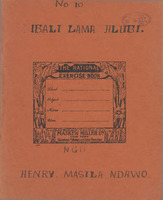
The “Henry Masila Ndawo” item set is a curated thematic collection within the African Heritage Collections of the Cory Library and Historical Archives at Rhodes University, focusing on the literary and cultural contributions of Henry Masila Ndawo, a figure associated with African written tradition and heritage. This item set forms part of the African Literary and Intellectual Works Collection, a broader grouping that documents African authors, historians, and intellectuals whose original manuscripts, texts, and cultural expressions enrich the understanding of southern African intellectual history. -
-
-
Images of Africans Collections
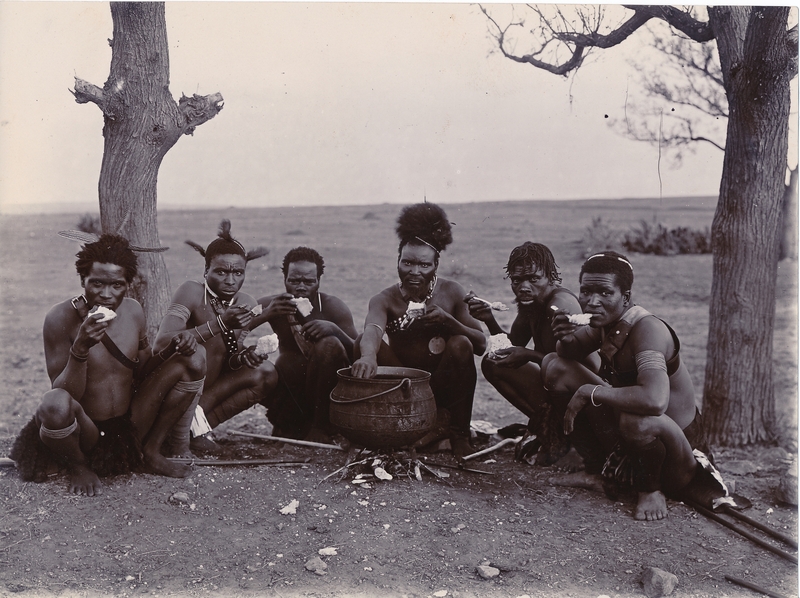
The 'Images of Africans Collection' brings together photographs and visual materials drawn from a range of collections held at the Cory Library. These collections provide the foundation for researchers to investigate themes of cultural memory, identity and representation, as the images depict African people across different periods, places, and social contexts. Many of these images and materials were originally created within colonial or Western frameworks, and inevitably by context, the intent behind their production was shaped by ethnographic, administrative, or exhibitionary purposes that may carry negative or objectifying connotations. This collection, as a project, in its intention to redefine past constructions, is curated with reflection, inquiry, and critical engagement in mind. The dynamic un-obscuration of those past histories, allows these images and materials to be recontextualised, acknowledging the circumstances of their creation while using them as sources through which African presence, lived experience, and historical reality, can be more fully recognised. By bringing these materials together, the collection highlights Africans as individuals and African communities situated within their own cultural, social, and historical contexts. Through this reframing, the 'Images of Africans Collection' aims to foreground the dignity, resilience, and beauty of African people. It positions the images as part of broader processes of identity formation, heritage preservation, and collective memory, inviting critical engagement with the past while affirming African histories and experiences as central to the curative, preservative role of the Cory archive. -
-
Kilnerton Training Institution
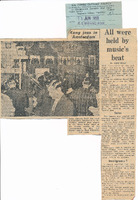
The Kilnerton Training Institution, affiliated to the Methodist Church of Southern Africa, was established in 1886 in the small suburb of Weaving Park, Pretoria. The Institution was named after Rev. John Kilner, who encouraged the formation of an indigenous clergy in South Africa. The mission of the Institution was to provide seminary education to locals in preparation for ordination. In addition to providing seminary education, Kilnerton also served as a primary and secondary school for local children. The Institution is known for some of its illustrious past students, including Dikgang Moseneke (Deputy Chief Justice), Sefako Makgatho, Miriam Makeba, Lillian Ngoyi and Thomas Masekela., -
-
-
Klipfontein & Glenmore, Cape Province - Forced Removals Collection (1979)
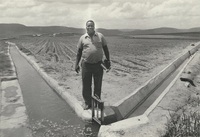
The Klipfontein & Glenmore, Cape Province – Forced Removals Collection (1979) comprises a series of 84 photographs and associated textual images documenting the forced removals of communities from Klipfontein farm, near Kenton-on-Sea, to the resettlement area of Glenmore in 1979. These images were compiled by journalist Ben Maclennan, who covered the removal and subsequent legal and community responses for the Eastern Province Herald and in his book Glenmore: the Story of a Forced Removal. The collection includes photographs of individuals and families affected by the eviction, agricultural schemes such as the Tyefu irrigation scheme, court proceedings in Grahamstown concerning eviction orders, community leaders and administration officials, and everyday scenes reflecting the socio-economic conditions of the displaced communities in both Klipfontein and Glenmore. The photographs provide a vivid visual record of apartheid-era forced removals and resettlement practices in the Eastern Cape, capturing both the human experience of dispossession and the political and legal contexts surrounding these events. This collection is an important resource for researchers in South African social history, apartheid studies, land rights and forced removals, journalism and visual culture, and community activism. -
-
Leila Kerr (Linington) Collection
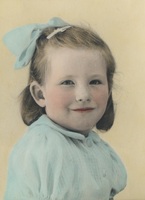
The Leila Kerr (Linington) Collection is a substantial photographic archive of historical images primarily documenting class reunions and related social gatherings of the Grahamstown Teachers’ Training College (South Africa) and associated community life over the mid-20th century. The collection comprises at least 120 digitised photographs featuring past pupils, families, children, and various participants at reunions and events, capturing personal relationships, leisure activities, and everyday scenes spanning decades. Items depict informal portraits of individuals and groups, children playing, family interactions, festive moments (such as fancy dress), and scenes at reunion venues including college grounds and surrounding areas. RU Digital Archives Many of the images were donated by Leila Kerr (née Linington) and reflect social networks and personal histories connected with the Teachers’ Training College community in Grahamstown — documenting not only institutional reunion activities but also broader familial and community ties. These visual records provide a rich resource for researchers interested in the history of education, community memory, social life in Grahamstown, and photographic practices in documenting local histories. -
Lidbetter Collection
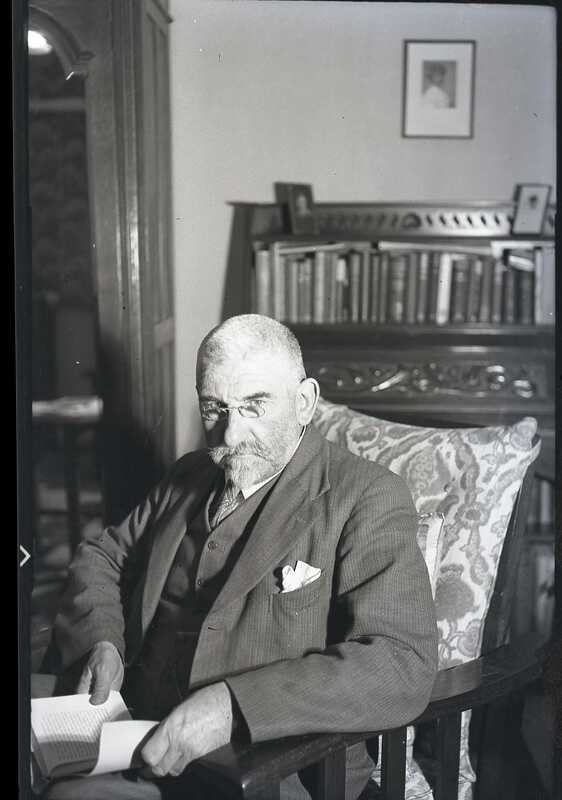
The William Walpole Lidbetter collection housed at Rhodes University constitutes a primary source for the study of the Eastern Cape, South Africa, during the early to mid-twentieth century. Lidbetter, a prominent photographer based in Cradock, is recognised for his prolific and detailed visual documentation, which offers insights into the region's social, political, and environmental history. The archive, primarily comprising glass-plate negatives and lantern slides, functions as a visual ethnography of the Cradock district and the broader Karoo. -
-
Lovedale Press
Established in 1823 at the Tyume Valley (Alice, Eastern Cape), Lovedale Press is one of South Africa’s oldest and most significant heritage institutions. Originally founded by the Glasgow Missionary Society, it became a foundational site for African intellectual life, pioneering the publication of literature in indigenous languages, most notably isiXhosa. Lovedale is renowned for publishing seminal works such as Sol Plaatje’s Mhudi, A.C. Jordan’s Ingqumbo Yeminyanya, and the early writings of S.E.K. Mqhayi. The digitisation and online accessibility of the Lovedale Press archive is a collaborative effort facilitated by Rhodes University. Through the extensive holdings of the Cory Library for Humanities Research, this project ensures that rare, out-of-print, and historically significant materials are preserved for future generations. -
Maden Dam Collection
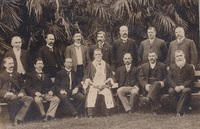
The Maden Dam Collection is a historical photographic and documentary archive that documents the planning, construction, and early years of the Maden Dam, located near King William’s Town in the Eastern Cape Province of South Africa. The set comprises approximately 30 digitised items, primarily photographs and related textual materials, depicting workers on the dam wall, machinery and construction scenes, officials and civic leaders inspecting the project, and ceremonial moments, such as the dam’s opening ceremonies in 1910. Maden Dam, constructed on the Buffalo River, was completed and officially opened in 1910 as part of the Pirie Waterworks Scheme to improve the water supply for King William’s Town and surrounding areas. The collection contains visual evidence of the civic involvement, engineering practices, and local community engagement surrounding this key piece of early-20th-century regional infrastructure. -
Martin Plaut Collection
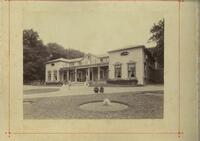
Martin Plaut Photographic Collection: In May 2015, Martin Plaut donated digital copies of six photographs he had purchased at a photographic fair in London to the Cory Library. He had recognised them as being taken in Grahamstown. Of the six, five are in fact related to the laying of the foundation stone of the chancel of the Cathedral of St Michael and St George on 29 January 1890, with the accompanying visit of the Governor of the Cape Colony, Sir Henry Loch. The sixth is of an imposing house, seemingly unrelated to the other five photographs. He later donated seven additional digital images of Grahamstown, King William's Town and Eastern Cape relevance, which he had purchased on eBay. Unfortunately, they therefore lack provenance, but research has provided contextual information wherever possible. -
Mary Pocock Plant Specimen Collection
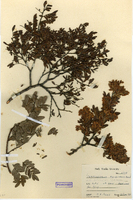
A curated collection of plant specimens collected by Mary Pocock, represented in the Rhodes University Botanical Collections. The item set includes multiple taxonomic specimens such as Barleria ramulosa, Genlisea glandulosissima R.E.Fr., Pleiotaxis ambigua S. Moore, Cryptosepalum exfoliatum subsp. pseudotaxus, and a loose botanical specimen mounted within a manuscript volume. -
Methodist Church of Southern Africa
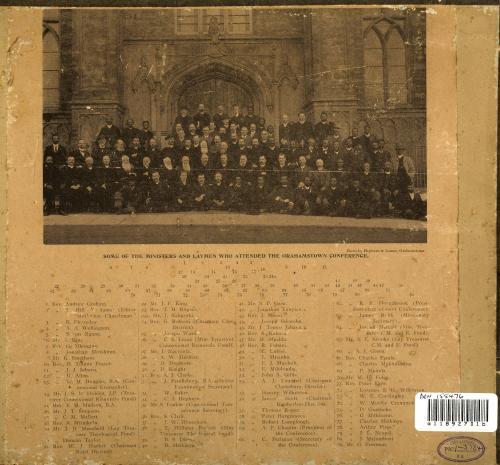
The Methodist Church of Southern Africa Materials held at the Cory Library for Humanities Research at Rhodes University comprise a significant archival collection, including manuscripts, pamphlets, periodicals, books, and pictorial items related to the church's history and activities in Southern Africa. -
Moffat Family Collection
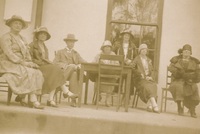
The Moffat Family Collection is a photographic and visual archive comprising 23 images documenting members of the Moffat family, a prominent missionary and settler family with historical ties to early Southern African missionary activity. The collection features multiple portraits of Robert Moffat (1795–1883), a renowned Scottish missionary to Africa, his wife, Mary Moffat (née Smith, 1795–1871), and other family members, including Jane Gardiner Moffat and Christian Wallace Price, grandchildren of Robert and Mary. The set also contains images tied to family life and places associated with the Moffats, including views of Kuruman that show the church and the pastor’s house where Robert Moffat served. Several portrait variants appear for the same individuals and sites, indicating the collection’s focus on lineage and memorialisation. This collection serves as a resource for scholars of missionary history, colonial encounters, family histories, and visual culture in 19th-century Southern Africa and its enduring legacies. It provides insights into key figures in missionary networks and their domestic and ecclesiastical environments through portraiture and documentary photography. -
-
-
-
Pre 1910 Maps
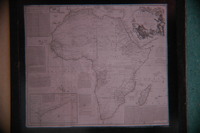
This digital collection comprises 95 historical maps and plans created before 1910, drawn from the cartographic holdings of the Cory Library for Humanities Research at Rhodes University. The maps encompass a range of colonial-era topographic surveys, military sketches, regional cartographic representations, and early colonial settlement plans, covering parts of Southern Africa, particularly the Eastern Cape, Cape Colony, and adjacent territories. The collection includes manuscript plans and lithographed maps, many of which were compiled under the auspices of colonial government departments, military engineers, and early surveyors. It reflects early geographical knowledge and spatial organisation during the 19th century and the period just before the turn of the 20th century, including maps of military engagements (e.g., Spion Kop, 1900), indigenous territories, settlement expansions, and early infrastructural landscapes. digitalarchives.ru.ac.za These pre-1910 maps are vital resources for historians, geographers, archaeologists, and researchers interested in colonial cartography, frontier history, military history, settlement patterns, indigenous landscapes and early colonial administration in South Africa. Each map provides unique insights into historical spatial understandings and territorial control at a formative stage in South African cartographic history. -
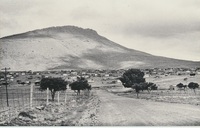
Oxton and Zweledinga, Cape Province - Forced Removals Collection (1980)
This collection comprises a series of twenty photographs documenting houses (both newly constructed and older dwellings) and the surrounding landscape in the Oxton and Zweledinga resettlement areas during 1980. The photographs record physical environments shaped by apartheid-era forced removals and resettlement policies in the Eastern Cape. The communities depicted in these images largely consist of residents who voluntarily left the Glen Grey and Herschel districts in 1976 in an effort to avoid incorporation into the Transkei homeland. Despite this relocation, the settlements of Oxton and Zweledinga were later incorporated into the Ciskei homeland. The photographs provide visual evidence of the material conditions, settlement patterns, and lived landscapes associated with displacement, resettlement, and homeland administration during the late apartheid period. As a visual record, the collection contributes to the documentation of population movement, land tenure changes, and the social consequences of apartheid spatial planning in South Africa. -
-
-
-
-
Sir George Cory Lantern Slide Collection
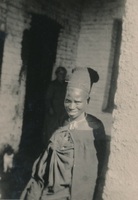
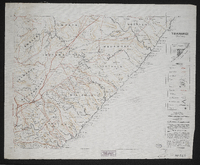
The George Cory Magic Lantern Slide collection is part of Sir George Cory’s large and varied research collection that he donated to Rhodes University Library. Sir George Cory (one of the four founding fathers of Rhodes University) had these slides made to accompany his public lectures, on Eastern Cape history and the 1820 Settlers. There are 270 lantern glass slides altogether, and some of the places included are Grahamstown, Graaff Reinet, Port Elizabeth, Bathurst, and Port Alfred, as well as many of the frontier forts. The slides illustrate life in the early days of the Eastern Cape. -
-
-
-
-
-
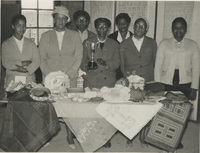
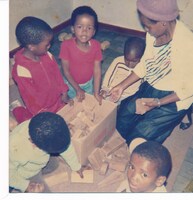
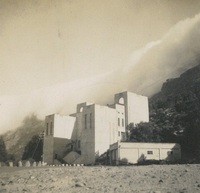
St. Michaels and St. Matthews Collection
The St. Michaels and St. Matthews Collection is a digitized archival set of photographs and visual materials documenting life at the St. Michaels and St. Matthews missions in Keiskammahoek, Eastern Cape, South Africa. The images depict scenes of daily life, social activities, school events (such as sports days and parades), and the people associated with these mission institutions — including students, local Xhosa women in traditional attire, hospital patients, and community gatherings. This collection offers valuable visual insight into the cultural, educational, and social history of mission life during the period these photographs were taken. It is part of the Cory Library for Humanities Research digital collections, which preserve historical sources relating to the Eastern Cape and broader South African history. -
-
-
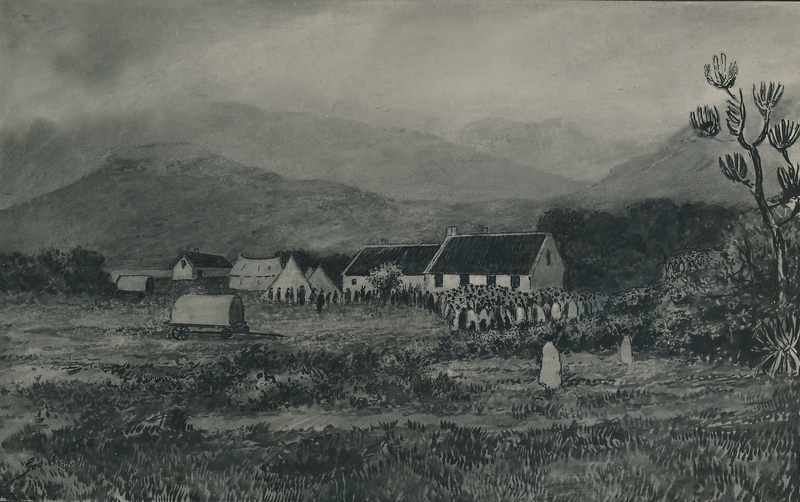
The Frontier Collections
The Frontier Collections are a curated collection of archival materials that document the turbulent and formative era of the Eastern Cape frontier. Spanning the late 18th to the early 20th century, these collections provide a multi-perspective view of the Frontier Wars (Xhosa Wars), the establishment of colonial administration, and the subsequent growth of settler infrastructure. The collection is particularly noted for its focus on the "Frontier Country"—the region surrounding Makhanda (Grahamstown)—detailing the interplay between British settlers, Boer trekkers, and the Xhosa kingdoms. -
-
-
-
-
Valda Niehaus Collection
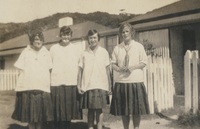
The Valda Niehaus Collection is a visual archive of 73 digitised photographs and related materials, documenting scenes of social life, landscapes, and community activities associated with Grahamstown Teachers’ Training College (GTTC) and its local environs in the Eastern Cape. The collection includes personal portraits, class and group photographs, picnic and outing scenes at places such as Shelly Bay, images of Lincoln House (class of 1939), and views of residences and river landscapes, including Bushman’s River. Most items are captioned with identifiable locations and names, reflecting educational community networks and social events across several decades of the mid-20th century. The Valda Niehaus Collection sheds light on the lived experiences, informal gatherings, educational communities and leisure activities of people connected to Grahamstown Teachers’ Training College. It offers valuable visual documentation for studies of social history, education, regional community life, and photographic practices in South African local history. -
-
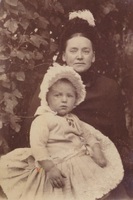
W.F.H. Pocock's Victorian Children Collection (ca. 1887)
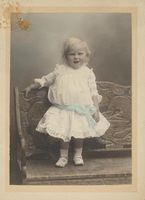
A collection of photographs probably taken by William Frederick Henry Pocock, photographer, mainly of Victorian children and babies in the 1880s. -
-
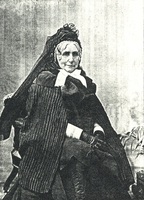
Workman Family Collection
The Workman Family Collection is an extensive set of materials, primarily photographic, documenting the personal and social life of the Samuel and Frances Workman (née Evans) family and their connections in both Southern Africa and the UK. Key Thematic Areas Family History and Genealogy: The collection provides deep insight into the Workman and Evans lineages, including parents, children, aunts, uncles, and cousins (e.g., Apperly family connections). Key individuals documented are Samuel Workman, Frances Workman (née Evans), and her father, Walter Evans. Life Events and Celebrations: Significant family milestones are documented, most prominently the Golden Wedding Anniversary (1952) of Samuel and Frances, but also weddings and birthdays (e.g., Samuel Workman's 80th birthday). Geographic Span (Southern Africa and UK): The material reflects transnational life, covering residences and travels in: Southern Africa: Port Elizabeth, Oudtshoorn, Hanover (Northern Cape), Adelaide, Johannesburg (The Chalet, Parktown), and Grahamstown (Wesleyan High School for Girls). United Kingdom/Ireland: Kent (Bebelauds Bidborgh), Rodborough Court, Brimscombe Court, Belfast (Queens University), and Ballymoney, Ireland. Social and Leisure Activities: The collection captures daily life, including tennis parties, picnics (e.g., at Beachy Head), holidays, family gatherings at Christmas (e.g., at Handsworth), and scenic views. Church and Education Ties (Implied): While focused on personal life, the family's connection to Methodism is evident through mentions of church buildings, such as Glen Thorn Church and Oudtshoorn Church (and its dedication), as well as educational institutions like Wesleyan High School for Girls in Grahamstown and Grahamstown Training College. -