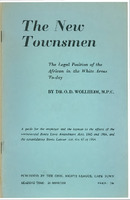
This study of urban African legislation is prompted by the widespread public interest in the controversial Bantu Laws Amendment Acts — now in force as the Bantu Labour Act, No. 67 of 1964. It will seek to give a picture of the purpose and effect of this legislation.
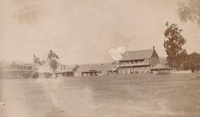
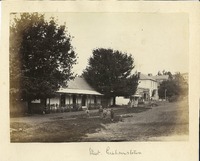
Although only inscribed 'Street. Grahamstown' on the mount, this is in fact a photograph of The Oaks, a cottage in Somerset Street, taken by Dr. W.G. Atherstone. It shows six little boys playing in the foreground, with Renfrew House to the extreme right.
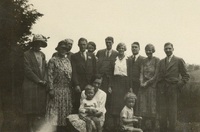
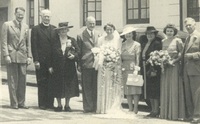
Photograph entitled "The Patersons at Hill Church of Port Elizabeth" showing old friends of the Traill family at the 1946 wedding of Walter Workman and Blanche Traill.
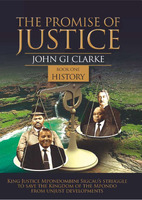
"In 1894 with troops massing on the border and Maxim guns taking aim, Cape Prime Minister Cecil Rhodes forced the King of Mpondo iKumkani Mqikela ka Sigcau to finally submit to Colonial rule. A year later, intoxicated by power, Rhodes arbitrarily imprisoned King Mqikela. This when President Jacob Zuma deposed his descendant iKumkani Mpondombini Justice Sigcau as King of Mpondo in 2010, the ghost of Cecil John Rhodes hovered fatefully over the court battle that unfolded over the next three years. When the Constitutional Court handed down judgement seven weeks later the Promise of Justice was fulfilled."
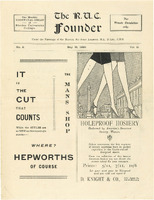
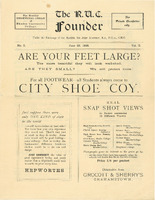
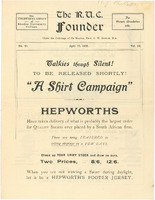
From the Editorial: "A poor thing but our own" is the motto which describes the Founder, for though it may not be of great literary value, though it may not contain ideas that will revolutionise the world, yet it is indeed our own. This issue is in this respect a great advance on any previous ones for it has drawn from all sections of our little community. We wish to thank all who have contributed, subscribed, or in any other way helped to make this issue a success. We want the co-operation of the whole College and we want everyone to feel that it is his own paper: we shall publish everything we receive (if it is good enough) and hope to be able to offer prizes shortly.
From Editorial: So too in our world we attempt to pursue a policy, in the presentation of the pervading spirit and thought of our College, which shall have due regard for the proportionate bearing upon the Student Life in its intrinsic setting. To the dominating and general we shall give prominence, while for the localised and particular we shall have but a correspondingly small space-the distorted and insensate view we shall reject.
Not without misgiving was it decided to revive this year that "poor thing but our own"-the "Founder." Behind, lay the grim spectre of the financial disaster of 1929; before, no assurance of success, but plenty of optimism. As was pointed out recently, the Rhodian is intended to mirror the College spirit, and we take this opportunity of affirming that the object of the "Founder" also is to reflect the spirit of the College-in its lighter and more abandoned moments-in fact, "just Rhodes talking."