Item sets
-
Klipfontein & Glenmore, Cape Province - Forced Removals Collection (1979)
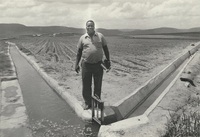
The Klipfontein & Glenmore, Cape Province – Forced Removals Collection (1979) comprises a series of 84 photographs and associated textual images documenting the forced removals of communities from Klipfontein farm, near Kenton-on-Sea, to the resettlement area of Glenmore in 1979. These images were compiled by journalist Ben Maclennan, who covered the removal and subsequent legal and community responses for the Eastern Province Herald and in his book Glenmore: the Story of a Forced Removal. The collection includes photographs of individuals and families affected by the eviction, agricultural schemes such as the Tyefu irrigation scheme, court proceedings in Grahamstown concerning eviction orders, community leaders and administration officials, and everyday scenes reflecting the socio-economic conditions of the displaced communities in both Klipfontein and Glenmore. The photographs provide a vivid visual record of apartheid-era forced removals and resettlement practices in the Eastern Cape, capturing both the human experience of dispossession and the political and legal contexts surrounding these events. This collection is an important resource for researchers in South African social history, apartheid studies, land rights and forced removals, journalism and visual culture, and community activism. -
-

Leila Kerr (Linington) Collection
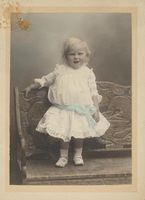
The Leila Kerr (Linington) Collection is a substantial photographic archive of historical images primarily documenting class reunions and related social gatherings of the Grahamstown Teachers’ Training College (South Africa) and associated community life over the mid-20th century. The collection comprises at least 120 digitised photographs featuring past pupils, families, children, and various participants at reunions and events, capturing personal relationships, leisure activities, and everyday scenes spanning decades. Items depict informal portraits of individuals and groups, children playing, family interactions, festive moments (such as fancy dress), and scenes at reunion venues including college grounds and surrounding areas. RU Digital Archives Many of the images were donated by Leila Kerr (née Linington) and reflect social networks and personal histories connected with the Teachers’ Training College community in Grahamstown — documenting not only institutional reunion activities but also broader familial and community ties. These visual records provide a rich resource for researchers interested in the history of education, community memory, social life in Grahamstown, and photographic practices in documenting local histories. -
Lidbetter Collection
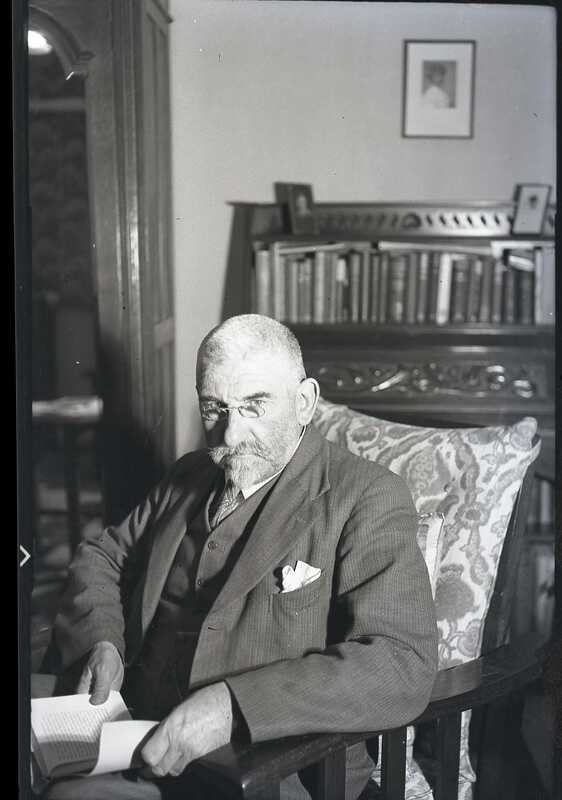
The William Walpole Lidbetter collection housed at Rhodes University constitutes a primary source for the study of the Eastern Cape, South Africa, during the early to mid-twentieth century. Lidbetter, a prominent photographer based in Cradock, is recognised for his prolific and detailed visual documentation, which offers insights into the region's social, political, and environmental history. The archive, primarily comprising glass-plate negatives and lantern slides, functions as a visual ethnography of the Cradock district and the broader Karoo. -
-
Lovedale Press
Established in 1823 at the Tyume Valley (Alice, Eastern Cape), Lovedale Press is one of South Africa’s oldest and most significant heritage institutions. Originally founded by the Glasgow Missionary Society, it became a foundational site for African intellectual life, pioneering the publication of literature in indigenous languages, most notably isiXhosa. Lovedale is renowned for publishing seminal works such as Sol Plaatje’s Mhudi, A.C. Jordan’s Ingqumbo Yeminyanya, and the early writings of S.E.K. Mqhayi. The digitisation and online accessibility of the Lovedale Press archive is a collaborative effort facilitated by Rhodes University. Through the extensive holdings of the Cory Library for Humanities Research, this project ensures that rare, out-of-print, and historically significant materials are preserved for future generations. -
Maden Dam Collection
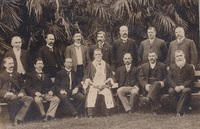
The Maden Dam Collection is a historical photographic and documentary archive that documents the planning, construction, and early years of the Maden Dam, located near King William’s Town in the Eastern Cape Province of South Africa. The set comprises approximately 30 digitised items, primarily photographs and related textual materials, depicting workers on the dam wall, machinery and construction scenes, officials and civic leaders inspecting the project, and ceremonial moments, such as the dam’s opening ceremonies in 1910. Maden Dam, constructed on the Buffalo River, was completed and officially opened in 1910 as part of the Pirie Waterworks Scheme to improve the water supply for King William’s Town and surrounding areas. The collection contains visual evidence of the civic involvement, engineering practices, and local community engagement surrounding this key piece of early-20th-century regional infrastructure. -
Martin Plaut Collection
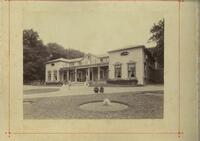
Martin Plaut Photographic Collection: In May 2015, Martin Plaut donated digital copies of six photographs he had purchased at a photographic fair in London to the Cory Library. He had recognised them as being taken in Grahamstown. Of the six, five are in fact related to the laying of the foundation stone of the chancel of the Cathedral of St Michael and St George on 29 January 1890, with the accompanying visit of the Governor of the Cape Colony, Sir Henry Loch. The sixth is of an imposing house, seemingly unrelated to the other five photographs. He later donated seven additional digital images of Grahamstown, King William's Town and Eastern Cape relevance, which he had purchased on eBay. Unfortunately, they therefore lack provenance, but research has provided contextual information wherever possible. -
Mary Pocock Plant Specimen Collection
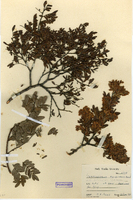
A curated collection of plant specimens collected by Mary Pocock, represented in the Rhodes University Botanical Collections. The item set includes multiple taxonomic specimens such as Barleria ramulosa, Genlisea glandulosissima R.E.Fr., Pleiotaxis ambigua S. Moore, Cryptosepalum exfoliatum subsp. pseudotaxus, and a loose botanical specimen mounted within a manuscript volume. -
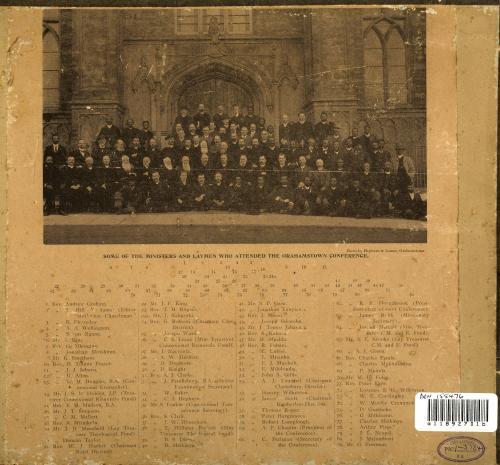
Methodist Church of Southern Africa
The Methodist Church of Southern Africa Materials held at the Cory Library for Humanities Research at Rhodes University comprise a significant archival collection, including manuscripts, pamphlets, periodicals, books, and pictorial items related to the church's history and activities in Southern Africa. -
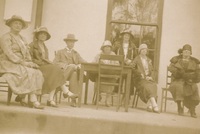
Moffat Family Collection
The Moffat Family Collection is a photographic and visual archive comprising 23 images documenting members of the Moffat family, a prominent missionary and settler family with historical ties to early Southern African missionary activity. The collection features multiple portraits of Robert Moffat (1795–1883), a renowned Scottish missionary to Africa, his wife, Mary Moffat (née Smith, 1795–1871), and other family members, including Jane Gardiner Moffat and Christian Wallace Price, grandchildren of Robert and Mary. The set also contains images tied to family life and places associated with the Moffats, including views of Kuruman that show the church and the pastor’s house where Robert Moffat served. Several portrait variants appear for the same individuals and sites, indicating the collection’s focus on lineage and memorialisation. This collection serves as a resource for scholars of missionary history, colonial encounters, family histories, and visual culture in 19th-century Southern Africa and its enduring legacies. It provides insights into key figures in missionary networks and their domestic and ecclesiastical environments through portraiture and documentary photography. -
-
-
-
Pre 1910 Maps
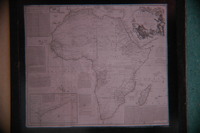
This digital collection comprises 95 historical maps and plans created before 1910, drawn from the cartographic holdings of the Cory Library for Humanities Research at Rhodes University. The maps encompass a range of colonial-era topographic surveys, military sketches, regional cartographic representations, and early colonial settlement plans, covering parts of Southern Africa, particularly the Eastern Cape, Cape Colony, and adjacent territories. The collection includes manuscript plans and lithographed maps, many of which were compiled under the auspices of colonial government departments, military engineers, and early surveyors. It reflects early geographical knowledge and spatial organisation during the 19th century and the period just before the turn of the 20th century, including maps of military engagements (e.g., Spion Kop, 1900), indigenous territories, settlement expansions, and early infrastructural landscapes. digitalarchives.ru.ac.za These pre-1910 maps are vital resources for historians, geographers, archaeologists, and researchers interested in colonial cartography, frontier history, military history, settlement patterns, indigenous landscapes and early colonial administration in South Africa. Each map provides unique insights into historical spatial understandings and territorial control at a formative stage in South African cartographic history. -
Oxton and Zweledinga, Cape Province - Forced Removals Collection (1980)
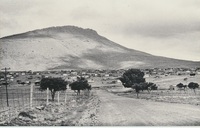
This collection comprises a series of twenty photographs documenting houses (both newly constructed and older dwellings) and the surrounding landscape in the Oxton and Zweledinga resettlement areas during 1980. The photographs record physical environments shaped by apartheid-era forced removals and resettlement policies in the Eastern Cape. The communities depicted in these images largely consist of residents who voluntarily left the Glen Grey and Herschel districts in 1976 in an effort to avoid incorporation into the Transkei homeland. Despite this relocation, the settlements of Oxton and Zweledinga were later incorporated into the Ciskei homeland. The photographs provide visual evidence of the material conditions, settlement patterns, and lived landscapes associated with displacement, resettlement, and homeland administration during the late apartheid period. As a visual record, the collection contributes to the documentation of population movement, land tenure changes, and the social consequences of apartheid spatial planning in South Africa. -
-
-
-
-
Sir George Cory Lantern Slide Collection
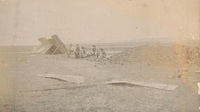
The George Cory Magic Lantern Slide collection is part of Sir George Cory’s large and varied research collection that he donated to Rhodes University Library. Sir George Cory (one of the four founding fathers of Rhodes University) had these slides made to accompany his public lectures, on Eastern Cape history and the 1820 Settlers. There are 270 lantern glass slides altogether, and some of the places included are Grahamstown, Graaff Reinet, Port Elizabeth, Bathurst, and Port Alfred, as well as many of the frontier forts. The slides illustrate life in the early days of the Eastern Cape. -
-
-
-