Item sets
-
-
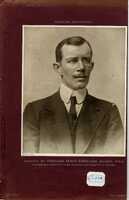
Gold Fields : African Magnates
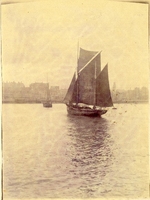
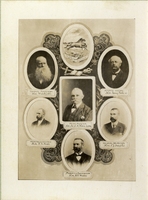
The "African Magnates" series is a set of portraits taken from the publication "African World", published in London in 1903 -
-
-
Gold Fields : Jameson Raid (1895-1896)
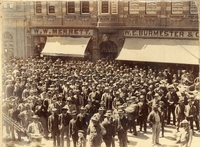
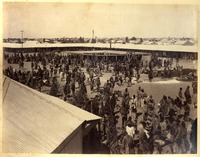
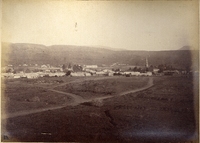
The Jameson’s Raid, 1895–1896 — Photograph Collection comprises photographs relating to events surrounding the Jameson Raid, a late nineteenth-century military expedition in southern Africa. The raid occurred between 29 December 1895 and 2 January 1896 and was led by Dr Leander Starr Jameson, who entered the South African Republic (Transvaal) with a force drawn from British colonial territories. The expedition was intended to support an anticipated uprising by British expatriate residents (Uitlanders) against the government of President Paul Kruger. The uprising did not take place, and Jameson and his men were captured by Boer commandos near Doornkop. The photographs provide visual documentation of people, places, and circumstances associated with the raid and its aftermath, and form part of the historical record of political and military tensions in southern Africa during the period preceding the South African (Anglo-Boer) War of 1899–1902. The collection is owned by Goldfields and is held by the Cory Library for Humanities Research, Rhodes University. -
-
-
-
Gold Fields : Rand Rebellion 1922
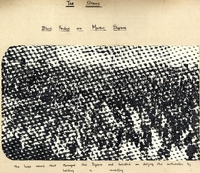
The Rand Rebellion, 1922 (also known as the Rand Revolt or Second Rand Revolt) refers to an armed uprising by white mineworkers in the Witwatersrand region of South Africa in March 1922. The rebellion arose from industrial conflict within the gold-mining industry, as mining companies sought to reduce costs in response to declining gold prices by restructuring labour practices, including the replacement of higher-paid white workers with lower-paid black labour. Following unsuccessful negotiations between mine owners, workers, and the state in February 1922, sections of the white mining workforce organised armed commandos and engaged in violent resistance to government authority. The uprising escalated into widespread clashes between strikers, police, and state forces in areas including Johannesburg, Benoni, Brakpan, Springs, Fordsburg, and Brixton. The Union government, led by Prime Minister General Jan Smuts, declared martial law and deployed the Union Defence Force, artillery, and aircraft of the South African Air Force to suppress the revolt. By mid-March 1922, government forces had regained control, resulting in significant loss of life, mass arrests, and the imprisonment or death of several rebel leaders. The Rand Rebellion had lasting political and social consequences, influencing labour relations, racialised employment policies in the mining sector, and the development of state security responses in South Africa. Materials in this item set document the events, participants, and contexts associated with the rebellion and its suppression. -
Gold Fields : South Africa: Souvenir Album (1898)
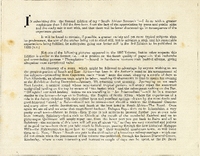
The fifty-two platinotypes--prints made from a photographic process using ferric oxalate in combination with platinum salts deposited directly on the paper (rather than in an emulsion like the silver print process)--are arranged by the photographer following the itinerary of a route proceeding clockwise from Capetown up the eastern coast of South Africa, through Port Elizabeth, Grahamstown, and East London, to Durban, and Pietermaritzburg, and provide views of the churches, parks, harbors, and main streets of these cities. Also included is a portrait of a local "cabby," a Zulu boy, wearing animal horns on his head, with his rickshaw. Continuing up the coast into what is now Mozambique, Middlebrook photographs Delagoa Bay, and the towns of Inhambane, Beira, Chinde, at the mouth of the Zambezi River, and Quelimane. As he crosses west into the Matoppo Hills towards Bulawayo, he records "Mr. Rhodes' Farm Buildings," with a photo of "C.J.R."--Cecil Rhodes--in the entrance of one of his conical "huts". Shots of Kimberley include a bird's eye view of the city from the De Beers Floors, and the Kimberley Sanitorium built by Rhodes. In Johannesburg, Middlebrook records a bird's eye view of the city, the imposing new post office, Commissioner and Pritchard Streets, Joubert Park, the vast produce market, and processing buildings of the Randt Gold Mining Companies. There are also views of Pretoria--including a scene of "Naachtmaal," when Boer farmers and families come to town for church services, and camp out in the town square--and the hills near Barberton, where Sheba G.M. Company mines quartz. Seven of the photographs portray native people, such as Chief Khama of the Batlapins, well-known for his friendship with Livingstone; Zulu men wearing head gear of rickshaw pullers in Durban; Zulu families in front of their homes in Natal, Zululand; an Amaxosa family in Cape Colony (Cape of Good Hope); a Matabele cane seller; a woman from Swaziland in native garb; and an east coast man, known as a Zanzibaree. The final two photographs are steamships: U[nion] S[steam] S[hip] Company's "Briton"; and C[astle] M[ail] P[ackets] Company's "Carisbrook Castle." Late 19th-century South African photographer. The flourishing diamond mines in Kimberley brought hundreds of workers and photographers to the area beginning in 1867. J.E. Middlebrook followed soon thereafter in the early 1870s, and set up his photography studio, The Premier Studio, on West Street West ; he had a second studio in Durban, "Opposite the Club." Middlebrook photographed the landscape, farms, cities, and people of South Africa. -
Gold Fields : South African Views
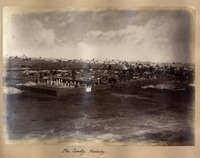
Album of "South African views": [collected by M. Naught?], containing photographs of (a) Cape; (b) Natal; (c) Roads and passes; (d) Africans; (e) Farms; (f) Rivers; (g) Personalities; (h) Ship - Hawarden Castle. [1880-1882]. -
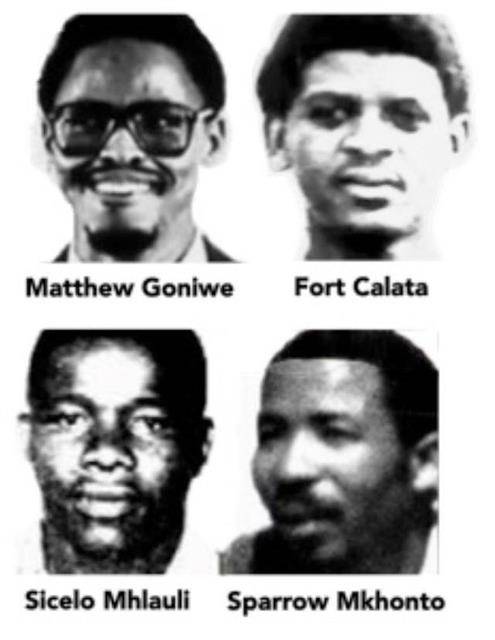
Goniwe Inquest
The “Goniwe Inquest” item set comprises archival records related to the judicial inquest into the murders of Matthew Goniwe, Sparrow Mkonto, Fort Calata, and Sicelo Mhlauli — four anti-apartheid activists collectively known as the Cradock Four — in 1985. These documents are part of the Cory Library and Historical Archives’ holdings on struggles against apartheid and the legal processes that followed state and police violence. The item set comprises three primary records from Inquest No. 626/87, heard in the Regional Court at New Brighton, Port Elizabeth, which detail the proceedings, testimonies, findings, and extensive exhibits associated with the case. Materials encompass the formal record of proceedings and findings, as well as affidavits, correspondence, press materials, police files, photographs, diagrams, and related documents that reconstruct the circumstances surrounding the killings and the subsequent legal inquiry. -
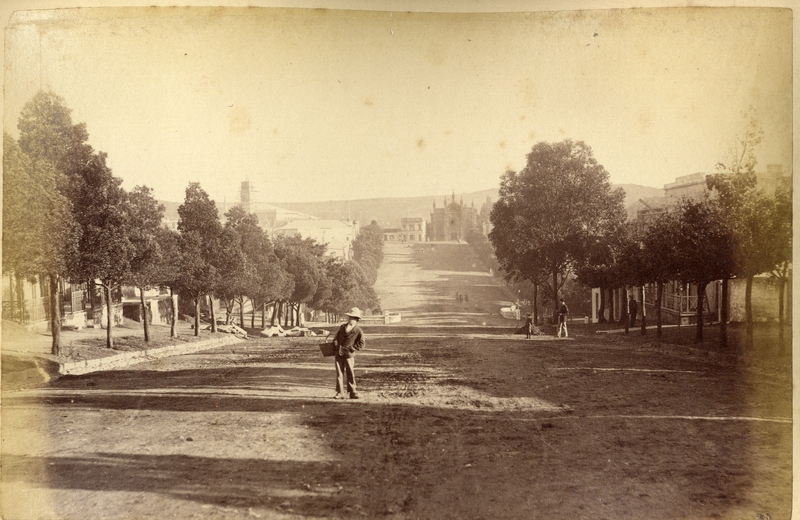
Grahamstown, Eastern Cape, South Africa
A curated digital collection documenting the history of Grahamstown (Makhanda). This set includes historical photographs, maps, architectural plans, and civic records. Key themes include the 1820 Settler heritage, Victorian-era development, local religious institutions, and the socio-political evolution of the town within the Eastern Cape. -
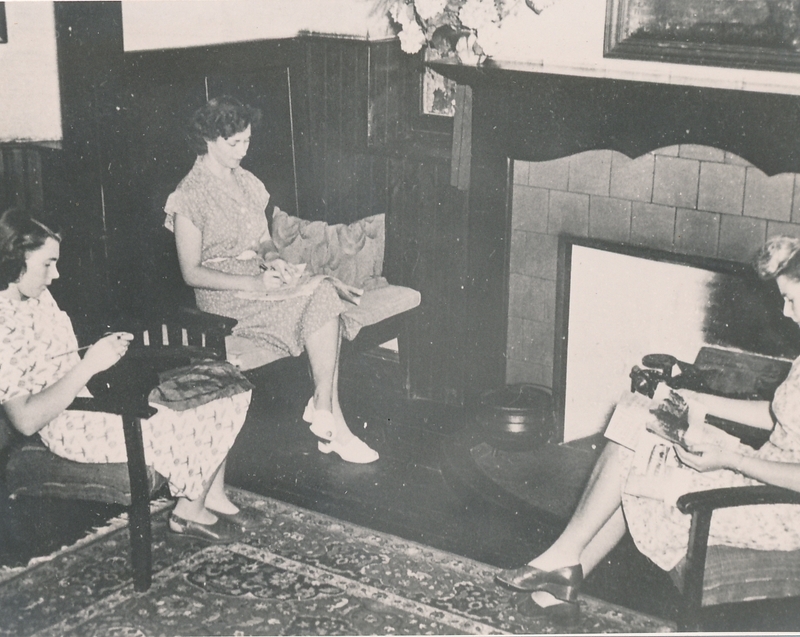
Grahamstown Teachers’ Training College (GTTC) Collections
The Grahamstown Teachers’ Training College (GTTC) Collections preserve the institutional memory of one of South Africa’s most influential teacher-training facilities. Established in 1894 by the Sisters of the Community of the Resurrection of Our Lord, the college played a pivotal role in professionalizing education in the Eastern Cape until its closure and incorporation into Rhodes University in 1975. -
Grahamstown Training College
The “Grahamstown Training College” item set is a photographic and documentary archival grouping within the Cory Library and Historical Archives’ digital collections that captures the history, activities, and community life of the Grahamstown Teachers’ Training College (GTC) in the Eastern Cape, South Africa. Established in 1894, the college operated for 81 years before closing in 1975. It played a key role in preparing primary school teachers for service across South Africa and neighbouring territories, contributing to educational development in the region. -
H.R. Stimson Collection
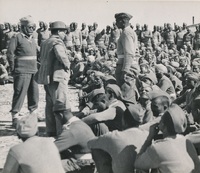
The H.R. Stimson Collection comprises 32 photographic albums and images, preserved by the Cory Library for Humanities Research at Rhodes University. The material largely documents the experiences of Indian Army units and press contingents in the Middle East and Europe during and immediately after World War II (circa 1945). Photographs depict Indian infantry troops in action and in camp, as well as key personnel, including commanding officers and press delegates, and scenes from regions such as Iraq, Palestine, Italy, and Egypt. Subjects include military life on the move, engagements with local populations, interactions with senior commanders, logistical moments such as customs and convoy movements, and the social dynamics of multi-national forces at the end of the war. This collection provides valuable visual documentation of India's military contributions during the Second World War, colonial and wartime mobility, and the cross-cultural dimensions of Allied operations in West Asia and Southern Europe. It is a valuable resource for scholars in military history, South Asian studies, World War II history, photographic history, and the study of colonial-era visual archives. -
-
Henry Masila Ndawo
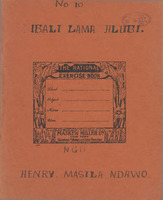
The “Henry Masila Ndawo” item set is a curated thematic collection within the African Heritage Collections of the Cory Library and Historical Archives at Rhodes University, focusing on the literary and cultural contributions of Henry Masila Ndawo, a figure associated with African written tradition and heritage. This item set forms part of the African Literary and Intellectual Works Collection, a broader grouping that documents African authors, historians, and intellectuals whose original manuscripts, texts, and cultural expressions enrich the understanding of southern African intellectual history. -
-
-
Images of Africans Collections
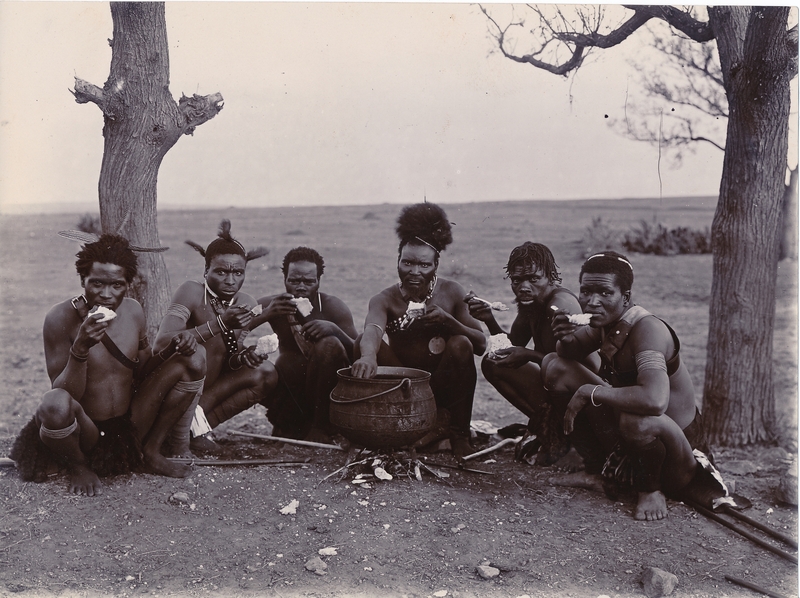
The 'Images of Africans Collection' brings together photographs and visual materials drawn from a range of collections held at the Cory Library. These collections provide the foundation for researchers to investigate themes of cultural memory, identity and representation, as the images depict African people across different periods, places, and social contexts. Many of these images and materials were originally created within colonial or Western frameworks, and inevitably by context, the intent behind their production was shaped by ethnographic, administrative, or exhibitionary purposes that may carry negative or objectifying connotations. This collection, as a project, in its intention to redefine past constructions, is curated with reflection, inquiry, and critical engagement in mind. The dynamic un-obscuration of those past histories, allows these images and materials to be recontextualised, acknowledging the circumstances of their creation while using them as sources through which African presence, lived experience, and historical reality, can be more fully recognised. By bringing these materials together, the collection highlights Africans as individuals and African communities situated within their own cultural, social, and historical contexts. Through this reframing, the 'Images of Africans Collection' aims to foreground the dignity, resilience, and beauty of African people. It positions the images as part of broader processes of identity formation, heritage preservation, and collective memory, inviting critical engagement with the past while affirming African histories and experiences as central to the curative, preservative role of the Cory archive. -
-
Kilnerton Training Institution
The Kilnerton Training Institution, affiliated to the Methodist Church of Southern Africa, was established in 1886 in the small suburb of Weaving Park, Pretoria. The Institution was named after Rev. John Kilner, who encouraged the formation of an indigenous clergy in South Africa. The mission of the Institution was to provide seminary education to locals in preparation for ordination. In addition to providing seminary education, Kilnerton also served as a primary and secondary school for local children. The Institution is known for some of its illustrious past students, including Dikgang Moseneke (Deputy Chief Justice), Sefako Makgatho, Miriam Makeba, Lillian Ngoyi and Thomas Masekela., -
-