The Development of Settler Towns
Item set
- Alternative Title
- Eastern Cape Settler Towns Historical Collection
- Description
- The Development of Settler Towns is a major digitised archival collection from the Cory Library and Historical Archives at Rhodes University, forming part of The Frontier Collection. It brings together nearly 468 digitised resources documenting the historical emergence, expansion, and material culture of settler towns across the Eastern Cape, South Africa during the colonial and frontier period. The collection includes sub-sets on towns such as Alice, Bathurst, Bedford, Cathcart, Cradock, East London, Grahamstown, King William’s Town, Port Alfred, Port Elizabeth, Queenstown and others, illustrating a range of urban development patterns, community activities, built environments, maps, plans, and visual materials that reflect the social, economic, and geographic histories of these settlements. As an overarching thematic grouping within the Cory Library’s frontier history holdings, this item set supports comparative and place-based research into settler town origins, colonial infrastructure, demographic change, and regional interactions in the Eastern Cape.
- Language
- English
- Type
- Collection
- Spatial Coverage
- Eastern Cape, South Africa (multiple towns)
- Temporal Coverage
- Primarily 19th – early 20th century
- Format
- Digital images
- Maps
Items
-
-
-
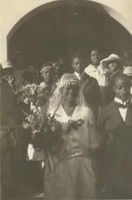 A photograph album compiled by Mary Butler, containing photographs of Wayfarers, Sunbeams and Pathfinders, mostly in Cradock. Two newspaper clippings and a handwritten concert programme included. There are three photographs of Rev. James Arthur Calata's young daughters, and he himself is included in two photographs. This photograph showing an African wedding ceremony infront of a church, bride and groom with the entourage
 -
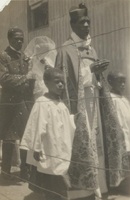 A photograph album compiled by Mary Butler, containing photographs of Wayfarers, Sunbeams and Pathfinders, mostly in Cradock. Two newspaper clippings and a handwritten concert programme included. There are three photographs of Rev. James Arthur Calata's young daughters, and he himself is included in two photographs. This photograph showing an African wedding ceremony, bride and groom led by the priest and two young boys wearing church outfit, probably alter servers
 -
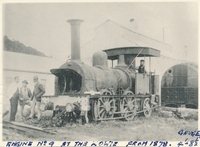 Note at the bottom: “Engine no9 at the Kowie from 1878. Gauge 4’-81/2”. Note on the back: “c. 1883 aka “Blackie” and “Frontier” This in Engine no 9 for 4-8 ½ inch Gauge. A series of this type of locomotive were sent out to Cape Town from Sept. 1859 is April 1860 – Engine no9 was sent to the “Kowie” Harbour Works during 1879. With the Compliments of Theo J Espitolies. PO Box 1006 Pretoria.”,Engine no. 9 at the Kowie from 1878.
 -
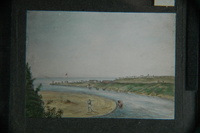 Entrance to East London Harbour on the Buffalo River.
 -
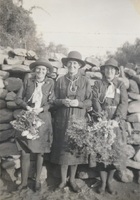 A photograph album compiled by Mary Butler, containing photographs of Wayfarers, Sunbeams and Pathfinders, mostly in Cradock. Two newspaper clippings and a handwritten concert programme included. There are three photographs of Rev. James Arthur Calata's young daughters, and he himself is included in two photographs. This photograph showing three European women Wafarer Officers carrying flower bouquet
 -
-
-
-
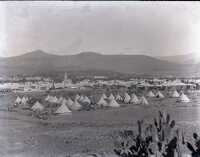 Glass negative : View showing the camp of First City Regiment with Cradock in the background, December 1899.
 -
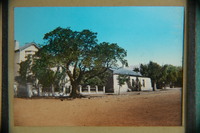 Photograph depicting first house in Grahamstown. Coral tree planted by Arnoldus Bernardus Dietz,High Street, Grahamstown.
 -
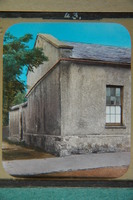 High Street, Grahamstown.
 -
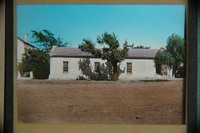 High Street, Grahamstown.
 -
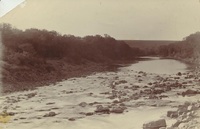
-
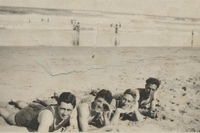 Photograph of four young men lying down on sand at the beach
 -
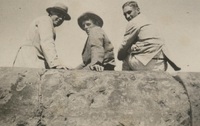 Photograph of three young men sitting on the pier
 -
-
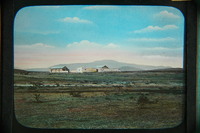 Named after Lt.-Col. RT Thomson of the Royal Engineers.
 -
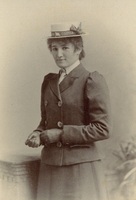 Frances Annie Evans (Workman) taken while at Wesleyan High School for Girls, Grahamstown.
 -
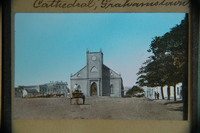 Shows the original square tower.
 -
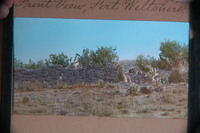 Fort Willshire was built by the Royal Engineers under Lieutenant Colonel Thomas Willshire of the 38th Regiment, on the orders of Lord Charles Somerset, in 1819.
 -
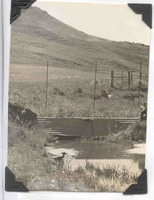 Hamerkop in a stream below Gaika's Kop.
 -
-