The Development of Settler Towns
Item set
- Alternative Title
- Eastern Cape Settler Towns Historical Collection
- Description
- The Development of Settler Towns is a major digitised archival collection from the Cory Library and Historical Archives at Rhodes University, forming part of The Frontier Collection. It brings together nearly 468 digitised resources documenting the historical emergence, expansion, and material culture of settler towns across the Eastern Cape, South Africa during the colonial and frontier period. The collection includes sub-sets on towns such as Alice, Bathurst, Bedford, Cathcart, Cradock, East London, Grahamstown, King William’s Town, Port Alfred, Port Elizabeth, Queenstown and others, illustrating a range of urban development patterns, community activities, built environments, maps, plans, and visual materials that reflect the social, economic, and geographic histories of these settlements. As an overarching thematic grouping within the Cory Library’s frontier history holdings, this item set supports comparative and place-based research into settler town origins, colonial infrastructure, demographic change, and regional interactions in the Eastern Cape.
- Language
- English
- Type
- Collection
- Spatial Coverage
- Eastern Cape, South Africa (multiple towns)
- Temporal Coverage
- Primarily 19th – early 20th century
- Format
- Digital images
- Maps
Items
-
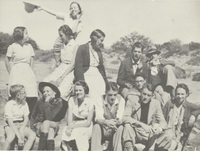
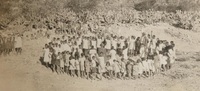 A photograph album compiled by Mary Butler, containing photographs of Wayfarers, Sunbeams and Pathfinders, mostly in Cradock. Two newspaper clippings and a handwritten concert programme included. There are three photographs of Rev. James Arthur Calata's young daughters, and he himself is included in two photographs. This photograph is showing a church group of young girls, Sunbeams playing games during camp, 1930
 -
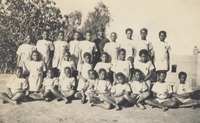 A photograph album compiled by Mary Butler, containing photographs of Wayfarers, Sunbeams and Pathfinders, mostly in Cradock. Two newspaper clippings and a handwritten concert programme included. There are three photographs of Rev. James Arthur Calata's young daughters, and he himself is included in two photographs. This photograph showing a church group of young girls, Sunbeams and Mrs Kwaza during St Andrews Day, 1930
 -
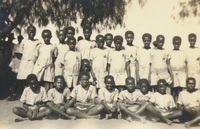 A photograph album compiled by Mary Butler, containing photographs of Wayfarers, Sunbeams and Pathfinders, mostly in Cradock. Two newspaper clippings and a handwritten concert programme included. There are three photographs of Rev. James Arthur Calata's young daughters, and he himself is included in two photographs. This photograph showing a church group of young girls, Sunbeams, during St Andrews Day, 1930
 -
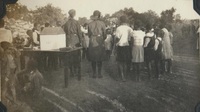 A photograph album compiled by Mary Butler, containing photographs of Wayfarers, Sunbeams and Pathfinders, mostly in Cradock. Two newspaper clippings and a handwritten concert programme included. There are three photographs of Rev. James Arthur Calata's young daughters, and he himself is included in two photographs. This photograph is showing a church group of children, Sunbeams, with their officers during St Andrews Day camp, 1930
 -
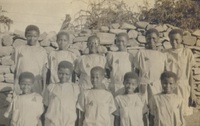 A photograph album compiled by Mary Butler, containing photographs of Wayfarers, Sunbeams and Pathfinders, mostly in Cradock. Two newspaper clippings and a handwritten concert programme included. There are three photographs of Rev. James Arthur Calata's young daughters, and he himself is included in two photographs. This photograph is showing a church group of young girls, Sunbeams during St Andrews Day, 1930
 -
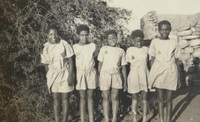 A photograph album compiled by Mary Butler, containing photographs of Wayfarers, Sunbeams and Pathfinders, mostly in Cradock. Two newspaper clippings and a handwritten concert programme included. There are three photographs of Rev. James Arthur Calata's young daughters, and he himself is included in two photographs. This photograph is showing a church group of young girls, Sunbeams during St Andrews Day, 1930
 -
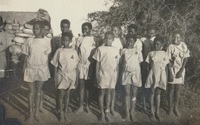 A photograph album compiled by Mary Butler, containing photographs of Wayfarers, Sunbeams and Pathfinders, mostly in Cradock. Two newspaper clippings and a handwritten concert programme included. There are three photographs of Rev. James Arthur Calata's young daughters, and he himself is included in two photographs. This photograph is showing a church group of young girls, Sunbeams during St Andrews Day, 1930
 -
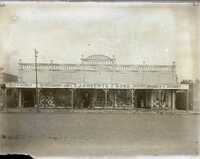 Glass negative : View showing the shop front of T. J. Roberts & Sons, general dealers and importers of drapery, opened in 1904. The negative is missing a small piece from the lower left corner.
 -
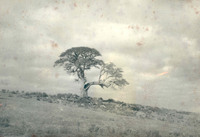 Old Coral tree, Erythrina caffra atop a ricky hill. Soon after the photo was taken the old tree collapsed from old age.
 -
-
-
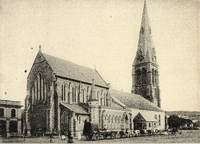 Cathedral in High Street, Grahamstown.,Gold Fields of South Africa Ltd. (donor)
 -
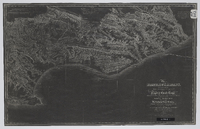 "Fine pasture country uninhabited and considered neutral ground".
 -
-
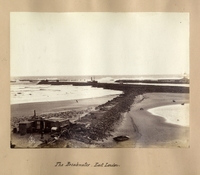
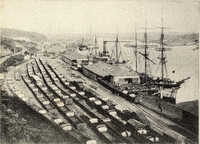 Harbour entrance, East London, South Africa. Showing ships and railway wagons.
 -
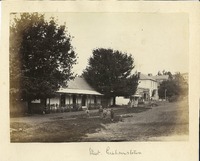 Although only inscribed 'Street. Grahamstown' on the mount, this is in fact a photograph of The Oaks, a cottage in Somerset Street, taken by Dr. W.G. Atherstone. It shows six little boys playing in the foreground, with Renfrew House to the extreme right.
 -
-
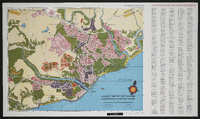 Tourist map of East London showing places of interest. Produced by the East London Publicity Association in conjunction with Shell South Africa (Pty) Limited. Compiled and drawn by B. L. Walton, October 1955.
 -
-
 Glass negative : View of the Town Guard shooting match with James Marburg, Easter 1900.
 -
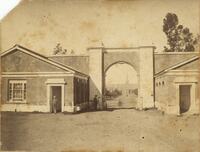 Photograph of two men in front of the Drostdy Arch, entrance to Rhodes University, in Grahamstown, South Africa. The Rhodes University clock tower is visible in the background.
 -
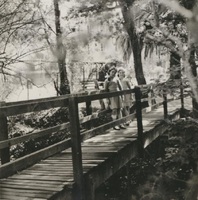 Photograph of two young girls (possibly Ann and Elizabeth Kerr) on a wooden bridge over Kowie Ditch in the Grahamstown Botanical Gardens,Leila Kerr (Linington) (Donor)
 -
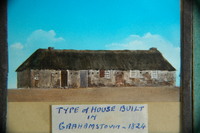 Old Guard House in High Street, Grahamstown. Part of Scott's Barracks. It was pulled down in 1824.
 -
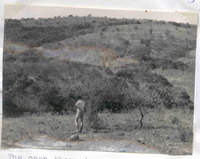 The open thorn-tree scattered hillside across the bushy valley contain the favourate Acacia karroo tree used successively for many years by Lesser Honeyguides as their call-site.
 -