Frontier Wars Collection
Item set
- Title
- Frontier Wars Collection
- Alternative Title
- The Frontier Wars
- Description
- The “The Frontier Wars” item set is a significant thematic collection within the Cory Library and Historical Archives’ digital holdings, documenting the series of conflicts along the Eastern Cape frontier between Indigenous Xhosa groups and colonial forces during the 18th and 19th centuries. These wars — often referred to as the Xhosa Wars in historical literature — were a defining feature of colonial expansion in southern Africa, significantly shaping the region's political, social, and geographic landscape. The collection brings together archival images, maps, and textual records that illuminate aspects of military engagements, frontier settlements, and the broader human experience of conflict on the Eastern Cape frontier.
- Date Issued
- Primarily 19th century (historical documentation dates)
- Language
- English
- Type
- Collection
- Subject
- South Africa--History--Frontier Wars, 1811-1878See all item sets with this value
- Eastern Cape -- History
- Colonial military history
- British--South Africa--History--19th centurySee all item sets with this value
- Xhosa People -- South Africa -- Eastern Cape -- History
- Format
- Digital images
- Digital manuscripts
- Spatial Coverage
- Eastern Cape, South Africa
- Cape Colony
- Temporal Coverage
- Late 18th–19th century frontier conflicts
Items
-
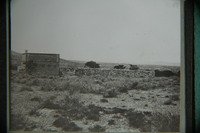 Showing the magazine and the remaining wall of the fort.
 -
-
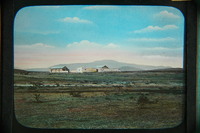 Named after Lt.-Col. RT Thomson of the Royal Engineers.
 -
-
-
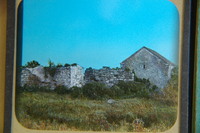
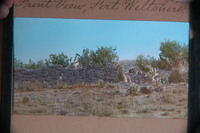 Fort Willshire was built by the Royal Engineers under Lieutenant Colonel Thomas Willshire of the 38th Regiment, on the orders of Lord Charles Somerset, in 1819.
 -
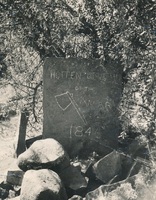 The gravestone is engraved: “Hottentot Victim of the [picture of an axe] war 1846”. On the back of the image is a note reading: “T Mackenzie Kingston House SMT”.
 -
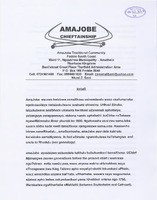 AmaJobe sisizwe kwizizwe zamaXhosa esinomlando waso osafumaneka ngokucacileyo kwisizukulwane seshumi elinesine. UNkosi Sinuka, isizukulwane sesibhozo ukusuka kwinkosi uZanemali ophetheyo, yabanguye owagqwesayo, ekhona kumlo ophakathi koCirha noTshawe ngaseMzimvubu River phambi ko 1600. Ngeloxesha esisizwe samaJobe sasele sikho kade kweli lamaXhosa njengesizwe samaJobe. Kwakukho izizwe zamaRhudulu , amaGqubusha, amaJobe asondele kakhulu kwisiduko samaNgwevu, in fact uSinuka ngumkhuluwa kaTshangisa and uncle to Rhudulu.,Historic record of AmaJobe community drafted by Chief Zanemali Bani.
 -
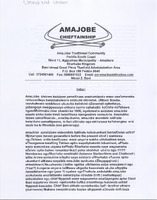 AmaJobe sisizwe kwizizwe zamaXhosa esinomlando waso osafumaneka ngokucacileyo kwisizukulwane seshumi elinesine. UNkosi Sinuka, isizukulwane sesibhozo ukusuka kwinkosi uZanemali ophetheyo, yabanguye owagqwesayo, ekhona kumlo ophakathi koCirha noTshawe ngaseMzimvubu River phambi ko 1600. Ngeloxesha esisizwe samaJobe sasele sikho kade kweli lamaXhosa njengesizwe samaJobe. Kwakukho izizwe zamaRhudulu , amaGqubusha, amaJobe asondele kakhulu kwisiduko samaNgwevu, in fact uSinuka ngumkhuluwa kaTshangisa and uncle to Rhudulu.,Historic record of AmaJobe community drafted by Chief Zanemali Bani.
 -
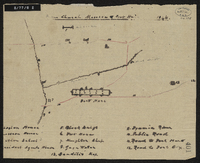
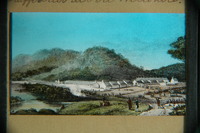 Fort Willshire was built by the Royal Engineers under Lieutenant Colonel Thomas Willshire of the 38th Regiment, on the orders of Lord Charles Somerset, in 1819.,From 1824 – 1830 weekly trade fairs were held at the Fort, where licensed British Settlers could trade in ivory, hides etc with Xhosa. At first cattle could not be traded, and trade in fire-arms and liquor was forbidden.
 -
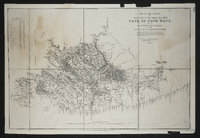 Lithographed by James Wyld, geographer to the Queen 457 Strand, 11 & 12 Charing Cross S.W. and 2 Royal Exchange E.C.,1849. Note: the position of the military posts are marked by a red circle, and the present colonial boundary is marked with a red tint. Copy of the original.
 -
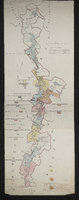 Map of the Great Fish River Irrigation Board. C.H. Hughes, circle engineer; A.D. Lewis, Director of Irrigation.
 -
-
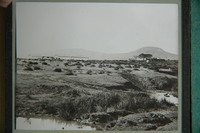
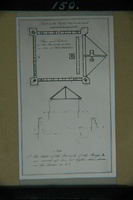 Fort Willshire was built by the Royal Engineers under Lieutenant Colonel Thomas Willshire of the 38th Regiment, on the orders of Lord Charles Somerset, in 1819.
 -
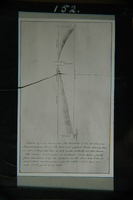 Fort Willshire was built by the Royal Engineers under Lieutenant Colonel Thomas Willshire of the 38th Regiment, on the orders of Lord Charles Somerset, in 1819.
 -
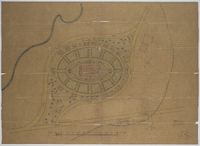
-
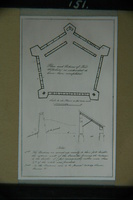 Fort Willshire was built by the Royal Engineers under Lieutenant Colonel Thomas Willshire of the 38th Regiment, on the orders of Lord Charles Somerset, in 1819.
 -
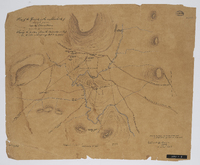
-
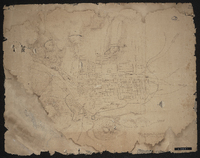 Plan shewing military defences of King Williams Town; [by] Geo. Newey.
 -
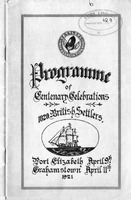 Programme of the centenary celebrations in commemoration of the arrival of the 1820 British settlers of Albany, to be held at Port Elizabeth on April 9th and at Grahamstown on April 11th 1921 : containing a descriptive guide to the motor route through the Eastern Province to be travelled by Major-General H R H Price Arthur of Connaught ..., Governor-General of the Union of South Africa, accompanied by H R H Princess Arthur of Connaught, at the close of the celebrations.
 -
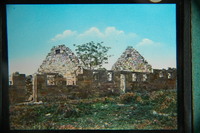 As a result of the annexation of the Province of Queen Adelaide in 1835, Governor D’Urban ordered the building of a series of new forts between the Keiskamma and Kei Rivers, Fort Murray being among them.
 -
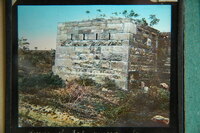 As a result of the annexation of the Province of Queen Adelaide in 1835, Governor D’Urban ordered the building of a series of new forts between the Keiskamma and Kei Rivers, Fort Murray being among them.
 -
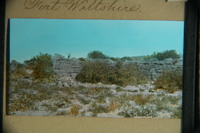 Fort Willshire was built by the Royal Engineers under Lieutenant Colonel Thomas Willshire of the 38th Regiment, on the orders of Lord Charles Somerset, in 1819.
 -
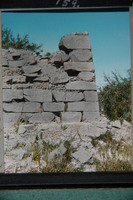 Fort Willshire was built by the Royal Engineers under Lieutenant Colonel Thomas Willshire of the 38th Regiment, on the orders of Lord Charles Somerset, in 1819.
 -