African Literary and Intellectual Works Collection
Item set
- Description
-
The Works by African Poets, Writers, and Intellectuals collection is a digitised archival grouping from the Cory Library and Historical Archives at Rhodes University, highlighting the literary, intellectual, and cultural contributions of African authors and thinkers preserved in the library’s holdings. Situated within the African Heritage Collections, this item set brings together materials that reflect creative expression, literary production, and intellectual discourse from prominent African poets, writers, and scholars.
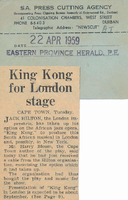
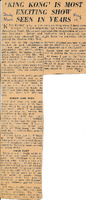
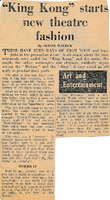
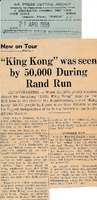
The collection encompasses sub-collections and individual item groups such as works and related archival material by authors including Henry Masila Ndawo, Malcolm Everitt Mlungiseleli Nyoka, pieces associated with the S.E.K. Mqhayi Collection, and materials linked to jazz-era cultural figure Todd Matshikiza (including parts of a King Kong thematic grouping). Collectively, these materials document a range of literary voices and intellectual traditions from the African continent, with a particular focus on South Africa, spanning poetry, prose, correspondence, manuscript materials, and related cultural artefacts. By foregrounding African creative and intellectual heritage, this collection supports research in literature, cultural studies, history, and African studies. - Type
- Collection
- Text
- Subject
- African literature
- African intellectuals
- Mqhayi, S.E.K.
- Matshikiza, Todd
- Ndawo, Henry Masila
- Nyoka, Mlungiseleli
- Literary heritage
- African heritage
- Spatial Coverage
- South Africa
- Temporal Coverage
- Primarily the 20th century (reflective of the authors and intellectuals represented)
- Format
- Digital images
- Manuscript scans
Items
-
-
-
-
-
 Autobiographical work of South African Samuel Edward Krune Mqhayi (S.E.K. Mqhayi), Xhosa poet, intellectual historian and author.
 -
-
This introductory text (Intshayelelo) to Incwadi yeBali neNtlalo yama-Mpondo, authored by Victor Poto Ndamase, articulates a deliberate intellectual and cultural project aimed at preserving the historical memory, social organisation, customs, and genealogies of the amaMpondo people. Written in isiMpondo, the introduction frames history (imbali) and social custom (intlalo) as essential safeguards against cultural erosion, moral disorientation, and uncritical assimilation of foreign practices. Ndamase emphasises the importance of documenting indigenous knowledge from within the community itself, arguing that written records enable comparison, discussion, and intergenerational transmission. Central to the work is the preservation of genealogies (imilibo), envisioned as a living “tree” whose branches connect present and future generations to their ancestral origins. Linguistic reflection further underscores the distinctiveness of isiMpondo in relation to isiXhosa, justifying the use of the former as the primary medium of narration. The introduction also situates the text within a broader emerging African-authored historiography, acknowledging parallel efforts by other Black intellectuals and stressing collaboration rather than competition in the pursuit of historical truth. Finally, the text documents the crucial role of informants—most notably Mangala—whose life history is carefully recorded as a guarantor of authority, continuity, and credibility. As such, Intshayelelo stands as both a methodological statement and a manifesto for indigenous historical writing in early twentieth-century Southern Africa.
-
-
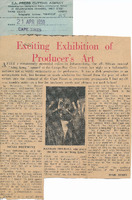
 Banned in South Africa by the Publications Control Board in 1964.
 -
-
This text presents a historical and ethnographic introduction to the origins, migrations, social organisation, and political leadership of the abaThembu and related Nguni-speaking peoples of southern Africa. Drawing on oral traditions, early European accounts, and later colonial-era writings, it traces the movement of the descendants of Ntu from north-eastern Africa through central and southern regions of the continent, culminating in the settlement and interaction of groups such as the abaThembu, amaXhosa, amaMpondo, amaMpondomise, amaBaca, amaXesibe, and others. Particular attention is given to the emergence of the name “Thembu” in early European records, descriptions of social customs, governance, and moral values, and the role of kings, chiefs, and councillors in maintaining order and tradition. The narrative further engages critically with historical testimonies by explorers, missionaries, colonial officials, and indigenous informants, including accounts associated with Dr. George McCall Theal, Simon van der Stel, Somtsewu (Sir Theophilus Shepstone), and others. By comparing these written sources with African oral histories, the work seeks to reconstruct genealogies of chiefly lineages and to clarify the relationships among major royal houses, particularly those descending from Zwide. While acknowledging unresolved debates concerning early ancestral links between Zwide, the Zulu, and Ntu, the text aims to lay a foundation for further scholarly inquiry into Nguni history, migration, and kingship, and to encourage deeper investigation into areas where historical evidence remains contested or incomplete.
-
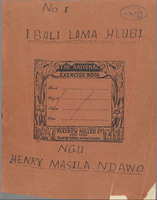 Author's original handwritten text of Ibali lamaHlubi. The book was written in school-type exercise books.
 -
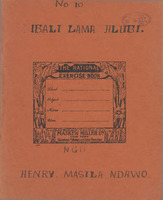 Author's original handwritten text of Ibali lamaHlubi. The book was written in school-type exercise books.
 -
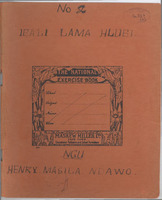 Author's original handwritten text of Ibali lamaHlubi. The book was written in school-type exercise books.
 -
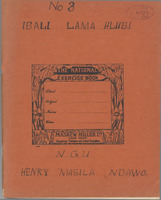 Author's original handwritten text of Ibali lamaHlubi. The book was written in school-type exercise books.
 -
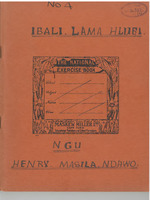 Author's original handwritten text of Ibali lamaHlubi. The book was written in school-type exercise books.
 -
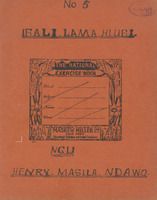 Author's original handwritten text of Ibali lamaHlubi. The book was written in school-type exercise books.
 -
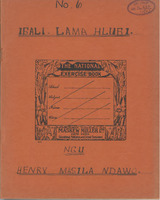 Author's original handwritten text of Ibali lamaHlubi. The book was written in school-type exercise books.
 -
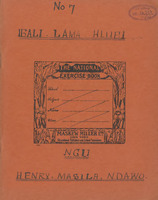 Author's original handwritten text of Ibali lamaHlubi. The book was written in school-type exercise books.
 -
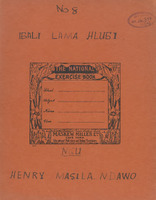 Author's original handwritten text of Ibali lamaHlubi. The book was written in school-type exercise books.
 -
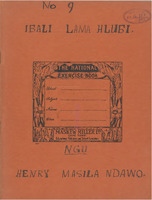 Author's original handwritten text of Ibali lamaHlubi. The book was written in school-type exercise books.
 -
This book brings together a series of Xhosa studies focused on four interrelated areas: the annual Ntsikana commemorations observed in the Cape Province; the clan names of the Xhosa people; the praise names associated with these clans; and a historical account of the Intlangwini tribes of South Africa. The studies are the outcome of more than thirty-five years of intermittent research and are published here for the first time. By documenting and analysing these cultural, historical, and linguistic traditions, the book seeks to preserve knowledge that has been insufficiently explored and is at risk of neglect by the present generation. The work draws on, and acknowledges, key scholarly contributions, including Dr R. H. W. Shepherd’s article on Ntsikana, which provides essential historical context, and Mr C. A. W. Sigila’s study of the Fingo celebrations. Overall, the volume aims to stimulate further research into Xhosa history, identity, and oral tradition, and to encourage renewed scholarly engagement with related, under-researched topics.
-
-
-