African Heritage Collections
Item set
- Description
- The African Heritage Collections preserve and celebrate Africa’s rich historical and cultural legacy. The collections bring together genealogies of clans, tribes, and nations; images of Africans, including chiefs, kings, and rulers; and creative works by African poets and writers. They offer valuable insights into African leadership, lineage, and artistic expression, and support learning, teaching, and research into Africa’s past and present.
- Language
- English
- Xhosa
- Type
- Collection
- Genre
- Family histories
- Photographs
- Manuscripts
- Genealogical tables
- Literature
Items
-
-
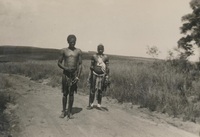 Photo of two Zulu men on road near KwaMagwaza, 1934.
 -
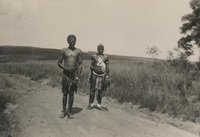 Photo of two Zulu men on road near KwaMagwaza, 1934.
 -
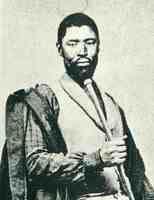 Image of Chief Mgolombane Sandile
 -
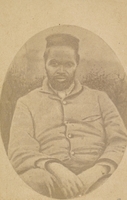 Original title "Mqikela (Pondo paramount chief)"
 -
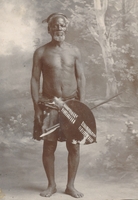 Note on back reads: “This is a photograph of Ndogeni, the Zulu who accompanied Dick King on his famous ride in 1842. The Boers at this time laid claim to Port Natal. It was, however, because England was determined to protect the rights of her subjects that Capt. Smith and a couple of hundred men were forthwith sent to Durban. On the 25th of May (same year), the situation having become extremely critical, it was imperative to send for help and over a distance of not less than 500 miles of the wildest country. Dick King volunteered at once for this service. As Ndogeni, then 15 or 16 years of age, was his servant and knew how to ride, King selected him as his companion, other persons, for some reason or another, being unavailable. Ndogeni was not, at the outset, told the true objective of the journey, no doubt on account of his youth as well as his nationality. The two were rowed across the Bay in a boat at night by George and Joseph Cato, their two horses being swum at the stern. Ndogeni accompanied King for nearly 250 miles and over what was undoubtedly the most perilous part of the journey. He would have gone further, only, owing to an omission, he became incapacitated because obliged to ride this great distance without stirrups. He proved of considerable assistance to his master, indeed it is not too much to say that without some such help as he was able to afford, the mission might not have been quite as successful as it was. Natal was saved. It is partly because his account of the journey throws fresh lustre on King’s magnificent achievement, that Ndogeni’s narrative has been specially translated, and the accompanying photograph taken.”
 -
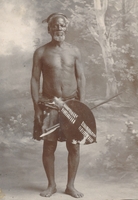 Note on back reads: “This is a photograph of Ndogeni, the Zulu who accompanied Dick King on his famous ride in 1842. The Boers at this time laid claim to Port Natal. It was, however, because England was determined to protect the rights of her subjects that Capt. Smith and a couple of hundred men were forthwith sent to Durban. On the 25th of May (same year), the situation having become extremely critical, it was imperative to send for help and over a distance of not less than 500 miles of the wildest country. Dick King volunteered at once for this service. As Ndogeni, then 15 or 16 years of age, was his servant and knew how to ride, King selected him as his companion, other persons, for some reason or another, being unavailable. Ndogeni was not, at the outset, told the true objective of the journey, no doubt on account of his youth as well as his nationality. The two were rowed across the Bay in a boat at night by George and Joseph Cato, their two horses being swum at the stern. Ndogeni accompanied King for nearly 250 miles and over what was undoubtedly the most perilous part of the journey. He would have gone further, only, owing to an omission, he became incapacitated because obliged to ride this great distance without stirrups. He proved of considerable assistance to his master, indeed it is not too much to say that without some such help as he was able to afford, the mission might not have been quite as successful as it was. Natal was saved. It is partly because his account of the journey throws fresh lustre on King’s magnificent achievement, that Ndogeni’s narrative has been specially translated, and the accompanying photograph taken.”
 -
-
From the Preface: This volume presents a critically compiled and historically grounded narrative of Ntsikana, widely regarded as one of the earliest African Christian converts and hymn composers among the amaXhosa. Prepared originally in 1878–79 and revised for publication in 1914, the work represents the first sustained attempt to render Ntsikana’s life and religious influence into a coherent English narrative. The account is based on a triangulation of sources, including oral testimony from elders who personally knew Ntsikana or his family, family memory preserved through the author’s grandparents, early missionary periodicals, and archival documents. Central among the written sources are articles published in Isigidimi Samaxosa (1875–1888) and the rediscovered 1845 issues of Ikwezi, the earliest Kafir–English missionary periodical, printed at the Chumie Mission Press. The volume also preserves four hymns attributed to Ntsikana, transmitted through oral tradition and here recorded with both words and melodies, underscoring his role in the indigenisation of Christian worship in southern Africa. Supplementary appendices include contemporaneous writings by Ntsikana’s close companions—later known as Charles Henry (Matshaya) and Robert Balfour (Noyi)—as well as extracts from Charles Brownlee’s authoritative nineteenth-century reflections on Xhosa society. Together, these materials situate Ntsikana within the broader historical context of early missionary encounter, African religious agency, and the beginnings of Christianity among the amaXhosa. The work argues for the essential reliability of the narrative, noting that subsequent references and critiques have largely confirmed, rather than contradicted, its central claims.
-
-
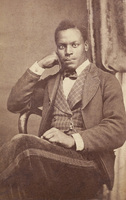 A sepia-toned studio portrait of Paul Ngxamngxa, who is seated and leaning his head on his right hand. Lovedale College would have taken advantage of the University's African language examinations; Ngxamngxa earned a Lovedale qualification in 1880.
 -
-
-
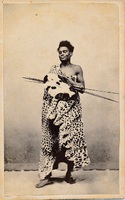 Full-length portrait of a young man dressed in a leopard skin kaross, carrying a small ornamented ox-hide shield, assegais and a kierie. The portrait is annotated in pencil, "Prince Kekolokowina in full dress".
 -
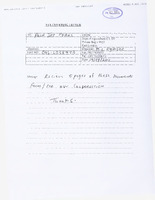 History and genealogy of the AmaCirha clan, as recorded in the Great House of the clan, tracing its origins from the AmaXhosa nation.
 -
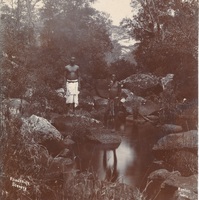
-
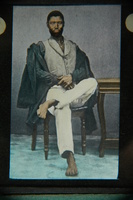 Original title "Chief Sandilli".
 -
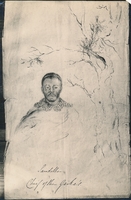 Original title "Drawing of Sandile, Chief of the Gaika's"
 -
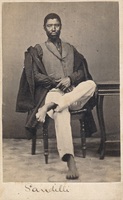 Sandile, attired formally in long white pants, dark coat, grey waistcoat and dark button shirt. Original title "Full-length portrait of Sandile, Xhosa Chief, in western dress".,Gold Fields of South Africa Ltd. (donor)
 -
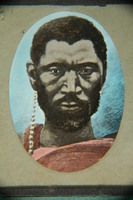 Originally titled "Chief Sandilli".
 -
-
-
-
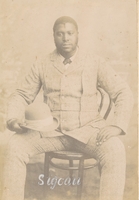 Photograph of Sigcau, Pondo chief.
 -
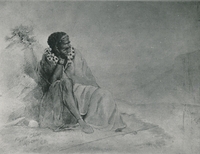 Sketch of chief Maqoma, of the amaXhosa.