African Heritage Collections
Item set
- Description
- The African Heritage Collections preserve and celebrate Africa’s rich historical and cultural legacy. The collections bring together genealogies of clans, tribes, and nations; images of Africans, including chiefs, kings, and rulers; and creative works by African poets and writers. They offer valuable insights into African leadership, lineage, and artistic expression, and support learning, teaching, and research into Africa’s past and present.
- Language
- English
- Xhosa
- Type
- Collection
- Genre
- Family histories
- Photographs
- Manuscripts
- Genealogical tables
- Literature
Items
-
-
This text presents a historical and ethnographic introduction to the origins, migrations, social organisation, and political leadership of the abaThembu and related Nguni-speaking peoples of southern Africa. Drawing on oral traditions, early European accounts, and later colonial-era writings, it traces the movement of the descendants of Ntu from north-eastern Africa through central and southern regions of the continent, culminating in the settlement and interaction of groups such as the abaThembu, amaXhosa, amaMpondo, amaMpondomise, amaBaca, amaXesibe, and others. Particular attention is given to the emergence of the name “Thembu” in early European records, descriptions of social customs, governance, and moral values, and the role of kings, chiefs, and councillors in maintaining order and tradition. The narrative further engages critically with historical testimonies by explorers, missionaries, colonial officials, and indigenous informants, including accounts associated with Dr. George McCall Theal, Simon van der Stel, Somtsewu (Sir Theophilus Shepstone), and others. By comparing these written sources with African oral histories, the work seeks to reconstruct genealogies of chiefly lineages and to clarify the relationships among major royal houses, particularly those descending from Zwide. While acknowledging unresolved debates concerning early ancestral links between Zwide, the Zulu, and Ntu, the text aims to lay a foundation for further scholarly inquiry into Nguni history, migration, and kingship, and to encourage deeper investigation into areas where historical evidence remains contested or incomplete.
-
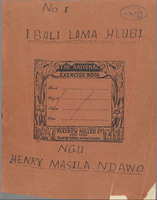 Author's original handwritten text of Ibali lamaHlubi. The book was written in school-type exercise books.
 -
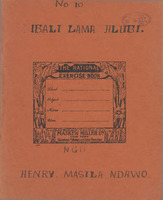 Author's original handwritten text of Ibali lamaHlubi. The book was written in school-type exercise books.
 -
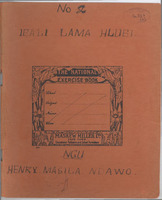 Author's original handwritten text of Ibali lamaHlubi. The book was written in school-type exercise books.
 -
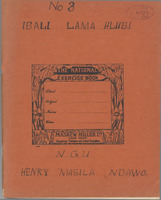 Author's original handwritten text of Ibali lamaHlubi. The book was written in school-type exercise books.
 -
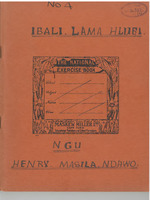 Author's original handwritten text of Ibali lamaHlubi. The book was written in school-type exercise books.
 -
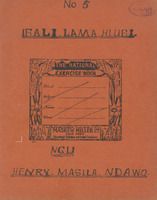 Author's original handwritten text of Ibali lamaHlubi. The book was written in school-type exercise books.
 -
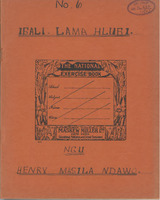 Author's original handwritten text of Ibali lamaHlubi. The book was written in school-type exercise books.
 -
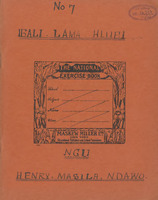 Author's original handwritten text of Ibali lamaHlubi. The book was written in school-type exercise books.
 -
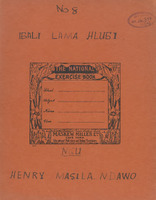 Author's original handwritten text of Ibali lamaHlubi. The book was written in school-type exercise books.
 -
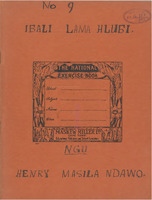 Author's original handwritten text of Ibali lamaHlubi. The book was written in school-type exercise books.
 -
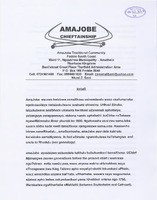 AmaJobe sisizwe kwizizwe zamaXhosa esinomlando waso osafumaneka ngokucacileyo kwisizukulwane seshumi elinesine. UNkosi Sinuka, isizukulwane sesibhozo ukusuka kwinkosi uZanemali ophetheyo, yabanguye owagqwesayo, ekhona kumlo ophakathi koCirha noTshawe ngaseMzimvubu River phambi ko 1600. Ngeloxesha esisizwe samaJobe sasele sikho kade kweli lamaXhosa njengesizwe samaJobe. Kwakukho izizwe zamaRhudulu , amaGqubusha, amaJobe asondele kakhulu kwisiduko samaNgwevu, in fact uSinuka ngumkhuluwa kaTshangisa and uncle to Rhudulu.,Historic record of AmaJobe community drafted by Chief Zanemali Bani.
 -
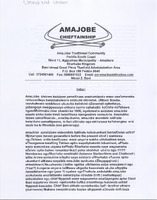 AmaJobe sisizwe kwizizwe zamaXhosa esinomlando waso osafumaneka ngokucacileyo kwisizukulwane seshumi elinesine. UNkosi Sinuka, isizukulwane sesibhozo ukusuka kwinkosi uZanemali ophetheyo, yabanguye owagqwesayo, ekhona kumlo ophakathi koCirha noTshawe ngaseMzimvubu River phambi ko 1600. Ngeloxesha esisizwe samaJobe sasele sikho kade kweli lamaXhosa njengesizwe samaJobe. Kwakukho izizwe zamaRhudulu , amaGqubusha, amaJobe asondele kakhulu kwisiduko samaNgwevu, in fact uSinuka ngumkhuluwa kaTshangisa and uncle to Rhudulu.,Historic record of AmaJobe community drafted by Chief Zanemali Bani.
 -
This book brings together a series of Xhosa studies focused on four interrelated areas: the annual Ntsikana commemorations observed in the Cape Province; the clan names of the Xhosa people; the praise names associated with these clans; and a historical account of the Intlangwini tribes of South Africa. The studies are the outcome of more than thirty-five years of intermittent research and are published here for the first time. By documenting and analysing these cultural, historical, and linguistic traditions, the book seeks to preserve knowledge that has been insufficiently explored and is at risk of neglect by the present generation. The work draws on, and acknowledges, key scholarly contributions, including Dr R. H. W. Shepherd’s article on Ntsikana, which provides essential historical context, and Mr C. A. W. Sigila’s study of the Fingo celebrations. Overall, the volume aims to stimulate further research into Xhosa history, identity, and oral tradition, and to encourage renewed scholarly engagement with related, under-researched topics.
-
-

-
-
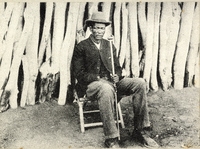 Originally titled "Chief Khama of the Batlapins, well known for his friendship with Livingstone also his Temperance principles."
 -
-
-
-
-
-
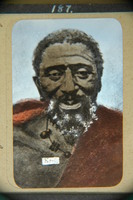 Originally titled "Chief Kreli, son of Hintza. Paramount Chief of all Xhosas". Chief Kreli, also known as King Sarili ka Hintsa, was the 5th chief of the Gcaleka sub-group of the Xhosa people of South Africa, as well as bieng the paramount chief of the Xhosa people. Chief Kreli wsa the oldest son of King Hintsa and Hintsa's first wife, Nomsa kaGambushe.