Apartheid, the Struggle and the People
Item set
- Description
- The Apartheid, the Struggle, and the People collection is a multifaceted archival assemblage at the Cory Library that documents the lived experience of systemic oppression and the organized resistance movements within the Eastern Cape. Unlike official state records, this collection prioritizes the voices of the marginalized, featuring a wealth of "ephemeral" history—pamphlets, underground newsletters, and personal testimonies.
- Language
- English
- Temporal Coverage
- 1948 – 1994 (with some background material from the 1920s)
Items
-
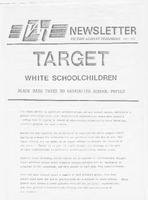 Excerpt: "The organisation by political pressure groups amongst school pupils, particularly groups with close links with revolutionary organisations which have played a leading role in trying to create an ungovernable situation in black townships, provides grounds for real concern. Whilst one may question the morality of an organisation which targets school pupils as a means for achieving its own political ends one may be sure that these efforts are not meant as an honest attempt to broaden the thinking of the youth. Rather it is part of a well thought out strategy on the part of such organisationaddElement(0, 'physicalDescription'); hidemenu()s to politicise school pupils along radical lines."
 -
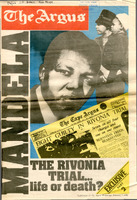 A retrospective report published in February 1990 reflecting on the commencement of the Rivonia Trial on October 9, 1963. The article highlights the social climate of the time, contrasting the trial of the "Rivonia 11" with the front-page news of Cape Town singer Danny Williams marrying a white woman in London—an act then criminalised in South Africa under the Prohibition of Mixed Marriages Act. It notes the archaic racial terminology used in 1963 press reports ("Natives") and the specific charges of sabotage and communism.
 -
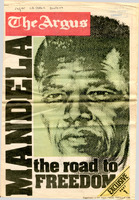 The inaugural installment of a four-part exclusive series by staff writer Dennis Cruywagen. Prepared over several months, the supplement reconstructs over 25 years of Nelson Mandela's life and the history of the ANC. The piece includes firsthand interviews with Rivonia Trial veterans, the Mandela family (including an impromptu interview with Winnie Mandela in a Johannesburg traffic jam), and various legal and political experts. It aims to provide an overview of the political drama and personal poignancy of Mandela’s life-term imprisonment.
 -
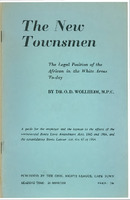 This study of urban African legislation is prompted by the widespread public interest in the controversial Bantu Laws Amendment Acts — now in force as the Bantu Labour Act, No. 67 of 1964. It will seek to give a picture of the purpose and effect of this legislation.
 -
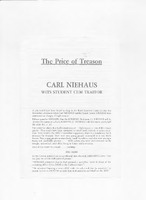 Pamphlet outlining the crime of treason, and sentencing of Carl Niehaus (and his then fiancé Johanna Lourens) in 1983.
 -
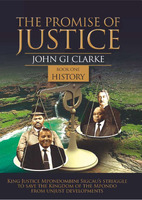 "In 1894 with troops massing on the border and Maxim guns taking aim, Cape Prime Minister Cecil Rhodes forced the King of Mpondo iKumkani Mqikela ka Sigcau to finally submit to Colonial rule. A year later, intoxicated by power, Rhodes arbitrarily imprisoned King Mqikela. This when President Jacob Zuma deposed his descendant iKumkani Mpondombini Justice Sigcau as King of Mpondo in 2010, the ghost of Cecil John Rhodes hovered fatefully over the court battle that unfolded over the next three years. When the Constitutional Court handed down judgement seven weeks later the Promise of Justice was fulfilled."
 -
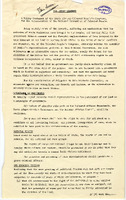 A Policy Statement of the South African Coloured People's Congress, for the consideration of the National Convention of Coloured People.
 -
 This item consists of the formal indictment issued by the Attorney-General of the Transvaal Province against Abram Fischer, charging him with multiple offences including sabotage under the General Law Amendment Act (Act No. 76 of 1962), contraventions of the Suppression of Communism Act (Act No. 44 of 1950, as amended), and charges of fraud, forgery, and uttering under South African statutory law. The document forms part of the prosecution record in one of the most significant political trials of the apartheid era, reflecting the use of security legislation against anti-apartheid activists and legal practitioners.
 -
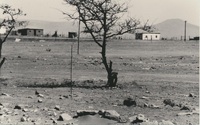 A series of twenty photographs showing scenes of houses (new and old) and landscape of the Oxton and Zweledinga areas of resettlement under the forced removals policy, 1980. Most of the community settled here had voluntarily left Glen Grey and Herschel in 1976, to avoid incorporation into the Transkei homeland, only to be incorporated, at a later date, into Ciskei instead.These photographs were taken by Priscilla Hall.
 -
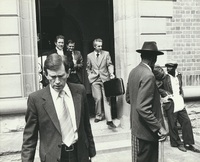 A series of photographs taken at the time of the Klipfontein evictions, the resultant trial at the Supreme Court Grahamstown, and the eventual settlement of those evicted in the Glenmore resettlement location, showing some of the residents involved, officials, members of the press, as well as aerial and on site views of Glenmore. Photographers: Dave Forbes, Ben Maclennan, Evert Smith, and an unknown photographer. This photograph shows Mr Louis Koch leaves the supreme court in Grahamstown after the setting aside of Mr Van der Watt's eviction order. Behind Mr Koch, from left: Advocate van Rensburg, Mr Dennis Bush, Mr van der Watt (top)
 -
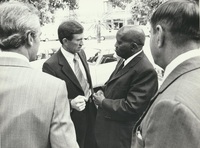 A series of photographs taken at the time of the Klipfontein evictions, the resultant trial at the Supreme Court Grahamstown, and the eventual settlement of those evicted in the Glenmore resettlement location, showing some of the residents involved, officials, members of the press, as well as aerial and on site views of Glenmore. Photographers: Dave Forbes, Ben Maclennan, Evert Smith, and an unknown photographer. This photograph shows Mr van der Watt's back view, Louis Koch, Mr B.B. Zondani and Dennis Bush's back view. The photograph was taken outside court building during the Klipfontein Forced Removal trial in Grahamstown
 -
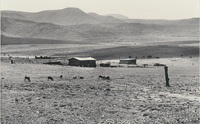 A series of twenty photographs showing scenes of houses (new and old) and landscape of the Oxton and Zweledinga areas of resettlement under the forced removals policy, 1980. Most of the community settled here had voluntarily left Glen Grey and Herschel in 1976, to avoid incorporation into the Transkei homeland, only to be incorporated, at a later date, into Ciskei instead. These photographs were taken by Priscilla Hall.
 -
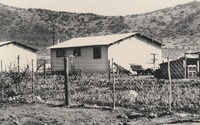 A series of twenty photographs showing scenes of houses (new and old) and landscape of the Oxton and Zweledinga areas of resettlement under the forced removals policy, 1980. Most of the community settled here had voluntarily left Glen Grey and Herschel in 1976, to avoid incorporation into the Transkei homeland, only to be incorporated, at a later date, into Ciskei instead. These photographs were taken by Priscilla Hall.
 -
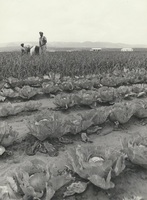 A series of photographs showing views of forced removal of communities from Klipfontein farm, near Kenton-on-sea, and other areas, to Glenmore in 1979. These photographs were accumulated by Ben Maclennan when he worked as a journalist for Eastern Province Herald, covering the move, and when he wrote the book "Glenmore : the story of a forced removal. This photograph showing cabbages and onions grown by one of the 12 commercial farmers at Tyefu. Tyefu Agricultural Scheme was a showpiece agricultural scheme run by the Ciskei administration in the impoverished tribal land south of Glenmore. Begun in November 1976, it was open to only a small number of selected farmers, all of whom had already been allocated plots
 -
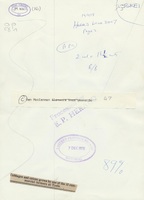 A series of photographs showing views of forced removal of communities from Klipfontein farm, near Kenton-on-sea, and other areas, to Glenmore in 1979. These photographs were accumulated by Ben Maclennan when he worked as a journalist for Eastern Province Herald, covering the move, and when he wrote the book "Glenmore : the story of a forced removal. This photograph showing a transcript "Cabbages and onions grown by one of the 12 commercial farmers at Tyefu". Tyefu Agricultural Scheme was a showpiece agricultural scheme run by the Ciskei administration in the impoverished tribal land south of Glenmore. Begun in November 1976, it was open to only a small number of selected farmers, all of whom had already been allocated plots
 -
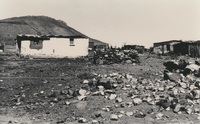 A series of twenty photographs showing scenes of houses (new and old) and landscape of the Oxton and Zweledinga areas of resettlement under the forced removals policy, 1980. Most of the community settled here had voluntarily left Glen Grey and Herschel in 1976, to avoid incorporation into the Transkei homeland, only to be incorporated, at a later date, into Ciskei instead. These photographs were taken by Priscilla Hall.
 -
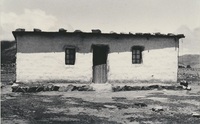 A series of twenty photographs showing scenes of houses (new and old) and landscape of the Oxton and Zweledinga areas of resettlement under the forced removals policy, 1980. Most of the community settled here had voluntarily left Glen Grey and Herschel in 1976, to avoid incorporation into the Transkei homeland, only to be incorporated, at a later date, into Ciskei instead. These photographs were taken by Priscilla Hall.
 -
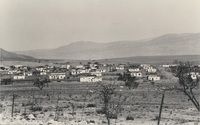 A series of twenty photographs showing scenes of houses (new and old) and landscape of the Oxton and Zweledinga areas of resettlement under the forced removals policy, 1980. Most of the community settled here had voluntarily left Glen Grey and Herschel in 1976, to avoid incorporation into the Transkei homeland, only to be incorporated, at a later date, into Ciskei instead.These photographs were taken by Priscilla Hall.
 -
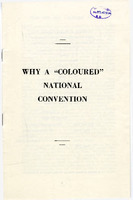 We would like to stress at the outset that we are not organising this Convention in order to “gang up” with persons of other race-groups against others. Some people say that we should have nothing to do with Africans, because we have nothing in common with them. This is utter folly. We could mention several important factors which we do have in common with them. There is our common humanity, there is our common South Africanism, there is a great deal of common discrimination under South African laws, and there is, in regard to a great and growing number of Africans, a common Western view of life. We would like to see developed a wider South Africanism, capable of embracing all the peoples of this country, whatever their race, colour or creed. Let nobody say that because we are organising a Convention as a Coloured group, we are recognising and accepting the fact that we are a separate groun, or that we wish to be so regarded in the laws of the land. We repeat that we are a separate group by exclusion, by discrimination, by virtue of laws which we regard as wrong. And it is to destroy this false, separate identity that we are dedicating ourselves in this Convention.
 -
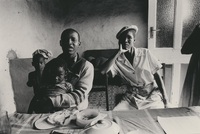 A series of photographs showing views of forced removal of communities from Klipfontein farm, near Kenton-on-sea, and other areas, to Glenmore in 1979. These photographs were accumulated by Ben Maclennan when he worked as a journalist for Eastern Province Herald, covering the move, and when he wrote the book "Glenmore : the story of a forced removal. This photograph showing Mr William Myali, his wife Nomtinam [Nontinam] and two children. One of the children is their daughter Pamela, held by Mr Myali