The Frontier Collections
Item set
- Title
- The Frontier Collections
- Description
-
The Frontier Collections are a curated collection of archival materials that document the turbulent and formative era of the Eastern Cape frontier. Spanning the late 18th to the early 20th century, these collections provide a multi-perspective view of the Frontier Wars (Xhosa Wars), the establishment of colonial administration, and the subsequent growth of settler infrastructure.
The collection is particularly noted for its focus on the "Frontier Country"—the region surrounding Makhanda (Grahamstown)—detailing the interplay between British settlers, Boer trekkers, and the Xhosa kingdoms. - Language
- English
- isiXhosa
- Type
- Collection
- Subject
- Frontier Wars
- 1820 Settlers
- Military History
- Colonial Architecture
- Xhosa History
- Urban Development
- Spatial Coverage
- Eastern Cape, South Africa (formerly the Cape Colony frontier)
- Temporal Coverage
- c. 1779 – 1910
- Format
- Manuscripts
- Lantern slides
- Cartographic materials
Items
-
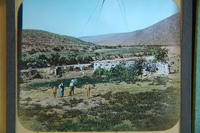 Two children and three men appear in the foreground, possibly including Sir George Cory.
 -
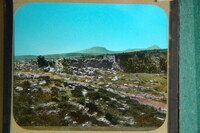 Fort Armstrong (originally known as Camp Adelaide) was built in 1836 to protect the Kat River Settlement. After suffering capture and bombardment in the 8th Frontier war (1851), it was never used again.
 -
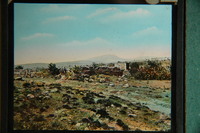 Fort Armstrong (originally known as Camp Adelaide) was built in 1836 to protect the Kat River Settlement. After suffering capture and bombardment in the 8th Frontier war (1851), it was never used again.
 -
-
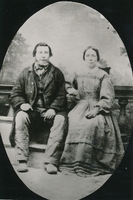
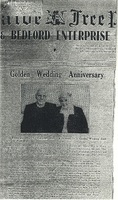 Samuel and Frances Workman featured in a newspaper article "Golden Wedding Anniversary", The Bedford Enterprise (newspaper), September 15, 1952.
 -
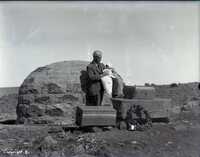 Glass negative : View of Samuel Cronwright-Schreiner holding baby Maria Cronwright van Dijk in front of the sarcophagus on Buffelskop, 13 August 1921. The coffins of Olive Schreiner, her baby and her dog Nita, are visible. The negative is marked "Copyright. 5".
 -
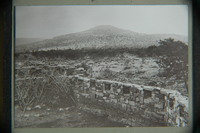
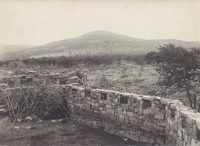 Photography of Sandile's Kop near Alice, Eastern Cape.
 -
-
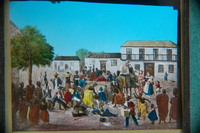 This painting by Frederick I’Ons is sometimes called ‘The Pump scene’, and shows the well which used to be sited at the junction of High and Bathurst Street – not Market Square as mentioned in the title. The double storey building in the background made way for the Commemoration Church in later years.
 -
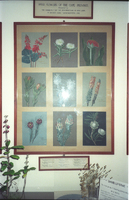 Display Sister Jeannie's flower paintings in foyer. A gift from Sisters of the Community of the Resurrection, per kind favour, the Curator, Tony Dold. (the white spot is a light reflection).
 -
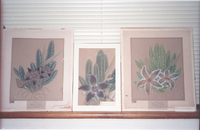 Three examples of Mary Elizabeth Barber's flower paintings. All stapelias. By kind permission the Curator, Mr. T. Dold
 -
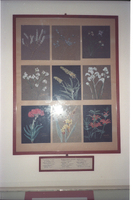 Display Sister Jeannie's flower paintings in foyer. A gift from Sisters of the Community of the Resurrection, per kind favour, the Curator, Tony Dold. (the white spot is a light reflection).
 -
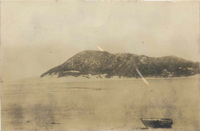 Vegetated dune-hill showing mature vegetation there in 1926 before Kenton-on-Sea was built up. Taken by C.J.Skead in 1926 when a schoolboy at St. Andrews College. He and a party of friends walked stark naked from here along the beach to Bushman's River Mount without fear of being seen by a soul.
 -
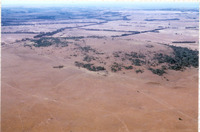 Surrounded by Bathurst suurveld. Taken from western side.
 -
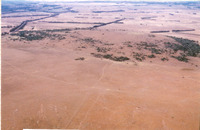 Surrounded by Bathurst suurveld. Taken from north facing towards the coast.
 -
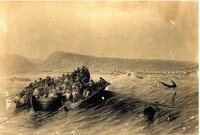
-
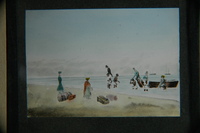
-
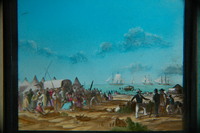
-
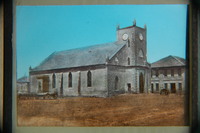 North west view of St. George’s Church in circa 1865.
 -
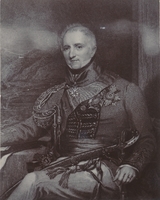 Portrait of Sir Rufane Donkin, governor of the Cape Colony from 1820-1921.
 -
-
-
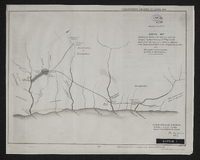 Ordered by the House of Commons to be printed 12th July 1837.
 -
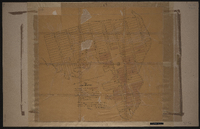 Sketch of Fort Beaufort; approved by J. Hare and Chas. Bell A.S.G. ; no scale
 -
 Signed by Charles Bell (Assistant Surveyor General.