The Frontier Collections
Item set
- Title
- The Frontier Collections
- Description
-
The Frontier Collections are a curated collection of archival materials that document the turbulent and formative era of the Eastern Cape frontier. Spanning the late 18th to the early 20th century, these collections provide a multi-perspective view of the Frontier Wars (Xhosa Wars), the establishment of colonial administration, and the subsequent growth of settler infrastructure.
The collection is particularly noted for its focus on the "Frontier Country"—the region surrounding Makhanda (Grahamstown)—detailing the interplay between British settlers, Boer trekkers, and the Xhosa kingdoms. - Language
- English
- isiXhosa
- Type
- Collection
- Subject
- Frontier Wars
- 1820 Settlers
- Military History
- Colonial Architecture
- Xhosa History
- Urban Development
- Spatial Coverage
- Eastern Cape, South Africa (formerly the Cape Colony frontier)
- Temporal Coverage
- c. 1779 – 1910
- Format
- Manuscripts
- Lantern slides
- Cartographic materials
Items
-
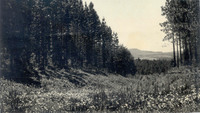 Spread of Zantedeschia aethiopica in damp hollow between pine plantations. Buttresses of southern Hogsback peak in distance.
 -
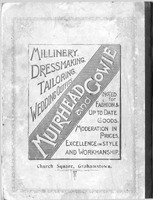 This publication, dated 1899, serves as souvenir publication of the industrial and arts exhibition held at Grahamstown, Cape Colony, between December 1898 and January 1899.
 -
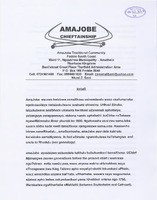 AmaJobe sisizwe kwizizwe zamaXhosa esinomlando waso osafumaneka ngokucacileyo kwisizukulwane seshumi elinesine. UNkosi Sinuka, isizukulwane sesibhozo ukusuka kwinkosi uZanemali ophetheyo, yabanguye owagqwesayo, ekhona kumlo ophakathi koCirha noTshawe ngaseMzimvubu River phambi ko 1600. Ngeloxesha esisizwe samaJobe sasele sikho kade kweli lamaXhosa njengesizwe samaJobe. Kwakukho izizwe zamaRhudulu , amaGqubusha, amaJobe asondele kakhulu kwisiduko samaNgwevu, in fact uSinuka ngumkhuluwa kaTshangisa and uncle to Rhudulu.,Historic record of AmaJobe community drafted by Chief Zanemali Bani.
 -
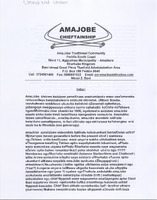 AmaJobe sisizwe kwizizwe zamaXhosa esinomlando waso osafumaneka ngokucacileyo kwisizukulwane seshumi elinesine. UNkosi Sinuka, isizukulwane sesibhozo ukusuka kwinkosi uZanemali ophetheyo, yabanguye owagqwesayo, ekhona kumlo ophakathi koCirha noTshawe ngaseMzimvubu River phambi ko 1600. Ngeloxesha esisizwe samaJobe sasele sikho kade kweli lamaXhosa njengesizwe samaJobe. Kwakukho izizwe zamaRhudulu , amaGqubusha, amaJobe asondele kakhulu kwisiduko samaNgwevu, in fact uSinuka ngumkhuluwa kaTshangisa and uncle to Rhudulu.,Historic record of AmaJobe community drafted by Chief Zanemali Bani.
 -
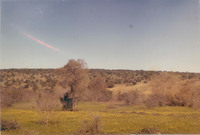 Field of forbs (Asteracae), scattered Combretum trees surrounding.
 -
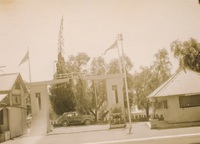
-
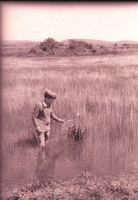 First flowering Vlei Lilies, Crinum campanulatum. The lilies were brought there from another vlei on the Burntkraal flats, by Mrs. Lou Mullins in 1960's.
 -
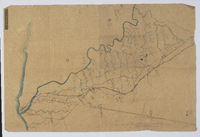 Inspection of telegraph line - G. McKay, East London to Potsdam - C. Brownlee, King Williams Town to Potsdam; [comp. by G. McKay?].Scale not stated. 1 sheet 14½" x 22". Manuscript; may be dated "1868".
 -
-
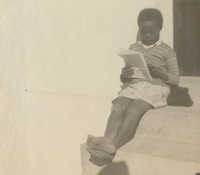 A photograph album compiled by Mary Butler, containing photographs of Wayfarers, Sunbeams and Pathfinders, mostly in Cradock. Two newspaper clippings and a handwritten concert programme included. There are three photographs of Rev. James Arthur Calata's young daughters, and he himself is included in two photographs. This photograph showing one of James Arthur Calata's daughters sitting on the stoep reading a book
 -
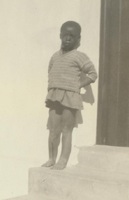 A photograph album compiled by Mary Butler, containing photographs of Wayfarers, Sunbeams and Pathfinders, mostly in Cradock. Two newspaper clippings and a handwritten concert programme included. There are three photographs of Rev. James Arthur Calata's young daughters, and he himself is included in two photographs. This photograph showing one of James Arthur Calata's daughters standing on the stoep. J.A. Calata had three daughters, namely, Nontsikelelo, Noluthando and Vuyiseka (born in 1922)
 -
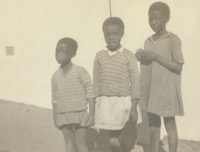 A photograph album compiled by Mary Butler, containing photographs of Wayfarers, Sunbeams and Pathfinders, mostly in Cradock. Two newspaper clippings and a handwritten concert programme included. There are three photographs of Rev. James Arthur Calata's young daughters, and he himself is included in two photographs. This photograph showing James Arthur Calata's three daughters standing next to a house. J.A. Calata had three daughters, namely, Nontsikelelo, Noluthando and Vuyiseka (born in 1922)
 -
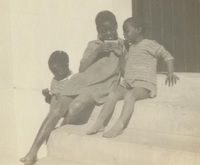 A photograph album compiled by Mary Butler, containing photographs of Wayfarers, Sunbeams and Pathfinders, mostly in Cradock. Two newspaper clippings and a handwritten concert programme included. There are three photographs of Rev. James Arthur Calata's young daughters, and he himself is included in two photographs. This photograph showing James Arthur Calata's three daughters sitting on the stoep, probably their house. They are probably looking at photographs or reading letters. J.A. Calata had three daughters, namely, Nontsikelelo, Noluthando and Vuyiseka (born in 1922)
 -
-
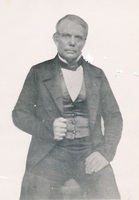 The note on the back reads: “Britse Setlaar Joseph Mildenhall (1801-1875) van Klu-Klu, Fort Beaufort”.
 -
-
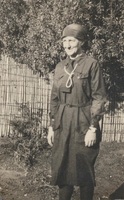 A photograph album compiled by Mary Butler, containing photographs of Wayfarers, Sunbeams and Pathfinders, mostly in Cradock. Two newspaper clippings and a handwritten concert programme included. There are three photographs of Rev. James Arthur Calata's young daughters, and he himself is included in two photographs. This photograph showing Joyce Brown, a Wayfarer Officer wearing her uniform, 1929
 -
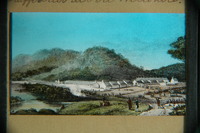 Fort Willshire was built by the Royal Engineers under Lieutenant Colonel Thomas Willshire of the 38th Regiment, on the orders of Lord Charles Somerset, in 1819.,From 1824 – 1830 weekly trade fairs were held at the Fort, where licensed British Settlers could trade in ivory, hides etc with Xhosa. At first cattle could not be traded, and trade in fire-arms and liquor was forbidden.
 -
-
-
-
-
-
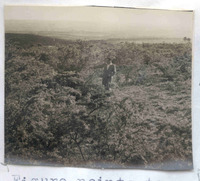 Figure points to bush where nest was built.
 -
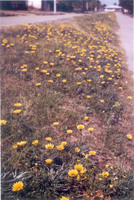 Field of Gazania.