Anti-Apartheid Movement and Acts of Defiance
Item set
- Description
-
The Anti-Apartheid Movement and Acts of Defiance item set is a curated collection of seven digitised primary sources held by the Cory Library for Humanities Research at Rhodes University. This set brings together pamphlets, newsletters, inventories, and correspondence that reflect resistance to apartheid and civic actions within South Africa, particularly relating to grassroots organisations and political pressure groups active in the 1980s.
Included are materials documenting criticisms of state actions, commentary on youth political mobilisation, inventories of activism-related archival collections (e.g., the Rosemary Smith Collection), and letters from civil society actors such as IDASA and the Black Sash. These items illustrate a range of responses to apartheid policies and provide insight into public dissent, civil society networks, and the mobilisation of activists and organisations during a period of intensifying struggle against the apartheid regime. - Date Issued
- 1948-1994
- Language
- English
- Provenance
- Original documents held at the Cory Library for Humanities Research, Rhodes University
- Subject
- Anti-apartheid movement — South Africa
- Civil resistance — South Africa
- Black Sash (Organisation)
- IDASA (Institute for a Democratic Alternative for South Africa)
- Political activism — South Africa
- Resistance to apartheid — 1980s
- Format
- Digital images
Items
-
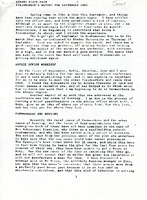 A detailed monthly report by an Albany Black Sash fieldworker covering the Grahamstown (Makhanda) region. Topics include the Rhodes University protest march (Sept 14), advice office workshops on farmworker housing, evictions in Rini, emergency detentions of MDM committee members, and reports of police repression in Barkly East, Adelaide, and Fort Beaufort.
 -
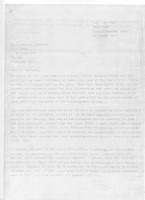 Letter written by the Chairman of the Blask Sash Cape Eastern Region, Isobel Douglas-Jones, to Dr F. van Zyl Slabbert, thanking him for his contribution (in the form of a speech) to the Sash/IDAMASA Public meeting held on the 6th of August 1987 in Port Elizabeth. Letter dated 20 August 1987.
 -
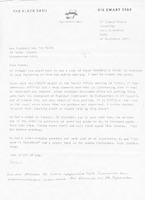 Letter written by Isobel (presumed Isobel Douglas-Jones) of the Cape Eastern Region (office in Port Elizabeth) of the Black Sash, to Rosemary Smith. Letter dated 26 September 1987.
 -
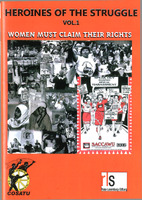 "The booklet serves as a commemoration of the heroines and veterans of the struggle. The brave women of the struggle, women who hold knife from its sharpest edge. Freedom cannot be achieved unless women have been emancipated from all forms of oppression. The booklet is the product of COSATU Archives in partnership with Rosa Luxemburg. The information is compiled by NANDIPAMITI (COSATU Archivist) pictures by William Matlala and COSATU Photo Archive."
 -
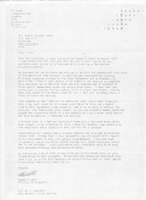 Letter written by Wayne Mitchell (National Co-ordinator: IDASA - Institute for a Democratic Alternative for South Africa)) to Isobel Douglas-Jones (Black Sash - Eastern Cape Region), The letter was written in response to a letter (dated 30 August 1987) written by Isobel Douglas-Jones to Dr. Slabbert (Dr. Frederik van Zyl Slabbert). Letter undated.
 -
 An editorial essay analyzing the internal contradictions of the National Party Cabinet in 1969. It contrasts the "altruistic" rhetoric of Dr. Piet Koornhof (who argued for the moral development of homelands) with the "callous" pragmatism of Mr. G.F. van L. Froneman (who viewed black South Africans as "surplus appendages"). The journal argues that despite their stylistic differences—labeled here as the "sissy" and the "barbarian"—both men serve the same fundamental goal: the preservation of white supremacy. The text concludes by asserting that the wealth of South Africa belongs to all its people jointly, rejecting the "blueprint" of separate development.
 -
 A 1969 issue of the liberal journal featuring an editorial on the global student rebellion, comparing South African student protests to those in Spain, Czechoslovakia, and Poland. It includes a foundational article by Anthony Barker on the "vivid humanity" and systemic disadvantages of African nurses, and a comparative study by Alan McConnell Mabin on the press in Communist Yugoslavia versus the "sensationalist" South African press. The issue explicitly challenges "eiesoortige" (own-kind) development as a tool for rigid racial separation.
 -
 A 1969 issue featuring an editorial on the Apollo 11 moon landing ("In Peace for All Mankind") and its implications for global unity. It includes a tribute to the rebanned Liberal Party leader Peter Brown by Alan Paton, an analysis of Emily Hobhouse’s pacifism and passive resistance by Marie Dyer, and a philosophical exploration of the "tensions" within liberalism by C.O. Gardner. The issue also reviews the film "Katrina" and discusses the American campus protest scene.
 -
 A 1969 issue dedicated to the centenary of Mahatma Gandhi and his relevance to a "violent world." The editorial analyses the unexpected victory of the anti-apartheid Labour Party in the Coloured Persons' Representative Council elections, mocking the government's attempts to nominate losing candidates to maintain control. It also includes Edgar Brookes' analysis of the "sullen silence" of oppressed South Africans and Donald Molteno’s critique of the "B.O.S.S. Act" (Bureau of State Security).
 -
 A 1970 issue exploring the "General Election for What?", Nadine Gordimer’s critique of censorship as a "homeland" for the mind, and E.G. Malherbe’s analysis of the newly legislated "autonomous" non-white universities. It features a critical look at the "Poverty Gap" and the psychological struggle within the Afrikaner personality between rigid authoritarianism and modern "man-of-the-world" Calvinism.
 -
 A 1970 issue exploring the inherent link between politics and sport, the legacy of Jan Smuts, and the struggles of writers in Zulu and Afrikaans. Key articles include André Brink's analysis of the Afrikaans writer's moral dilemma and Edgar Brookes' reassessment of Smuts. It documents the police harassment of the non-racial South African Soccer Federation and the banning of athletes Arthur Ashe and Papwa Sewgolum.
 -
 Published following the 1970 General Election, this issue critiques the "annihilation" of the Herstigte Nasionale Party and the "sham" of separate development. It features Edgar Brookes on the "Brain Drain" of liberal academics and Donald Gillham’s philosophical inquiry into the nature of revolutionaries versus bigoted conservatives. Other topics include the threat to African writing and the dilemma of liberals regarding the Middle East conflict.
 -
 This issue focuses on the shifting spectrum of student activism in the 1970s, the role of the Church in politics, and the government's introduction of the "Book of Life" (Identity Document). It features Neville Curtis on the emergence of Black Consciousness (SASO) and its challenge to NUSAS, as well as an analysis of the deportation of the Rev. Dick Cadigan.
 -
 This issue focuses on the judicial crisis following the re-detention of the "22" (including Winnie Mandela), the role of student protests in challenging arbitrary state power, and the ethical dilemmas of the English-speaking community. It includes Edgar Brookes on the "State of the Republic" and Peter Randall on the "Social Dynamics of Change."
 -
 This issue features a keynote address by British Labour politician Denis Healey on the "Opinions of Mankind" regarding Apartheid. The editorial expands on Terence Beard's thesis that the "Common Society" is impossible without closing the catastrophic economic gap between races. It also explores the "otherness" created by poverty and the psychological barriers to change in the white electorate.
 -
 This issue critiques the 10th anniversary of the Republic, highlighting the "Coloured" Labour Party's defiance of the government-created Representative Council. It includes Neville Curtis's call for a boycott of Republic Day celebrations, supported by an array of socioeconomic statistics, and an analysis of Afrikaner linguistic conservation.
 -
 This issue analyzes the state's "campaign" against English-speaking clergy and the systematic expulsion of foreign ministers. It includes Sonny Leon’s vision for the Labour Party, Edgar Brookes’ analysis of the first three Spro-cas reports, and a satirical future-history of public executions in South Africa.
 -
 This issue examines the "Dialogue" movement between South Africa and Black African states (specifically Houphouët-Boigny), the 1971 Republic Day boycott, the "Polarisation" vs. "Dialogue" debate in student politics, and a critique of the Dutch Reformed Church.
 -
 This issue critiques the "blind side" of Nationalist cynicism, analyzes the rise of SASO and the Black Consciousness Movement, and provides a "close look" at the devastating inequalities in Bantu Education. It includes a tribute to the late Mary Lee.
 -
 This issue critiques the Bantustan policy as a "dead end," analyzes South Africa's "Outward Policy" of economic expansion into Africa, and features reflections on "Black Disinvolvement" by Nadine Gordimer and the "Slave Mentality" by Selby Msimang.
 -
 A 1972 issue featuring a sharp critique of the English-language press for supporting the government's external "dialogue" policy and using state-sanctioned terminology like "terrorist" for guerrilla fighters. It includes a significant field report by David de Beer on the political shift in South West Africa (now Namibia) following the 1971 World Court Opinion, detailing the student boycott in Ovamboland and the opposition of the Lutheran churches to apartheid. Other articles cover the Coloured Persons' Representative Council, literacy work in Swaziland, and South Africa's expansionist foreign policy
 -
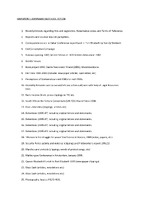 Inventory of the Rosemary Smith Collection held at the Cory Library for Humanities Research at Rhodes University. The documents (mostly consisting of letters, articles and notes) were collected by Rosemary Smith, and relates to the work of the Black Sash during the Apartheid era in Grahamstown. Includes material relating to elections, detentions, marches and protests etc.
 -
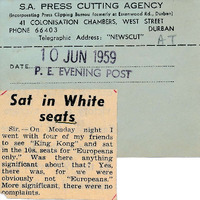
-
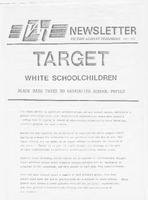 Excerpt: "The organisation by political pressure groups amongst school pupils, particularly groups with close links with revolutionary organisations which have played a leading role in trying to create an ungovernable situation in black townships, provides grounds for real concern. Whilst one may question the morality of an organisation which targets school pupils as a means for achieving its own political ends one may be sure that these efforts are not meant as an honest attempt to broaden the thinking of the youth. Rather it is part of a well thought out strategy on the part of such organisationaddElement(0, 'physicalDescription'); hidemenu()s to politicise school pupils along radical lines."
 -
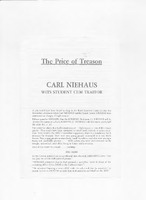 Pamphlet outlining the crime of treason, and sentencing of Carl Niehaus (and his then fiancé Johanna Lourens) in 1983.