-
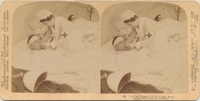
First aid to a wounded fusilier - Honey Nest Kloof battle (Feb 13)
-
First City Regiment with Cradock in the background, December 1899 Glass negative : View showing the camp of First City Regiment with Cradock in the background, December 1899.
-
First train of refugees out of Kimberley after the siege (Feb 22nd)
-
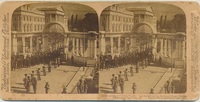
Funeral procession of the Right Honorable Cecil Rhodes
-
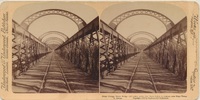
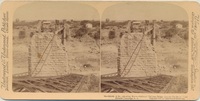
Great Orange River bridge (450 yds), which the Boers failed to destroy, near Hopetown
-
Grenadier guards resting
-
Guns from the warships, firing on the Pretoria forts
-
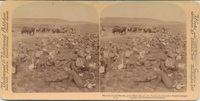
Handiwork of retreating Boers
-
History recorders and history makers
-
In a field hospital along the Tugela River
-
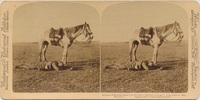
Incidents of the great march to Bloemfontein - Faithfully waiting his sleeping master
-
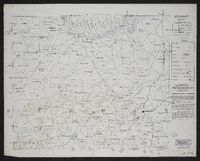
Kenhart
-
Krygsgevangene - Bhim Tal - 189-1902 - 175 Sondagskool kinders ouderdom 8-19 jaar Handwritten inscription on photo reads: "Krygsgevangene - Bhim Tal - 189-1902 - 175 Sondagskool kinders ouderdom 8-19 jaar".,During the Anglo-Boer War, Bhim Tal POW Camp (India) was one of the Prisoner-or-War (POW) camps used by the British Forces to imprison for Boers from South Africa. Elria Wessels wrote the following as a caption to the image, on the Facebook group “Bhim Tal POW Camp: Bhim Tal is the largest lake located in the Kumaon Hills in the Uttaranchal province. The lake is 1701 m by 454 m, making it 265 m longer than Naini Lake. The Boer camp was established at the northern most point of the lake. Situated at a level of 1371.6 m, it is twenty-two km from Nainital. The lake regulates the climate of the area. The weather is very pleasant throughout the year except during winter months. In the summer the temperature alternates between 27.5°C and 11°C and 16°C and 2°C in winter. It rains almost every afternoon and Rev. A Burger recorded that he found the camp under water after a heavy rainstorm on 21 May 1902. The 500 prisoners of war, mostly children, and the aged were housed in tents in a picturesque setting -“absolutely beautiful” according to Burger. He came to the conclusion that even the most beautiful of settings would not ever be satisfying to a POW as it was not the scenery of his beloved fatherland. Major A. de G. Hadow and Captain T.C.B. Holland were in charge. They were assisted by 2nd Lt. B. H. Hall (2nd Yorkshire Regiment); 2nd Lt. L. Lovett Thomas (Royal Engineers), Lt. F. Curtis (2nd Yorkshire Regiment) and Lt. N.E. Swan (2nd Yorkshire Regiment) adjutant and quartermaster. The camp commandant was Lt. C.F. Colquhoun (1st Surrey Regiment) while the section officer was Lt. H.J. Massey (3rd Rifle Brigade). J.F. Ferris acted both as censor and interpreter. The camp finally closed its door on 1 December 1902.”
-
Krygsgevangene Kamp - Bhim Tal - 1899-1902 - Indië Gesig van die Noorde Handwritten inscriptions on photo read: "Krygsgevangene Kamp - Bhim Tal - 1899-1902 - Indië Gesig van die Noorde" on top of photo, and "Boer Camp Bhim Tal 5th May 1902".,During the Anglo-Boer War, Bhim Tal POW Camp (India) was one of the Prisoner-or-War (POW) camps used by the British Forces to imprison for Boers from South Africa. Elria Wessels wrote the following as a caption to the image, on the Facebook group “Bhim Tal POW Camp: Bhim Tal is the largest lake located in the Kumaon Hills in the Uttaranchal province. The lake is 1701 m by 454 m, making it 265 m longer than Naini Lake. The Boer camp was established at the northern most point of the lake. Situated at a level of 1371.6 m, it is twenty-two km from Nainital. The lake regulates the climate of the area. The weather is very pleasant throughout the year except during winter months. In the summer the temperature alternates between 27.5°C and 11°C and 16°C and 2°C in winter. It rains almost every afternoon and Rev. A Burger recorded that he found the camp under water after a heavy rainstorm on 21 May 1902. The 500 prisoners of war, mostly children, and the aged were housed in tents in a picturesque setting -“absolutely beautiful” according to Burger. He came to the conclusion that even the most beautiful of settings would not ever be satisfying to a POW as it was not the scenery of his beloved fatherland. Major A. de G. Hadow and Captain T.C.B. Holland were in charge. They were assisted by 2nd Lt. B. H. Hall (2nd Yorkshire Regiment); 2nd Lt. L. Lovett Thomas (Royal Engineers), Lt. F. Curtis (2nd Yorkshire Regiment) and Lt. N.E. Swan (2nd Yorkshire Regiment) adjutant and quartermaster. The camp commandant was Lt. C.F. Colquhoun (1st Surrey Regiment) while the section officer was Lt. H.J. Massey (3rd Rifle Brigade). J.F. Ferris acted both as censor and interpreter. The camp finally closed its door on 1 December 1902.”
-
Krygsgevangene Kamp - Bhim Tal - 1899-1902 - Indië Gesig van die Suide Handwritten inscription on photo reads: "Krygsgevangene Kamp - Bhim Tal - 1899-1902 - Indië Gesig van die Suide" on top of photo.,During the Anglo-Boer War, Bhim Tal POW Camp (India) was one of the Prisoner-or-War (POW) camps used by the British Forces to imprison for Boers from South Africa. Elria Wessels wrote the following as a caption to the image, on the Facebook group “Bhim Tal POW Camp: Bhim Tal is the largest lake located in the Kumaon Hills in the Uttaranchal province. The lake is 1701 m by 454 m, making it 265 m longer than Naini Lake. The Boer camp was established at the northern most point of the lake. Situated at a level of 1371.6 m, it is twenty-two km from Nainital. The lake regulates the climate of the area. The weather is very pleasant throughout the year except during winter months. In the summer the temperature alternates between 27.5°C and 11°C and 16°C and 2°C in winter. It rains almost every afternoon and Rev. A Burger recorded that he found the camp under water after a heavy rainstorm on 21 May 1902. The 500 prisoners of war, mostly children, and the aged were housed in tents in a picturesque setting -“absolutely beautiful” according to Burger. He came to the conclusion that even the most beautiful of settings would not ever be satisfying to a POW as it was not the scenery of his beloved fatherland. Major A. de G. Hadow and Captain T.C.B. Holland were in charge. They were assisted by 2nd Lt. B. H. Hall (2nd Yorkshire Regiment); 2nd Lt. L. Lovett Thomas (Royal Engineers), Lt. F. Curtis (2nd Yorkshire Regiment) and Lt. N.E. Swan (2nd Yorkshire Regiment) adjutant and quartermaster. The camp commandant was Lt. C.F. Colquhoun (1st Surrey Regiment) while the section officer was Lt. H.J. Massey (3rd Rifle Brigade). J.F. Ferris acted both as censor and interpreter. The camp finally closed its door on 1 December 1902.”
-
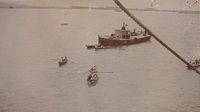
Las Palmas and boats on water
-
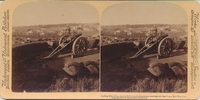
Looking from Johannesburg Fort toward Jeppertown (Jeppestown) - showing old Boer gun
-
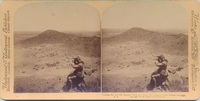
Looking over the 12th Brigade Camp and Signal Hill, Slingersfontein, British Campaign
-
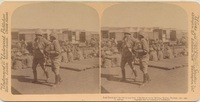
Lord Kitchener (the taller) and General Pole-Carew, at the Railway Station,Pretoria (June 5th)
-
Lord Roberts entering Kroonstadt
-
Lord Roberts, hero of Candahar and South Africa
-
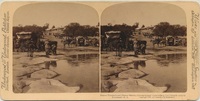
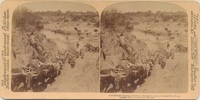
Lord Roberts' advance on Pretoria - transports crossing the Zand River
-
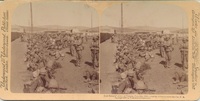
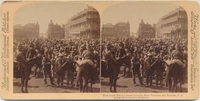
Lord Roberts' army at Pretoria, June 5th 1900 - waiting orders to enter the city
-
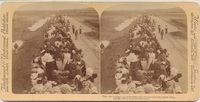
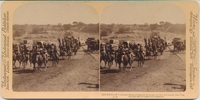
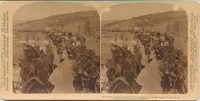
Lord Roberts' great transport trains entering the Transvaal capital, Pretoria
-
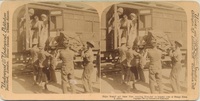
Major Russell and Sister Rose receiving wounded on hospital train at Orange River