The Frontier Collections
Item set
- Title
- The Frontier Collections
- Description
-
The Frontier Collections are a curated collection of archival materials that document the turbulent and formative era of the Eastern Cape frontier. Spanning the late 18th to the early 20th century, these collections provide a multi-perspective view of the Frontier Wars (Xhosa Wars), the establishment of colonial administration, and the subsequent growth of settler infrastructure.
The collection is particularly noted for its focus on the "Frontier Country"—the region surrounding Makhanda (Grahamstown)—detailing the interplay between British settlers, Boer trekkers, and the Xhosa kingdoms. - Language
- English
- isiXhosa
- Type
- Collection
- Subject
- Frontier Wars
- 1820 Settlers
- Military History
- Colonial Architecture
- Xhosa History
- Urban Development
- Spatial Coverage
- Eastern Cape, South Africa (formerly the Cape Colony frontier)
- Temporal Coverage
- c. 1779 – 1910
- Format
- Manuscripts
- Lantern slides
- Cartographic materials
Items
-
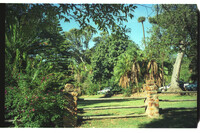 Varied vegetation. Gardens date from 1853.
 -
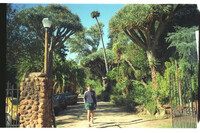 Rhodes University student passing through northern gates of the Botanical Gardens. Note the variety of interesting plants including aliens.
 -
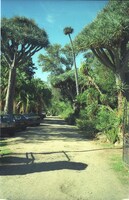 Array of alien palms and indigenous aloes. etc. The gardens were established in 1853.
 -
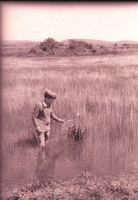 First flowering Vlei Lilies, Crinum campanulatum. The lilies were brought there from another vlei on the Burntkraal flats, by Mrs. Lou Mullins in 1960's.
 -
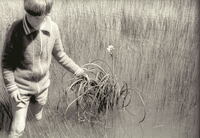 Close-up of first flowering vlei lilies, Crinum campanulatum. Planted there in 1960's by Lou Mullins.
 -
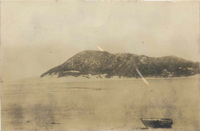 Vegetated dune-hill showing mature vegetation there in 1926 before Kenton-on-Sea was built up. Taken by C.J.Skead in 1926 when a schoolboy at St. Andrews College. He and a party of friends walked stark naked from here along the beach to Bushman's River Mount without fear of being seen by a soul.
 -
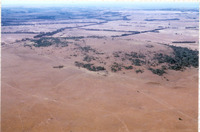 Surrounded by Bathurst suurveld. Taken from western side.
 -
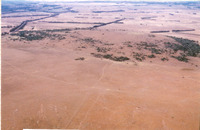 Surrounded by Bathurst suurveld. Taken from north facing towards the coast.
 -
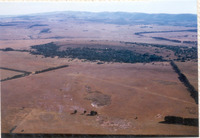 Aerial view of Bathurst suurveld, the old Zuure Veldt, looking north to Kap River Hills with the dome of Round Hill centrally.
 -
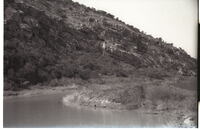 On the krans in the background are at least 32 nests of black-headed Herons yet, on top of the krans is a thicket of tall Euphorbias on which the birds could have built comfortably more in conformity with their usual habit of nesting in trees.
 -
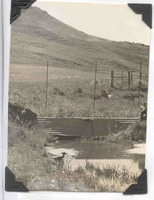 Hamerkop in a stream below Gaika's Kop.
 -
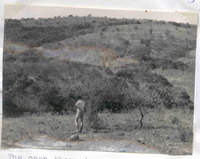 The open thorn-tree scattered hillside across the bushy valley contain the favourate Acacia karroo tree used successively for many years by Lesser Honeyguides as their call-site.
 -
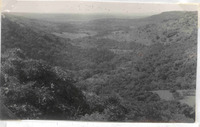 The Scaly-throated Honeyguides call-site was in the dense tall patch in the stream bed.
 -
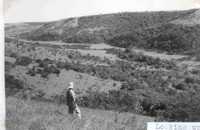 The Scaly-throated Honeyguide ranged over the whole area but mostly in the forests and along bushy streams.
 -
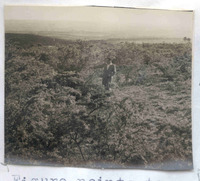 Figure points to bush where nest was built.
 -
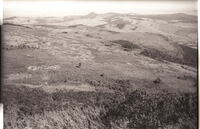 Looking westwards from top of Hoho Peak (Pirie West Peak) over Protea thickets in immediate foreground to the mid-picture ridge covered in Cliffortia fynbos and which might once have held dense Protea subvestita and /or Protea multibracteata thickets. Some of the latter still growing below the subvestita thickets there. iNtaba knNdoda Peak in distance.
 -
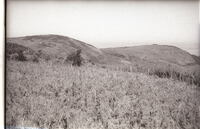 Cape and Gurney Sugerbird Promerops cafer & Gurneyi country. The left-hand dome is Hoho Peak, or Pirie West Peak, on the western slopes of which both species where found occupying and nesting in a thicket of tall, dense Protea subvestita, almost the last patch of any size on these mountains. The dark areas on the slopes are protea trees. Those on top had been burned out. Such thickets would have been more widespread in the past. Below are some Protea multibracteata plants. The thickets of subvestita were burnt out in the late 1960's to make way for stock grazing.
 -
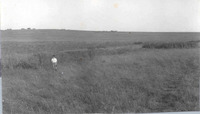 "Two photos of Red Bishop nesting area in swamps. Nesting site was in the dark mass at right; small clumps of Typha & Phragmites held a few nests."
 -
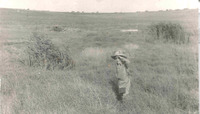 "Two photos of Red Bishop nesting area in swamps. Nesting site was in the dark mass at right; small clumps of Typha & Phragmites held a few nests."
 -
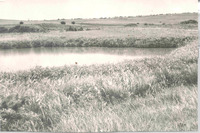 Dense Typha beds surrounding a vlei, used annually as a nesting site by Red Bishop birds.
 -
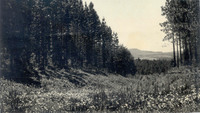 Spread of Zantedeschia aethiopica in damp hollow between pine plantations. Buttresses of southern Hogsback peak in distance.
 -
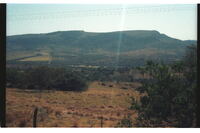 The original Rietberg over which early waggoners and some 1820 Settlers passed on way to the north, the track ascending just out of picture to the left on Boekenhoutfontein farm.
 -
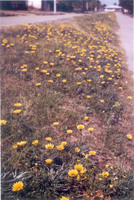 Field of Gazania.
 -
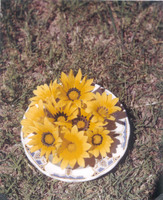 9 different centres from the same field of Gazania.
 -
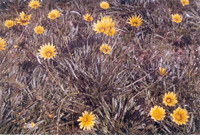 Note the variable centre.