Mary Pocock Plant Specimen Collection
Item set
- Title
- Mary Pocock Plant Specimen Collection
- Description
- A curated collection of plant specimens collected by Mary Pocock, represented in the Rhodes University Botanical Collections. The item set includes multiple taxonomic specimens such as Barleria ramulosa, Genlisea glandulosissima R.E.Fr., Pleiotaxis ambigua S. Moore, Cryptosepalum exfoliatum subsp. pseudotaxus, and a loose botanical specimen mounted within a manuscript volume.
- Subject
- Botanical specimens
- Plant taxonomy
- Herbarium
- Mary Pocock
- Rhodes University Botanical Collections
- Southern African flora
- Temporal Coverage
- Early–mid 20th century
Items
-
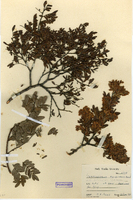 Image of original plant specimen held at Selmar Schonland Herbarium, Albany Museum/Rhodes University: "M. A. Pocock 6778". Label: Cryptosepalum Pseudotaxus Bak.f = C. exfoliatum De Wild. Location: Kutsi : alt. 4200' : bark used for tying. Legit M.A. Pocock Date 22 June 1925, Mary Agard Pocock Diary entry: June 22. [1925] : 'Found the bark tree (bark used for tying) in bloom ... got plenty of the curious little, very sweet-scented blooms' Quoted from 'Bushmen, Botany and Baking Bread. Compiled and edited by Tony Dold and Jean Kelly (2018). Vernacular plant names: Mbundu - Mukuvi, Mukuve. Bushman - Koviku, Trust: Mary Agard Pocock
 -
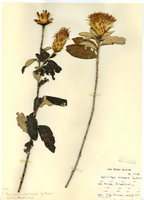 Herbarium specimen of Pleiotaxis ambigua S. Moore, collected from Nalolo, Barotseland (present-day western Zambia). The mounted sheet includes flowering material, with visible capitula and leaves preserved for taxonomic study. This specimen forms part of the Rhodes University Botanical Collections and contributes to the historical documentation of southern and central African flora.
 -
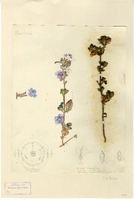 Composite herbarium specimen of Barleria ramulosa, consisting of a dried plant specimen mounted together with a detailed botanical painting and analytical drawings on a single sheet. The specimen illustrates floral morphology, vegetative features, and diagnostic characteristics used in taxonomic study.
 -
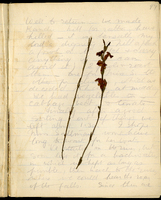 Loose-pressed plant specimen mounted directly onto a handwritten manuscript page from a bound volume. The specimen consists of two slender flowering stems affixed to the page, integrating botanical material with personal written notes. This item illustrates informal and field-based botanical collecting and documentation practices, where specimens were preserved alongside observational or diary-style records rather than on standard herbarium sheets.
 -
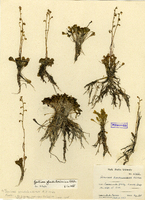 Genlisea glandulosissima (P. Taylor, dated 8 February 1968) is a species of "corkscrew plant," a genus of carnivorous plants. They are unique for having specialised underground leaves that act as traps for protozoa and other small soil organisms. The "glandulosissima" name refers to the dense covering of glands on its flower stalks, which are visible as the tall, thin stems rising from the leafy rosettes in this specimen.