C.J. Skead Photograph Collection
Item set
- Title
- C.J. Skead Photograph Collection
- Creator
- Skead, C. J. (Cuthbert John)
- Description
-
The Jack (Cuthbert John) Skead Collection comprises a substantial body of photographic material that documents the natural environments, vegetation types, and ecological habitats of the Eastern Cape and the wider southern African region. The photographs—taken over several decades—capture landscapes, plant communities, wetlands, forests, grasslands, and other habitat formations that were central to Skead’s extensive research interests. Many images also document environmental change, land use patterns, and field sites associated with his ornithological and botanical studies.
The collection provides a valuable visual record for researchers working in the fields of environmental history, ecology, biogeography, conservation, and Eastern Cape natural heritage. The photographs complement Skead’s published and unpublished work held at Cory Library, including field notes, correspondence, and research manuscripts. - Language
- English
- Provenance
- Materials received from the Skead Family.
- Type
- Collection
- Genre
- Photographs
- Subject
- South Africa--Addo Elephant National Park
- Addo Elephant National Park (South Africa)
- Natual history -- South Africa -- Eastern Cape
- Vegetation -- South Africa -- Eastern Cape
- Habitats -- South Africa -- Eastern Cape
- Ecology -- South Africa -- Eastern Cape
- Landscape photography -- South Africa
- Photograph collections
- Environmental change -- South Africa -- Eastern Cape
- Biogeography -- South Africa
- Eastern Cape (South Africa) -- Photographs
- Albany District (South Africa) -- Photographs
- Skead, C. J. (Cuthbert John), 1912–2006
Items
-
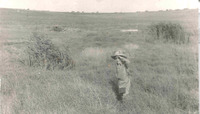 "Two photos of Red Bishop nesting area in swamps. Nesting site was in the dark mass at right; small clumps of Typha & Phragmites held a few nests."
 -
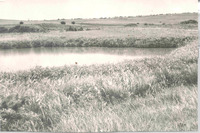 Dense Typha beds surrounding a vlei, used annually as a nesting site by Red Bishop birds.
 -
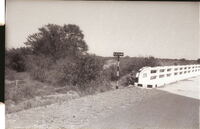 Where Levaillant shot the Klaas' Cuckoo to make this the type of locality of the species, Chrysococcyx klaasi. Karoo veld-type with riverside scrub and thorns.
 -
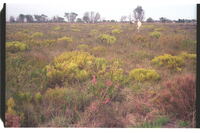 Flowering Erica glandulosa & much Leucadendron. Encroaching Wattles in background.
 -
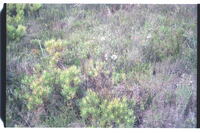 Erica pectinifolia & Leucadedrons in dense stand of good quality fynbosveld such as once covered the whole country from Algoa Bay to Van Staden's River
 -
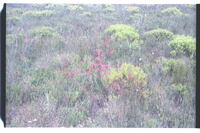 Erica glandulosa & Erica pectinifolia with Leucodendron in good fynbosveld.
 -
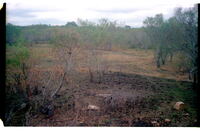 Gross overgrowth of Austalian Wattle. Photo taken from the roadbridge, passing over the narrow gauge railway line.
 -
 Original vlei drained by P.E. Municipality. Already 2 dabchicks, 2 Egyptian Geese & 2 yellowbiled duck were at the vlei which had been dry for years.
 -
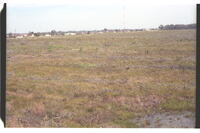 Shown here with tall wattles removed since my photographs 10 months earlier in neg. BP 6.
 -
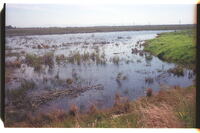 Original vlei drained by P.E. Municipality. Already 2 dabchicks, 2 Egyptian Geese & 2 yellowbiled duck were at the vlei which had been dry for years.
 -
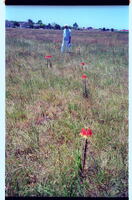 A line of flowering Cyrtanthus obliquus in coarse grassveld, a large square left uncovered by urban sprawl despite houses on 2 sides, obiously due for submergence in time. An example of what the natural veld there used to be.
 -
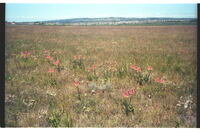 20 flowering Cyrtanthus obliquus on an open field of natural coarse grasses. Another 25 plants grew just out of the photo to the right. Built in on 2 sides by housing estates, this open field, a paradise for wild flowers throughout the year, is bound to disappear under housing. Lovemore Heights at Walmer in the distance.
 -
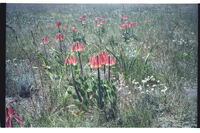 Close-up of about 20 Cyrtanthus obliquus plants in a field of coarse grassveld. Another group of 25 plants grew to the immediate left of the picture, with other lesser groups & individuals scattered around the field. With housing estates crowding in on two sides of this field its plants mmust inevitably disappear.
 -
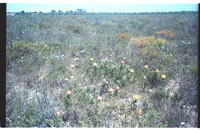 Cluster of Leucospermum cuneiforme in an open grassy-fynbos field almost certain to disappear under housing in due course, a fine area for wild flowers in all seasons. This field is a good example of what natural veld in this district used to be. Bridgemead suburb in left background.
 -
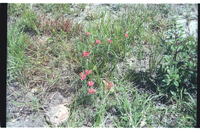 Single plant of Microloma tenuifolium, 'Waxie' or Waxcreeper, climbing on grass stools. This area of natural open mixed fynbos grass on Parson's Vlei (Kuyga Flats) will almost certainly disappear under housing which had already encroached 50m of where this photograph was taken.
 -
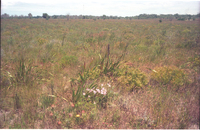 Except for alien willows in far background, this natural veld represents the nature of local veld from PE to Van Staden's before disturbance by man. Single flowering patch of Chironia palustris and also Leucospernum in foreground.
 -
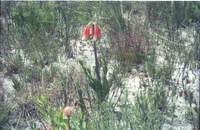 Single plant of Cyrtanthus obliquus in natural veld not yet disturbed by urban sprawl but likely to be destroyed in the near future.
 -
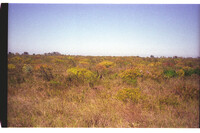 Leucadendrons in natural veld, almost disappeared now, but which once covered all the western sector from PE to Van Staden's in the 1920's and before.
 -
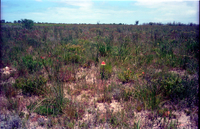 Single Cyrtanthus obliquus in good flower. A few waxies, Microloma sp.(red) twined around Bobartia stems in bottom left hand corner. Almost all of the veld between Port Elizabeth & Greenbushes was like this in the 1920's.
 -
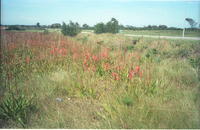 Watsonia pillansii, past their best at the end of flowering season. Part of a large field to the left. This field due to be covered by urban development.
 -
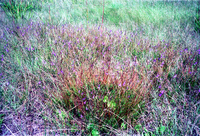 Large patch of dark blue Lobelia, Bluebells.
 -
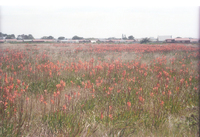 Fine stand of Watsonia pillansii on ground soon to be covered by houses, unless wisdom prevails. A very fine stand this year although good in most years.
 -
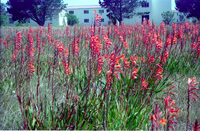 A fine cluster of Watsonia pillansii, a very small section of several hectares now in flower.
 -
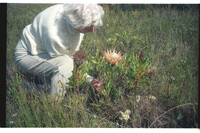 Protea cynaroides var. elliptica (Port Elizabeth form). In natural fynbosveld soon to be covered by urban sprawl, spelling out the last of this distinctive fynbos form.
 -
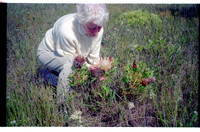 Protea cynaroides var. elliptica (Port Elizabeth form). In natural fynbosveld soon to be covered by urban sprawl, spelling out the last of this distinctive fynbos form.