C.J. Skead Photograph Collection
Item set
- Title
- C.J. Skead Photograph Collection
- Creator
- Skead, C. J. (Cuthbert John)
- Description
-
The Jack (Cuthbert John) Skead Collection comprises a substantial body of photographic material that documents the natural environments, vegetation types, and ecological habitats of the Eastern Cape and the wider southern African region. The photographs—taken over several decades—capture landscapes, plant communities, wetlands, forests, grasslands, and other habitat formations that were central to Skead’s extensive research interests. Many images also document environmental change, land use patterns, and field sites associated with his ornithological and botanical studies.
The collection provides a valuable visual record for researchers working in the fields of environmental history, ecology, biogeography, conservation, and Eastern Cape natural heritage. The photographs complement Skead’s published and unpublished work held at Cory Library, including field notes, correspondence, and research manuscripts. - Language
- English
- Provenance
- Materials received from the Skead Family.
- Type
- Collection
- Genre
- Photographs
- Subject
- South Africa--Addo Elephant National Park
- Addo Elephant National Park (South Africa)
- Natual history -- South Africa -- Eastern Cape
- Vegetation -- South Africa -- Eastern Cape
- Habitats -- South Africa -- Eastern Cape
- Ecology -- South Africa -- Eastern Cape
- Landscape photography -- South Africa
- Photograph collections
- Environmental change -- South Africa -- Eastern Cape
- Biogeography -- South Africa
- Eastern Cape (South Africa) -- Photographs
- Albany District (South Africa) -- Photographs
- Skead, C. J. (Cuthbert John), 1912–2006
Items
-
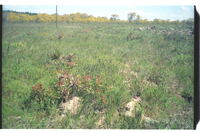 Plant of Protea foliosa on sandy soil among outcrops of Table Mt. Sandstone in field.
 -
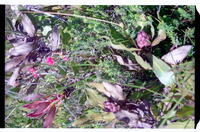 Plant of P. foliosa.
 -
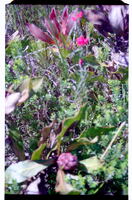 Kunene Road, destroyed by human development. Had a dense population, now only a few plants.
 -
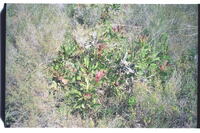 Plants of Protea foliosa on stony outcrop, Flowering but soon to disappear under urban sprawl now on its doorstep. This point constitutes the last of the species at the eastern reach of the range on the P.E. sandveld.
 -
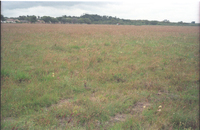 A few Gladiolus maculatus flowering. Poor year. A few years ago this whole field was covered in blossoms. Encroaching house in the distance.
 -
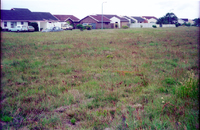 A few Gladiolus maculatus flowering. Poor year. A few years ago this whole field was covered in blossoms. Encroaching house in the distance.
 -
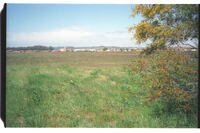 On this veld & a little more to the right out of the picture Gladiolus maculatus flowered in unbelievable profusion in November 1990, a last example of what the Port Elizabeth sandveld was like in the 1920;s before urban development and the gross spread of Australian Wattles exterminated the aandbloms. Townspeople used to gather large armfuls of the flowers for their homes, enjoying the scent given off in the evenings. Sherwood Dutch Reform Church in the background with Lovemore Heights in the far background.
 -
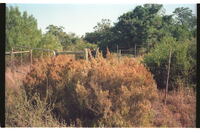 Erica demissa growing on ridge, a large sample of its kind. Plant with dying flowers, apart from one small spring centrally. Flowering season over. Others nearby in same condition. Erica caffra grows along same ridge. Plants surviving within road fences, but almost eliminated on farm ground.
 -
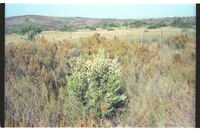 In front , good specimen of Erica caffra in full flower with the browning mass of Erica demissa behind. Plants surviving between road fences. Note that farm ground beyond fence is clear of this fynbos.
 -
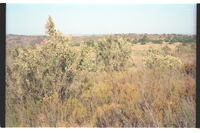 In front , good specimen of Erica caffra in full flower with the browning mass of Erica demissa behind. Plants surviving between road fences. Note that farm ground beyond fence is clear of this fynbos.
 -
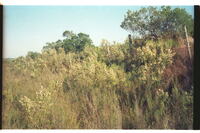 Good stand of Erica caffra at roadside, survives along roadside, mostly between road-fences; eliminated on farm ground beyond the fences. Probably covered most of this area originally.
 -
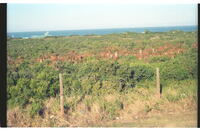 Single patch of Aloe pluridens in full flower in dense bushveld. Another such isolated patch was flowering in dense bushveld near Coega railway station.
 -
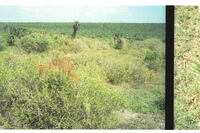 Cleared ground with Cotyledon adscendens coming up through a shrub. The darkness in the distance behind the aloe gives an idea of the density of local bushveld before clearance took place, a feature of this whole flat country between the Swartkops and Coega Rivers.
 -
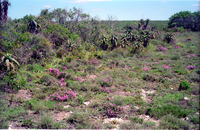 Patches of Sutera microphylla in open spaces between scrubby bushclumps. Likely to be replaced by housing.
 -
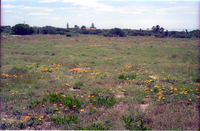 Cleared grasslands from dense bush with good spread of flowering Gazania krebsii. Likely to be replaced by housing.
 -
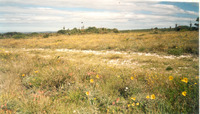 Stretch of open veld surrounded by dense Valley Bush. Fine place for wild flowers, soon to be covered by building development.
 -
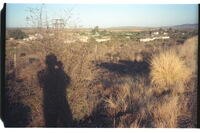 Views over Wolwefontein.
 -
 Fine specimen of Klapperbos, Nymania capensis in good colour. Other bushes in the vicinity not as good.
 -
 Good spread of Pelargonium peltatum creeping over a roadside bush. Others in the vicinity.
 -
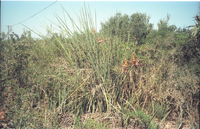 Good cluster of Strelitzia juncea in dense bushveld.
 -
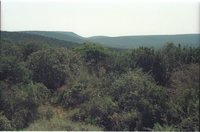 Cluster of flowering Strelitzia juncea in dense Valley Bush now being used as a game farm, e.g. for kudu-hunting. Many other such clusters in the vicinity.
 -
 Good cluster of Strelitzia juncea in light bushveld. Klapperbos, Nymania capensis in left background. With Aloe africana in right background.
 -
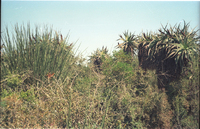 Cluster of Strelitzia juncea in dense scrub surrounded by Aloe africana. Many others in the vicinity.
 -
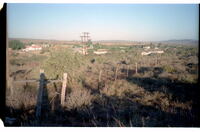 Where in 1797 John Barrow found 14 buffalos wallowing in a vlei and watched them run off into the hills.
 -
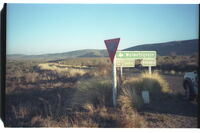 Where in 1797 John Barrow found 14 buffalos wallowing in a vlei and watched them run off into the hills.