C.J. Skead Photograph Collection
Item set
- Title
- C.J. Skead Photograph Collection
- Creator
- Skead, C. J. (Cuthbert John)
- Description
-
The Jack (Cuthbert John) Skead Collection comprises a substantial body of photographic material that documents the natural environments, vegetation types, and ecological habitats of the Eastern Cape and the wider southern African region. The photographs—taken over several decades—capture landscapes, plant communities, wetlands, forests, grasslands, and other habitat formations that were central to Skead’s extensive research interests. Many images also document environmental change, land use patterns, and field sites associated with his ornithological and botanical studies.
The collection provides a valuable visual record for researchers working in the fields of environmental history, ecology, biogeography, conservation, and Eastern Cape natural heritage. The photographs complement Skead’s published and unpublished work held at Cory Library, including field notes, correspondence, and research manuscripts. - Language
- English
- Provenance
- Materials received from the Skead Family.
- Type
- Collection
- Genre
- Photographs
- Subject
- South Africa--Addo Elephant National Park
- Addo Elephant National Park (South Africa)
- Natual history -- South Africa -- Eastern Cape
- Vegetation -- South Africa -- Eastern Cape
- Habitats -- South Africa -- Eastern Cape
- Ecology -- South Africa -- Eastern Cape
- Landscape photography -- South Africa
- Photograph collections
- Environmental change -- South Africa -- Eastern Cape
- Biogeography -- South Africa
- Eastern Cape (South Africa) -- Photographs
- Albany District (South Africa) -- Photographs
- Skead, C. J. (Cuthbert John), 1912–2006
Items
-
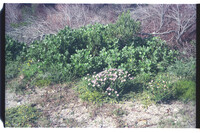 Two plants of Felicia echinata at roadside. Other singletons were flowering elsewhere along this stretch of road.
 -
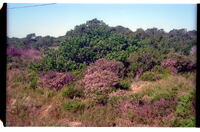 Coleonema pulchrum in full flower with more not far from there.
 -
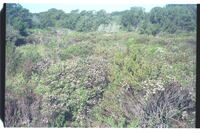 Strong patch of Coleonema pulchrum plants showing how common the species is in this area.
 -
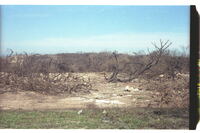 Recent devastation by fire on an extensive scale.
 -
 Complete burn of veld.
 -
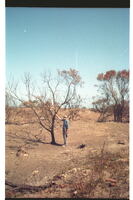 Burnout of wattle.
 -
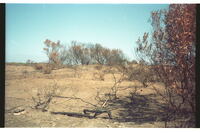 Burnout of wattle.
 -
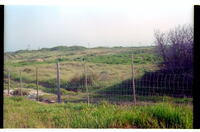 Regrowth of duneveld (seven years regrowth) after fire of 14 jan 1998 when heavy invasions of wattle were destroyed. Note the bushy wattle regrowth among local indigenous vegetation.
 -
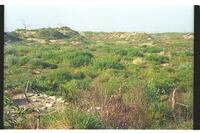 View from same aspect as CO 1 above looking west over ground. Note the strong regrowth of a grass sp. 7 years after the fire of 14 Jan 1998.
 -
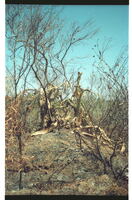 Burnout of wattle.
 -
 Heather Collins at 3 weeks.
 -
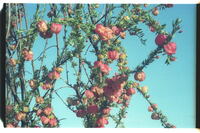 Klapperbos, Nymania capensis in good pod. Many such plants grew along the road at this point.
 -
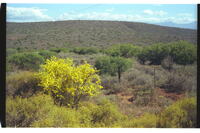 Fine flowering plant of Rhigozum obovatum within roadside fences.
 -
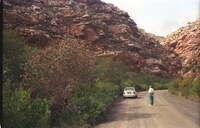 One of many flowering Keurbooms, Virgilia oroboides. Peggy Collins and her car on display.
 -
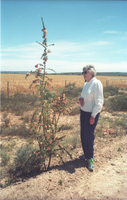 Single plant of Nymania capensis, Klapperbos, in full seed-pod (Chinese Lantern) at roadside. Wheatland in background, recently reaped.
 -
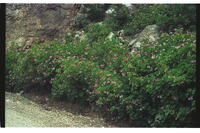 Pelargonium? In massed flower along the roadside and partway up the steep slopes at the base of the precipices. This was a mere portion of the whole scene.
 -
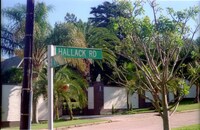 Hallack Street signpost off Park Drive, Port Elizabeth - named in honour of Mr. Russell Hallack (1824-1903) a Port Elizabeth businessman and naturalist who lived in Park Drive.
 -
 Home of Mrs. Florence Paterson, an outstanding plant-collector and amateur botanist of the late 19th & early 20th centuries.
 -
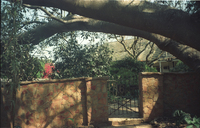 Home of Mrs. Florence Paterson, an outstanding local plant-collector and amateur botanist of her time.
 -
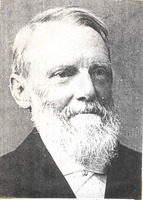 Russel Hallack (1824 - 1903). Father of Florence Mary Paterson (1869 - 1936). Both keen amatuer botanists.
 -
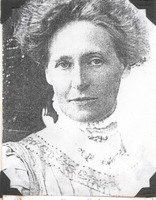 Florence Mary Paterson b. Hallack (1869 - 1936). Well known amatuer botanist at Port Elizabeth. Daughter of Russel Hallack, also a keen amatuer botanist.
 -
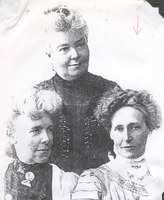 Annie Hallack (later Vardy) b. 1852. Left: Elizabeth Hallack (later English); Right: Florence Mary Hallack (later Paterson) (1869 - 1936). Daughters of Russel Hallack of Port Elizabeth.
 -
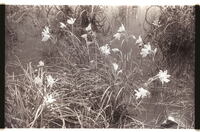 White Vlei Lilies (Crinum campanulatum).
 -
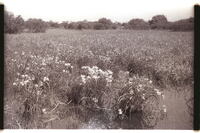 White Vlei Lilies (Crinum campanulatum). Usually they are a deep pink.
 -
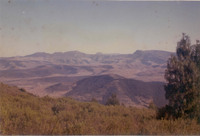 Between these three and Chata Peak to the far right is Gaika's Kop, a truncated spitskop in the distance. On the slopes of Bhukazana a dense tall growth of Protea subvestita thrives as it does out of the picture to the immediate left of the photographer.