C.J. Skead Photograph Collection
Item set
- Title
- C.J. Skead Photograph Collection
- Creator
- Skead, C. J. (Cuthbert John)
- Description
-
The Jack (Cuthbert John) Skead Collection comprises a substantial body of photographic material that documents the natural environments, vegetation types, and ecological habitats of the Eastern Cape and the wider southern African region. The photographs—taken over several decades—capture landscapes, plant communities, wetlands, forests, grasslands, and other habitat formations that were central to Skead’s extensive research interests. Many images also document environmental change, land use patterns, and field sites associated with his ornithological and botanical studies.
The collection provides a valuable visual record for researchers working in the fields of environmental history, ecology, biogeography, conservation, and Eastern Cape natural heritage. The photographs complement Skead’s published and unpublished work held at Cory Library, including field notes, correspondence, and research manuscripts. - Language
- English
- Provenance
- Materials received from the Skead Family.
- Type
- Collection
- Genre
- Photographs
- Subject
- South Africa--Addo Elephant National Park
- Addo Elephant National Park (South Africa)
- Natual history -- South Africa -- Eastern Cape
- Vegetation -- South Africa -- Eastern Cape
- Habitats -- South Africa -- Eastern Cape
- Ecology -- South Africa -- Eastern Cape
- Landscape photography -- South Africa
- Photograph collections
- Environmental change -- South Africa -- Eastern Cape
- Biogeography -- South Africa
- Eastern Cape (South Africa) -- Photographs
- Albany District (South Africa) -- Photographs
- Skead, C. J. (Cuthbert John), 1912–2006
Items
-
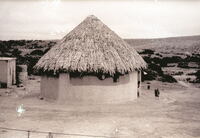 The 'thatch' is made from the stems of Spekboom trees, Portulacaria afra. The dried stems are beaten with stones to flatten them, and are then packed on top of each other to form the thatch. There is no grassy thatching material in this dry Fish River area. No wonder the Spekboom is been destroyed so quickly.
 -
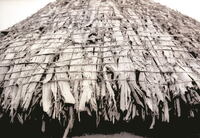 Close-up of the thatching of a Native laborer's hut. The stems and branches of the Spekboom have been flattened by pulping and then stacked one on top of the other.
 -
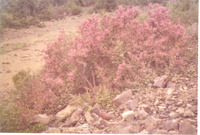 Spekboom in flower.
 -
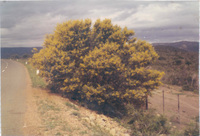 Single Acacia karroo tree in full flower.
 -
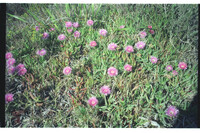 Mauve form of Carpobrotus deliciosus. 33 flowers in picture.
 -
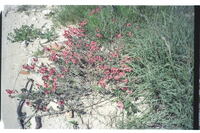 Batch of Indigofera hispida in fair numbers. Seen here annually
 -
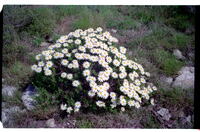 Batch of Bellis perennis.
 -
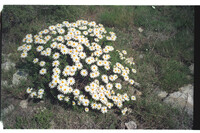 Batch of Bellis perennis.
 -
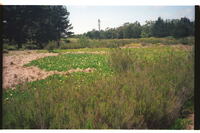 Large mass of cream-flowered Carpobrotus edulis.
 -
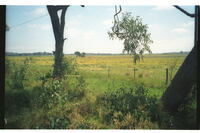 Massed flowering of Athanasia dentata invading farm pasture-land.
 -
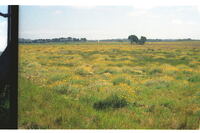 Massed flowering of Athanasia dentata invading farm pasture-land.
 -
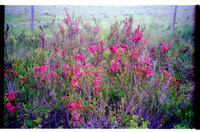 Erica discolor. Note close-eaten grass beyond fence on farm. Photo taken on a dull day.
 -
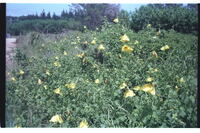 Low corner of roadside, Hibiscus ludwigii.
 -
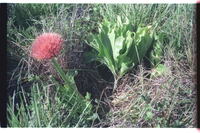 Scadoxus puniceus
 -
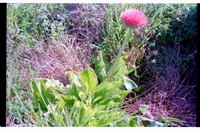 Scadoxus puniceus
 -
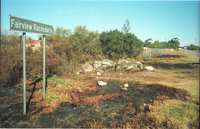 Partly overgrown with bush & with recent burn on grass & adjacent bush. An outspan for waggoners and herders taking goods & stock to the Port Elizabeth markets.
 -
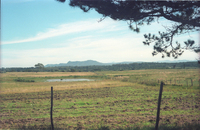 Photo taken after heavy rains, hence standing water. The dank vegetation across mid-picture is wattle encroachment. Up to the 1920's / 30's the flats to Witteklip were open fynbosveld almost in its prime.
 -
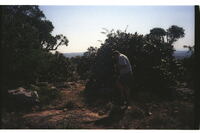 Oldenburgia arbuscula and other plants on lone copse.
 -
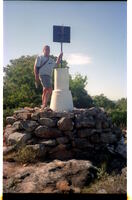 Oldenburgia arbuscula and other plants on lone copse.
 -
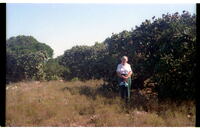 Oldenburgia arbuscula and other plants on lone copse.
 -
 Oldenburgia arbuscula and other plants on lone copse.
 -
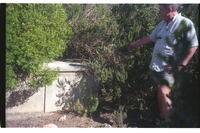 Grave of Maria Petronella Pohl, aged 17 (d.23.3.1843). Overgrown with a Gwarri (left) and a European Myrtle (right), the latter brought from Europe and planted by her fiance soon after her death.
 -
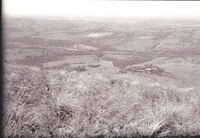 In the foreground are massed rushes (biesies) of Bobartia (Ncaluka, Xhosa - sometimes called whip reed).
 -
 South face of Highlands Mountain, 22km west of Grahamstown, 2nd highest point in the Albany districtWith Carl's Rust farmstead and outbuildings at base. The outline of the so-called AFRICA BUSH is to the left of the mountainside. Protea cynaroides once grew here before extermination by burning to bring grazing to sheep.
 -
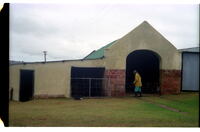 Used in mid-1800's by Carl Pohl for waggon-building. Lean-to buildings added very much later.