
Items
-
 Three years ago this Province under the banner of the Western Cape National Union of Mineworkers gathered in this constitutional structure, the Regional conference under the slogan “Develop Leadership to Advance Socialismâ€. That conference then declared and adopted a comprehensive programme of action to take forward that Regional conference declaration. That the regional committee should and within the broad framework of the declaration ensure that the NUM in a regional context fight for better working conditions of our members. That the RC develops concrete programmes for the broader structures and membership to understand and ultimately be implemented at those levels. This conference has to deal with the assessment of the progress made during this period under review. Within the context of contestation forward mobility is ensured that seeks to help build the working class leadership which is ultimately or essentially political leadership. Worker control is one of the key founding principles of our union which will be better understood and implemented when we are to begin to find synergy between the worker leadership and the intellectual capacity within our organisation. This report will deal with the different chapters as identified. This report will also deal with our participation in COSATU structures as well as lack of cohesiveness between branch leaders and general membership and also the possible fear to engage. We will also try and attempt to discuss the lack of information flow from our structures to the broader membership. As we engage this report, let us try to use our organisational tools to resolve the problems facing our region and in particular the branches and as a result find suitable solutions to build and strengthen the organisation.
 -
 AIDS is a trade union issue and must be discussed and placed on the agendas of all union meetings. We have committed ourselves to campaign for HIV prevention, care and treatment with the same determination and energy with which we fight many other working class struggles. COSATU has also committed to work in partnership with other trade unions, government, business and organs of civil society in the fight against the disease.â€
AIDS is a trade union issue and must be discussed and placed on the agendas of all union meetings. We have committed ourselves to campaign for HIV prevention, care and treatment with the same determination and energy with which we fight many other working class struggles. COSATU has also committed to work in partnership with other trade unions, government, business and organs of civil society in the fight against the disease.†-
 A policy paper analyzing the integration of land reform with social development on commercial farms. It critiques the "brutal past" of farm labor relations and introduces the Land Bank’s "Social Discount Product"—a financial incentive for farmers to improve worker conditions. The authors argue that since redistribution only reaches a minority, broad-based "farm-based development" is essential for systemic poverty alleviation.
 -
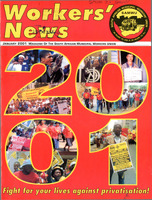 The focus is on mass mobilization, featuring the "Phantsi Goli 2002" rally at Library Gardens. It covers victories against privatization in Port Elizabeth (Nelson Mandela Bay) and Upington, and criticizes municipalities that refuse to transform their labor practices. It also sets the implementation goals for resolutions passed at the union congress.
 -
 This volume of Bargaining Indicators for 2002 comes in the context of the September 11 attacks on the World Trade Center in New York, the United States' war on Afghanistan, the collapse of the economy of Argentina and with it the biggest sovereign bankruptcy in history. All these historic events are unfolding within the first synchronised global recession since the 1970s, and have in turn deepened this recession. Within South Africa, this edition of Bargaining Indicators comes in the context of the first anti-government national strike by organised labour since the 1994 elections, and a deepening of the economic slowdown that we noted in the last edition of Bargaining Indicators. In this review of economic developments during 2001 we shine the spotlight on the global recession and its dynamics, and we look in particular at the slide of the world's largest economy - that of the United States - into its first serious economic crisis since the end of the cold war, and we take a look at the significance of the attacks of September 11 and their aftermath on the dynamics of the global recession. We conclude our discussion of the global recession by discussing the responses of the Bush government and its allies, and at the meaning of these responses for neoliberal economic orthodoxy. We continue our analysis by looking at developments within the South African economy. In particular, we look at the implications of the global recession on the South African economy, and at how the currency crisis that has unfolded since the last quarter of 2001 forms an important moment in the dynamics of the unfolding global recession. Within this context we look at the main economic indicators (GDP; GDE; fixed capital formation, operating surpluses, wages, employment, savings and so on). Lastly, we look at the year ahead, and in particular at the implications of the global and domestic economic developments for the 2002 bargaining season.
 -
 SADTU welcomes the release of White Paper No. 5 on Early Childhood Development. We thank the Ministry and Department of Education for affording us this opportunity to make an input. We are however concerned that the process during its development excluded stakeholder participation.
 -
 As a SACCAWU Staff Member it is important to know exactly what your Conditions of Service are hence this booklet. The Union believes in the principle of good and fair treatment of Staff and sees this as encouraging motivated and dedicated Officials. We have therefore tried to make Conditions as favourable as possible within the constraints of being a no-profit making organisation. In return, however the organisation does expect diligence, commitment and efficiency. Staff have the right before 1st March, every year to put forward proposals to* National Finance Committee in order to improve Working Conditions. Two Representatives elected from each Region will attend National Discussions/Engagements which shall put together a national mandate and elect Representatives to meet with NFC.
 -
 The StreetNet offices were opened in February 2000, eighteen months ago. We are now half-way through our three-year programme to launch StreetNet as an international organisation of street vendors all over the world. tVhat progress has been made in the first eighteen months ? We have two people working part-time in the StreetNet office since February 2000. Pat Horn is the International Co-ordinator while Nozipho Lembethe is the International Administrator. We have been trying unsuccessfully to find a website manager/researcher to start working with us this year.
 -
 What do a street vendor of traditional sweets in Venezuela, an indigenous vendor of flowers in Bolivia and an immigrant vendor of “empanadas†in Costa Rica have in common? A lot despite their different realities! For example, livelihoods that rely on production and sale on the streets or at markets that cost them years of struggle; goods frequently made with their own hands, battles against unsympathetic municipalities; harassment -sometimes violent - from the local police; the desire to organise themselves, which must overcome daily problems of leadership, politics and internal conflicts, and lack of resources to improve their situation or to help solve problems of their fellow vendors.
 -
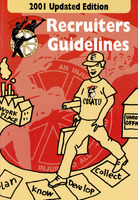 The purpose of this booklet is to touch in number of areas, which are important at this point for the recruitment campaign of the federation. It is not meant even by implication to provide details of how to handle the campaign what it does is to highlight issues and areas that we must think in the preparation for this campaign. More importantly is the fact that COSATU remains the biggest federation in South Africa and fastest growing international. Beside a loss of membership from + 2 million to + 1.8 million members. The decrease in membership is mostly because of retrenchments. The well known fact is that only about 40% of the workforce that is unionized. The aim of the recruitment drive is to access this 60% that is not unionized. The mistake must not be committed to think that the 40%, which is unionized, belong to COSATU. There are two other federations plus number of non-affiliated unions. Our commitment to One Country One Federation does not stop us to recruit from other unions as long as we remain under different bodies. This October campaign coincides with Red October campaign of the SACP and Health and Safety month of the federation this must be seen as strength than lack of co-ordination. One area that is link to recruitment is the servicing of membership. It is useless to recruit and fail to service membership because every campaign that we will take around recruitment we may find ourselves had to fight with disgruntled members and obviously it will be difficult to attract new members. This must say to us that members come first.
 -
 Whereas the SOUTHERN AFRICAN CLOTHING AND TEXTILE WORKERS' UNION is an association not for gain, non-racial registered trade union, unaffiliated to any political party and whereas the SOUTHERN AFRICAN CLOTHING AND TEXTILE WORKERS' UNION is dedicated and committed - irrespective of race, colour, creed or sex: to promote and maintain free democratic trade unionism for all workers in Southern Africa and to oppose the exploitation of cheap labour; to advance the dignity, rights, socio-economic and cultural well-being of all workers in Southern Africa through collective bargaining and free negotiation; to do all in our power to assist in fully developing the full potential of workers and their children in the economic, social, political and cultural fields; to oppose any forms of discrimination which could prevent all the people of this land from being able to trade, manufacture, practise all crafts, trades and professions and own land, live and be educated where and as they choose; to defend the right to equal status in the eyes of the law for all people and to support the rule of just law; to maintain the right to free compulsory and equal education for all children and the opportunity for all students to receive the highest specialised training; to promote the right to full employment for all people of Southern Africa; to promote the right for all people to live where they choose, to be properly and decently housed, and to raise their families in security and comfort; to promote a system whereby the aged and infirm are supported regardless of income or status; to pursuing an enlightened programme to assist unorganised workers, and to develop educational facilities within the trade union movement; to disseminate as widely as possible press democratic trade union principles among all workers in the industry; to promote the sharing of the fruits of the labour of all workers in the industry.
 -
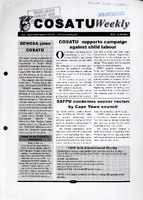 A 2001 issue of the COSATU newsletter reporting on the historic decision by the Democratic Nursing Organisation of South Africa (DENOSA) to join the federation. It highlights the vote of 200 delegates at the Pretoria congress under the theme "Nursing facing challenges: Development and HIV/Aids." The document frames this as a vital consolidation of public sector and white-collar workers, challenging the notion that COSATU only represents lower-ranked labourers.
 -
 The purpose of this booklet is to touch in number of areas, which are important at this point for the recruitment campaign of the federation. It is not meant even by implication to provide details of how to handle the campaign what it does is to highlight issues and areas that we must think in the preparation for this campaign. More importantly is the fact that COSATU remains the biggest federation in South Africa and fastest growing international. Beside a loss of membership from + 2 million to + 1.8 million members. The decrease in membership is mostly because of retrenchments. The well known fact is that only about 40% of the workforce that is unionized. The aim of the recruitment drive is to access this 60% that is not unionized. The mistake must not be committed to think that the 40%, which is unionized, belong to COSATU. There are two other federations plus number of non-affiliated unions. Our commitment to One Country One Federation does not stop us to recruit from other unions as long as we remain under different bodies. This October campaign coincides with Red October campaign of the SACP and Health and Safety month of the federation this must be seen as strength than lack of co-ordination. One area that is link to recruitment is the servicing of membership. It is useless to recruit and fail to service membership because every campaign that we will take around recruitment we may find ourselves had to fight with disgruntled members and obviously it will be difficult to attract new members. This must say to us that members come first.
 -
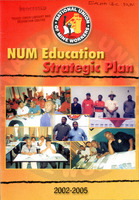 This document serves as the foundational framework for the National Union of Mineworkers (NUM) educational initiatives. It outlines a systematic approach to trade union education, designed to align the union’s developmental goals with its available resources and internal capacity. The plan is structured to provide a clear reference point for the ongoing assessment of progress, ensuring that educational outcomes are both measurable and realistic. By analysing both internal organisational conditions and external socio-economic factors, the document articulates a long-term vision intended to inspire and motivate union members. Key objectives include the formulation of manageable strategies, the optimisation of resource allocation, and the accurate measurement of educational impact on the union's overall success.
 -
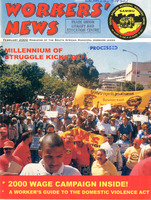 Entering the new millennium, this issue outlines the 2000 Wage Campaign and the union's continued resistance to iGoli 2002. Notably, it includes a worker's guide to the Domestic Violence Act, showing the union's expansion into social justice issues outside the immediate workplace. It also reports on international solidarity from unions in Canada and Australia.
 -
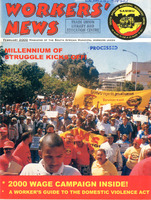 Lead article for the February 2000 issue detailing SAMWU's national wage demands. The union has submitted a demand for a R1600 minimum wage and a sliding scale increase (15% for lower earners to 8% for high earners). A critical focus of the issue is the union's opposition to the 6% cap on municipal expenditure, which SAMWU argues unconstitutionally limits collective bargaining and wage improvements.
 -
-
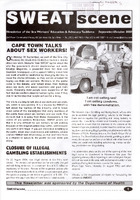 On Monday 25 September,, as- part of the One City Festival, the Black Arts Collective hosted a debate about sex work. Natasha from SWEAT spoke about the why the government should decriminalize sex work. Khadija Magardie, a journalist from the Mail and Guardian newspaper, sent a speech talking about how sex work should be abolished by changing the law to make the clients criminals, so they can be arrested for buying sex from sex workers. Members of the public came to the debate, and talked about their feelings about sex work, and asked questions and gave comments. Generally most people were supportive of the fact that sex workers deserve human rights, even if they didn't like the idea that people sell sex for a living. The city is starting to talk about sex work and sex workers, which is very exciting. It is a chance for SWEAT to talk about the realities of the industry, and to break down some of the stereotypes that many members of the public have about sex workers and sex work. One element that is missing from these discussions is the voices of sex workers themselves. SWEAT points out that it is very difficult for sex workers to talk publicly because of the stigmatization they suffer, and because sex work is still illegal. If you are interested in talking to the public about your experiences and opinions, please contact SWEAT and let us know, so that next time there is a chance to speak to the public we can invite you along.
 -
-
 Despite the massive contribution women make around the world, they still fall into the category of the poorest and the most oppressed. Women have borne the brunt of the social costs of the changes in the world economy such as globalisation, increased international competition, structural adjustment and the deregulation of labour legislation. Massive technological advances have done little to benefit women around the world. In fact, in many instances it has actually increased their hardships. Multinational companies search the globe for areas that offer cheap labour and poor working conditions. Globally, women make up the bulk of the army of so-called “flexibleâ€, cheap workers sought after by employers anxious to increase their profits. It is women who are mostly to be found in sweatshops and who are least likely to be organised. In South Africa, there is already a significant trend of homeworking in the clothing sector and casualisation in the retail and other sectors. And when they are organised into unions, women struggle to be recognised as leaders in those movements.
 -
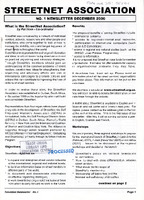 StreetNet was conceived by a network of individual vendors, activists, researchers and other people and institutions, who came together to look at how to increase the visibility, voice and bargaining power of street vendors throughout the world. StreetNet aims to promote the exchange of information and ideas on critical issues facing street vendors and on practical organizing and advocacy strategies. Through StreetNet, members should gain an understanding of the common problems of street vendors, develop new ideas for strengthening their organizing and advocacy efforts and join in international campaigns to promote policies and actions that can contribute to improving the lives of millions of street vendors.
 -
 This information and policy document has been produced in response to a resolution adopted by the SASBO National Congress in October 1998. The information provided is a summary of the rights of employees with regard to strike and other industrial actions, and of their employers' recourse to lockout. SASBO members wishing to acquire a more detailed knowledge of strikes and lock-outs should refer to Chapter IV of the Labour Relations Act of 1995 for the full text of the relevant legislation.
 -
 Formed as a trade union in 1916, SASBO's primary objectives are to improve the conditions of service and protect the interests of its members, individually and collectively, in relation to their employers and otherwise, and generally to raise their status. Operating in the South African finance sector, SASBO identifies with the ethics and conventions of finance professionals and has always encouraged sound industrial relations with employers and/or their organisations, with the intention of regulating conflict as peacefully and constructively as possible by endeavouring to settle disputes by conciliatory methods. The union has always been, and continues to be, committed to fair and honest dealings, and integrity, in its interaction with all its stakeholders, this in the fundamental belief that SASBO's operation and business should be conducted honestly, fairly and within the parameters of labour and other laws.
 -
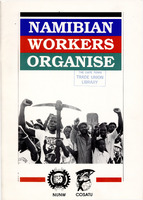 In 1987, long before Namibian independence was even on the agenda, the Congress of South African Trade Unions (COSATU) and the National Union of Namibian Workers (NUNW) decided to produce a joint book on the Namibian trade union movement. At that stage the Namibian trade unions had just begun to assert themselves. The idea of the book was to provide information useful for both Namibian and South African workers on the history of the working class struggle in Namibia. It was hoped that this would help to build a powerful working class solidarity between South African and Namibian workers. The International Labour Research and Information Group (ILRIG) - a research and educational service organisation specialising in working class struggles internationally — was commissioned by COSATU and NUNW to research, write and produce the book. Work on the book started in 1988. Between then and May 1989, two ILRIG workers visited Namibia a number of times - once with comrades from COSATU - and gathered a vast amount of information on the struggle in Namibia. Information came from workers, from trade unionists, from SWAPO, from documents and from observation. At all times in the process of writing the book, material was referred back to COSATU and NUNW for discussion and approval. The final chapter on solidarity was done at the end of August 1989, when a delegation of COSATU leaders visited Namibia to discuss setting up a permanent Working Committee with the NUNW. The book is coming at a time when Namibia is about to achieve her independence from South African colonial occupation under UN Resolution 435. The Namibian workers' struggle for a living wage, for the right to strike, for decent houses, for jobs for all and against privatisation will not end with independence. The need for strengthening and extending trade union organisation in Namibia will not end with independence. The necessity for building solidarity between the Namibian and South African working class will not end with independence.
 -
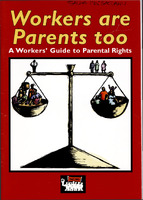 This booklet is a follow-up to the Parental Rights' Manual for negotiators produced by SACCAWU in 1 999. These publications have been the product of painful soul- searching. They are attempts to highlight the plight of women in the workplace and represent the uncompromising resolve of the union to challenge the inequalities and discrimination that workers, especially women, suffer as parents. This booklet is intended to assist negotiators, shop stewards and ordinary workers in knowing and exercising their parental rights. In order to win the struggle for parental rights, the understanding of worker rights must reach all the way to the shop floor. This booklet will help to make that understanding a reality. We wish to thank the commitment and dedication by all workers and union officials who have worked tirelessly for the realisation of the noble goal of parental rights and have forced the bosses to reason beyond dogmatic greed to maximise profits. Achievements won thus far have not been easy victories, nor can they be attributed to kindness or a change of heart by the employers. This booklet builds on our manual and further inspires us to translate our dreams into reality. We would like to thank everyone who contributed to the writing of this booklet, especially the SACCAWU Reference Group of Fihliwe Lusu, Brenita Cloete, Bella Maneli, Judy Piti, Abduragmann Jacobs, the SACCAWU National Gender Co-ordinator, Patricia Appolis, and those involved directly in production: John Pape of ILRIG, Meg Jordi, William Matlala, Rosie Campbell, Jon Berndt and Logo Print.