
Items
-
 As women in South Africa, it is important for us to understand the nature of our oppression, for it is only after understanding it, can we identify the target of our attack and plan the appropriate strategy and tactics for our struggle. Black women in South Africa suffer three types of oppression. 1. Political oppression, which is common to all blacks in South Africa, ie. the denial of rights to vote for or choose the type of government we want, and the denial of rights as a people in South Africa. 2. Economic oppression as black workers in South Africa. Black women workers are even more exploited than men workers. They are paid lower wages for the same job, are treated as temporary staff and can be fired at anytime especially if they fall pregnant. 3. Social oppression which stems from the idea that women are born inferior to men and therefore have to play an inferior role in society. The socialization process starts at birth and women and men are geared towards certain roles in society. Men most often towards leadership positions and professional jobs and women towards household duties and secretarial jobs. This socialization process continues throughout ones life such that most people accept it as a natural phenomenon and a way of life. Having understood the forms of oppression, we can see that the struggle is not between men and women, where men are seen as the source of our oppression. Nor is it a struggle for mechanical equality between men and women ie. being paid the same wages as men, and having equal status as men in society, because this will mean equality within the present status quo. Our struggle is a struggle between womenand the existing social order. It is a struggle of the oppressed against oppression. Our main weapons in the struggle for liberation are UNITY and ORGANISATION. Unity is realised through common effort, links are forged through collective work and study, through criticism and self-critcism and through action against opression. Organization can be achieved through women's groups and organization. A women's group's first demand should be the clarification of our ideas, to get rid of miscosepts and erroneous ideas concerning the role and liberation of women. A women's group usually tackles the question of social oppresion, but more important, it must be seen as a stepping stone towards involvement in the broader struggle can we destroy the foundations of exploitative society and rebuild society on new foundations. Foundations built on the demands of the FREEDOM CHARTER. “The fundamental struggle is for national liberation of the oppressed people of South Africa, and any women's organization that stands outside this struggle must stand apart from the mass of women. What was realised by the Federation of South African Women was that it would be impossible for women to achieve their rights as women in a society in which so many fundamental rights are denied to both men and women by virtue of their colour and their class. Therefore just as there can be no revolution without the liberation of women, the struggle for women's emancipation cannot succeed without the victory of the revolution".
 -
 The majority of the residents of Khutsong are employed at mines in the area south of Carletonville (stretching form East Driefontein in the east to Deelkraal in the west), as well as in Carletonville itself. The large majority of these people are dependant on public transport for commuting to work, for undertaking trips for shopping purposes and for going to school. The condition of the road network in Khutsong is of such a nature that large areas are totally inaccessible to public transport (especially in the rainy season) resulting in a situation where large numbers of people have to walk unacceptable long distances between their places of residence and public transport routes. A comprehensive programme have been embarked upon in consultation with the community to rectify this situation.
 -
 The basic objectives of ANC policy are threefold: * To overcome the legacy of inequality and injustice created by colonialism and apartheid, in a swift, progressive and principled way; * To develop an economy and state infrastructure that will progressively improve the quality of life of all South Africans; and, * To encourage the flourishing of the feeling that South Africa belongs to all who live in it, to promote a common loyalty to and pride in the country and to create a universal sense of freedom and security within its borders. These are not mutually exclusive goals. On the contrary, the future of our country depends on the harmonious and simultaneous realisation of all three. The advancement of the majority of people will, in the medium-and-long-term, release hitherto untapped and suppressed talents and energies that will both boost and diversify the economy. Developing the economy will, in turn, provide the basis for overcoming the divisions of the past without creating new ones. Finally, the achievement of a genuine sense of national unity depends on all of us working together to overcome the inequalities created by apartheid. The beacons guiding these advances are equal rights, nonracialism, non-sexism, democracy and mutual respect. A broad, inclusive approach, free of arrogance or complexes of superiority or inferiority, is fundamental. We have to develop a truly South African vision of our country, one undistorted by the prejudices and sectarianism that has guided viewpoints on race and gender, in the past. We have to rely on the wisdom, life experiences, talents and know-how of all South Africans, men and women. There can be no apartheid in finding solutions to the problems created by apartheid. This document does not present a rigid ANC blue-print for the future of South Africa, to which our supporters will be expected to rally and our opponents required to submit. Rather, the document represents a set of basic guidelines to policies we intend to pursue. These ideas will be developed through discussion within the ANC, and through consultation with the broadest spectrum of South African public opinion. The policies will be adapted according to these processes and on the basis of experience. Our problems run deep It is necessary to dwell on the problems which will be faced by the first government which is elected under a new democratic constitution. It will help create an understanding of the magnitude of the tasks involved in transforming our country into one where everyone can enjoy a reasonable standard of living combined with peace and security. It will underline the fact that there are choices to be made and priorities to be established. The nationalist government has pursued active political and social policies which, amongst others things, have led to: extreme levels of poverty and disease in the rural areas; the creation of urban ghettos where people have been denied access to even the most basic means of survival as a result of severely limited access to decent homes, electricity, water-borne sewerage, tarred roads, and recreational facilities; an education system preparing the majority of South Africans for lives of subordination and low income wage jobs; a social security system geared almost entirely to fulfilling the needs of the white minority; a health system that has seriously neglected the wellbeing of most South Africans; the social and political marginalisation of the majority of people, the African community in particular, their exclusion from public life and decision [ making as well as the denial of their culture. Gender discrimination has either excluded or subordinated the nature of women's participation in all socio-economic and political institutions. Combined with apartheid, this has resulted in African women being the most exploited and poverty stricken section of the South African population. Both the political system of apartheid and the pattern of economic development in our country, have been responsible for these developments. The white minority have used their exclusive access to political and economic power to promote their own sectional interests at the expense of black people and the country's natural resources. Black people have been systematically excluded and disadvantaged economically with the result that South Africa has one of the most unequal patterns of income and wealth distribution in the world. Since the mid-1970s, the South African economy has stagnated. An average growth rate of 6% in the 1960s declined to 3% in the 1970s and is now below 1%. Unemployment is estimated at over 40% of the economically active population. For over forty years, economic strategy was based on expanding industry through the substitution of hitherto imported manufactured goods for the wealthy minority. There has also been an emphasis on strategic industries such as arms and petrochemicals. This led to the emergence of a significant manufacturing sector in our country, but one which is generally uncompetitive in terms of international costs and prices. The alienation of land from the indigenous people and the denial of the African majority's rights to land and political power in our country are intimately connected. The agricultural sector in South Africa is currently experiencing a deep crisis. Debt levels of white farmers have reached R14 billion. These problems have led to rapidly increasing unemployment and a serious decline in living standards. Our people remain divided. We do not know each other. We are prevented from developing a national vision, in terms of which, we would see our country through the eyes of all its citizens, and not just one group or another. We live apart, physically separated, spiritually alienated, frightened of getting too close, knowing that we have different life-chances and different views of what change means. We are ruled by a multiplicity of fragmented departments, boards, councils and ministries. Apartheid has left us apart. Policies for transformation In this context it is vital that the ANC develops a clear response. This response must be aimed both at establishing a new and democratic political dispensation that replaces the racist and undemocratic apartheid constitution and addresses the legacy of apartheid in the broader socio-economic sphere. This document is a direct response to the above challenges. It sets out for discussion a comprehensive set of guidelines highlighting the ANC's broad policy response to all the major areas of political, social and economic life. The document is structured so as to highlight the strong relationship between the creation of political democracy and social and economic transformation. It is critical, however, that we honestly face up to the extent of the problems confronting our country. They are not going to be solved overnight and there are no easy or quick solutions. The problems run deep and resources are limited. Accordingly, the policies proposed here represent our broad vision. These policies highlight, our ultimate goals, which will need to be transformed into effective and realisable programmes in the short-term. In other words, we will need to establish priorities both within each of the different policy areas and between these broad areas. These priorities must be arrived at through democratic discussions and decision making processes and we must establish just and efficient mechanisms for implementing these decisions. Progress will also depend on involving as many sections of our society as possible in finding solutions.
 -
 Nationalisation involves putting any section of the economy under the control and ownership of a government. Nationalisation is not new to South Africa. The governments of the past and especially the Nationalist Party have nationalised a number of industries in the South African economy. Today almost 54% of the productive assets in the country are in the hands of the government. Transport, electricity, post office, are a few examples. Nationalisation in the past has been used to benefit only the whites, by providing them with jobs and services.
 -
 An analytical introduction to the CORD welfare programme. It critiques the existing South African welfare system's urban and racial biases and proposes a holistic, developmental model. It focuses on training auxiliary workers to address the shortage of rural professionals and suggests that welfare can serve as a catalyst for broader community growth.
 -
 This document is an educational resource titled "Regional Educators' Workshop on Trade Union History in South Africa." It contains a first-hand account from a migrant worker at Rely Precision Castings in the East Rand, covering the period between the late 1970s and early 1980s. The text documents the development of collective bargaining and industrial action within the Metal and Allied Workers Union (MAWU). It describes the working conditions in the foundry industry and the socio-economic pressures of the migrant labour system, specifically the relationship between employment and residency rights under the pass laws. Key subjects include: Union Organisation: The process of recruiting members and transitioning from informal grievances to formal representation. Labour Relations: The role of factory management, indunas (foremen), and the South African Police during labour disputes. The 1980 Rely Precision Strike: The events leading to the dismissal and subsequent prosecution of 55 workers for illegal striking. Historical Context: The broader strike wave in the East Rand metal industry during 1980 and 1981. Solidarity Models: The concluding arguments for inter-factory unity and community-based labour mobilisation.
 -
 This document is an instructional manual titled "Wage Negotiations Workbook." It outlines the preparatory requirements for trade unions engaging in collective bargaining with employers. The text emphasises a structural approach to labour relations, asserting that effective negotiation outcomes are dependent on organisational groundwork established well in advance of formal meetings. It identifies a lack of preparation—rather than a lack of recognition—as a primary cause of union failure during the bargaining process.
 -
 This document serves as a facilitator’s guide for a workshop on disclosure, hosted by the National Union of Metalworkers of South Africa (NUMSA) on 12 October 1995. The material was developed by the Trade Union Research Project (TURP) and details the pedagogical methods and introductory procedures for the session. The guide outlines a participatory approach to labour education, emphasising the value of the workers' existing life experiences and technical knowledge. It provides a structured icebreaker activity—the "picnic game"—designed to build group cohesion and test memory without the use of written notes, followed by a discussion on the workshop's objectives and TURP’s educational philosophy.
 -
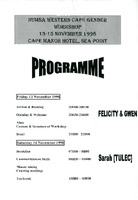 Programme for the NUMSA Western Cape Gender Workshop, 13-15 November 1998 Cape Manor Hotel, Sea Point.
 -
 This document outlines a week-long curriculum for the NUMSA KwaZulu-Natal Gender Workshop, held from July 20 to July 24, 1998. The program was facilitated by the International Labour Resource and Information Group (ILRIG) and focuses on the intersection of gender, labour rights, and macroeconomic trends. The workshop aims to analyse the impact of globalisation on the South African economy, specifically regarding its effects on women workers. It provides a critical evaluation of South African labour legislation, identifying both the protections and the limitations for the labour movement. The curriculum is designed to build the capacity of women within the union to navigate global economic challenges and utilise legal frameworks to secure workplace gains.
 -
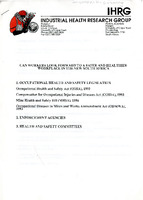 This document outlines a workshop focused on the evolution of Occupational Health and Safety (OHS) in South Africa during the post-apartheid transition. It assesses the effectiveness of new legislative frameworks and the role of state enforcement agencies in promoting workplace safety.
 -
 This document serves as a mission statement and service outline for Azaad, a race consultancy focused on promoting racial equality and empowerment within post-apartheid South Africa. The text details a strategic framework for implementing anti-discrimination training through informal education and participatory learning. The consultancy’s mandate centres on challenging systemic oppression while celebrating cultural, linguistic, and social diversity. Azaad advocates for a collaborative "partnership" model between Black and White South Africans in decision-making and learning processes. The curriculum is delivered through a variety of formats, including workshops, seminars, and role-play exercises, designed to equip individuals with the skills to advocate for their rights.
 -
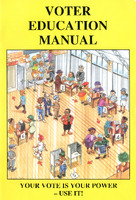 This document is a pedagogical guide titled "Voter Education Manual," designed for activists and volunteers conducting community outreach in preparation for South Africa’s first democratic elections. It addresses the historical disenfranchisement of the majority of the population under the apartheid-era white minority government and the limited participation in the subsequent tricameral parliament. The manual serves as a strategic toolkit to reach an estimated 18 million new voters, focusing on overcoming political apathy and procedural barriers. It provides a framework for explaining the democratic process, the mechanics of casting a ballot, and the significance of the vote as a tool for social and political change.
 -
This document serves as the introductory curriculum for the Shop Steward Foundation Course, developed by the Chemical Workers Industrial Union (CWIU). It is designed to equip newly elected union representatives with the fundamental skills and knowledge required to perform their duties within the chemical and petroleum industries. The course establishes the shop steward as the primary link between the union leadership and the rank-and-file membership. It provides a structured framework for understanding the rights and responsibilities of stewards, the principles of worker democracy, and the technical aspects of grievance handling and shop floor representation.
-
 The manual serves as a guide for shopstewards of the National Union of Metalworkers of South Africa (NUMSA), in enabling shopstewards to support the union members. Included is the duties of a shopsteward, information pertaining to NUMSA, as well as an outline of the activities of NUMSA.
 -
 This document is a technical training manual titled "Advice Skills: A Guide for NUMSA Shop Stewards," produced between 1996 and 1999. It is designed to equip representatives of the National Union of Metalworkers of South Africa (NUMSA) with the practical knowledge required to advise members on statutory rights, social security benefits, and workplace legalities during the early post-apartheid era. The guide focuses on the "paralegal" role of the shop steward, providing a structured approach to navigating complex South African labour and welfare legislation. It bridges the gap between high-level policy and the immediate, individual needs of union members regarding financial security and job protection.
 -
 This document is a Discussion Document on economic policy, prepared for the African National Congress (ANC) Department of Economic Policy (DEP) workshop held in Harare from 20 to 23 September 1990. It represents a significant historical contribution to the democratic formulation of economic strategy during the early transition period following the unbanning of political organisations in South Africa. The text frames economic policy as an essential component of national liberation, asserting that constitutional changes must be accompanied by fundamental socio-economic transformation. Grounded in the principles of the Freedom Charter, the document outlines a vision for the redistribution of land and wealth, the provision of universal housing and security, and the restructuring of the economy to serve the needs of the majority.
 -
 This document is a Workshop Package on the Discussion Document on Economic Policy, produced by the African National Congress (ANC) Department of Economic Policy (DEP) in the early 1990s. It is designed as a facilitator's toolkit to assist local branches in conducting structured debates on the movement's emerging economic strategies. The package serves as a pedagogical bridge between high-level policy documents and grassroots political education. It emphasises a participatory approach to policy-making, providing activists with visual aids—such as templates for wall charts and overhead transparencies—and guided questions to ensure that branch members could actively shape the ANC’s socio-economic agenda during the transition from apartheid.
 -
 This document is a formal Report from the Portfolio Committee on Welfare / UNICEF Workshop on Children and Development. The session was chaired by the Honourable Cassiem Saloojee, MP, and served as a consultative forum for evaluating contemporary research on child welfare and developmental indicators in South Africa. The workshop convened a diverse group of stakeholders, including Members of Parliament, government officials, and representatives from Non-Governmental Organisations (NGOs) and Community-Based Organisations (CBOs). Its primary objective was to bridge the gap between academic research and legislative policy, ensuring that developmental programmes for children were informed by current data and social realities in the post-apartheid context.
 -
 This document is a Job Summit Reading Pack compiled for the Trust for Community Outreach and Education (TCOE). It was prepared as a preparatory resource for the 1998 Presidential Job Summit, drawing extensively on the 1996 report by the Commission to Investigate the Development of a Comprehensive Labour Market Policy (often referred to as the Labour Market Commission) established under the National Economic Development and Labour Council (NEDLAC). The reading pack serves as a strategic briefing for TCOE—an organisation with roots in the Black Consciousness Movement founded by Steve Biko—to engage with national debates on unemployment and labour market restructuring. It focuses on the transition from apartheid-era industrial relations to a "comprehensive labour market policy" that balances economic growth with social equity and the protection of vulnerable workers.
 -
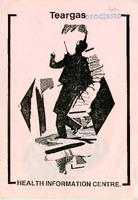 This document is a public health and safety resource titled "Teargas", compiled by the Health Information Centre (HIC) in Johannesburg. Produced during a period of heightened civil unrest and police intervention in South Africa, the booklet serves as both a medical advisory and a civil rights tool, providing transparent information on the chemical agents used by security forces for riot control. The publication details the physiological effects of tear gas (typically CS or CN gas) on the human body, ranging from immediate respiratory distress to long-term health implications. Crucially, it provides practical, "first-aid" style instructions for activists, bystanders, and community members on how to mitigate exposure and treat symptoms in environments where these irritants have been deployed.
 -
 Budget presentation to the Workers' College, May 1996