
Items
-
 The past year has been a very dramatic one for TGWU. It has been a year of enormous growth in membership, and at the same time a year where we have had to deal with the traumas of numerous mergers (both into TGWU, and TGWU membership into other unions). We have had to endure the difficulties of being without a physical locality for our head office for three months (after the bomb attack on Cosatu House), and more recently the arson attack on our head office premises. In an attempt to cope with the growth of the union we have developed new structures, and have expanded our staff at all levels. The year has also of course been a very dramatic one for the trade union movement as a whole, and for Cosatu in particular. The two most serious features of this have been the restricting of Cosatu in terms of the State of Emergency (along with 17 other organisations), and the proposed Labour Relations Amendment Bill. TGWU has tried to address these issues with the seriousness and determined opposition that they deserve. As a result, the state has seen fit to clash with our members, as witnessed by the detention (and now trial) of our first vice president, Comrade Alfred Ndlovu, and at least 15 other TGWU memebers over the past year. Nine TGWU members are still suffering in the isolation and evilness of detention.
 -
 A foundational educational manual and primary source reader compiled for the Workers’ College. It documents the launch and structural framework of the National Economic Development and Labour Council (NEDLAC) in February 1995. The reader includes the "Founding Declaration," the NEDLAC Act and Constitution, and the landmark launch speeches by Tito Mboweni (Government), John Gomomo (Labour/COSATU), and David Brink (Business). It outlines the "quadripartite" structure (Labour, Business, Government, and Community) and the four specific chambers: Public Finance, Labour Market, Trade and Industry, and Development.
 -
-
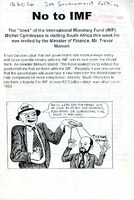 A protest pamphlet and mobilisation call issued by CANSA following the visit of IMF Managing Director Michel Camdessus to South Africa in October 1996. The document critiques the South African government's shift toward "Structural Adjustment Programmes" (SAPs) and the adoption of the GEAR (Growth, Employment and Redistribution) strategy. It outlines the "Dangers of the IMF," including privatisation, cuts to social spending, and trade liberalisation. It concludes with the announcement of CANSA’s launch in Gauteng and Cape Town on 15 October 1996, as an alliance of NGOs, trade unions, and community groups.
 -
-
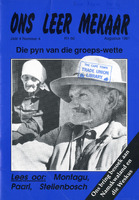 A community education magazine documenting grassroots struggles and social initiatives in the Western Cape. Key features include an investigation into the Montagu Woodworkers Co-operative (a worker-owned business), a travel report on land struggles in Namakwaland and Elandskloof, and a profile on "Ma Karriem," a Worcester activist and poet. The issue also addresses the housing crisis in Stellenbosch (SHAC) and includes practical "Hulp-hoekie" advice on homemade soap to counter the high cost of living.
 -
 A four-phase historical review authored by R.M. Godsell (Chairman of SACCOLA) detailing the organisation's engagement with labour law reform from 1983 to August 1988. The report tracks SACCOLA's evolution from its expulsion from the International Organisation of Employers to its role as a primary negotiator during the crisis surrounding the 1988 Labour Relations Amendment Bill. It documents high-stakes meetings with COSATU and NACTU, the 1988 three-day national stay-away, and employer attempts to reach consensus on "Unfair Labour Practice" definitions to prevent industrial conflict.
 -
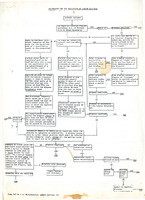
 An activist briefing paper analysing the apartheid government's "Total Strategy" during the 1986 State of Emergency. It describes the shift toward "Low Intensity Conflict" (LIC) and "Winning Hearts and Minds" (WHAM) strategies. The document breaks down the four-committee structure of the JMCs (Intelligence, Security, Welfare, and Communications) and explains how the state combined brutal repression (assassinations and detentions) with "upgrading" (socio-economic projects) to divide communities and neutralize liberation movements.
 -
-
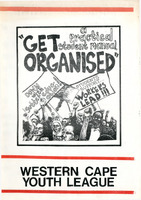 A comprehensive activist manual produced during the 1985 State of Emergency. The handbook provides theoretical frameworks for understanding "Apartheid Capitalism," instructions on forming Student Representative Councils (SRCs), and guidance on "Awareness Programmes." It emphasises the necessity of linking student protests to the broader working-class struggle and offers practical advice on meeting procedures, legal rights upon arrest, and a critique of "Bourgeois Culture" in theatre.
 -
 A credit union is a self-help financial co-operative where people, who are united by a Common Bond, agree to save money together and, to make loans to one another at low rates of interest. The common bond is the most important characteristic of a credit union because credit unions are founded on trust and unless members already have something in common, they have no basis for trusting one another. The purpose of the common bond is to protect members' interests and members' funds. It also fosters a spirit commitment and co-operation.
 -
 1984 has witnessed an intensification of the world economic crisis which began 10 years ago and with it a heightening of the class struggle world-wide. So extreme has the recession become that banner headlines liken it countless times to the first capitalist crash of 1929. Not even the USA's conjunctural boom can act as any respite to its own working population or to those of the other nations linked inexorably in the Imperialist chain. In America capitalism can boast an increase in profits of up to 50% for 1984 and the truth is that this has been achieved by depressing the value of wages below the inflation rate since 1981. For Latin America, America's boom has brought nothing but greater hardship as she reels under the economic burden of increased indebtedness, exacerbated by the soaring interest rates in the USA. Caring little for traditional blood-ties America intensifies the death throes of her oldest rival - Britain. The buoyant dollar has suppressed confidence in sterling, pushing up the cost of credit and thus discouraging capitalists from investing. The threat of this ruthless business sense has expressed itself in the most tenacious struggles on the part of workers to defend their right to work. In South Africa, hopes of an export-led recovery have been shattered by greatly diminished exports from the drought striken agricultural sector, and the costly importation of heavy machinery from America and Japan where the rand finds very little in exchange. This then is the meaning of America's boom. In a period of rapidly declining capitalism, there can be no talk of a protracted boom which brings about general social upliftment, but only an intensification of the most nationalisic throat-cutting and the immiseration of large sections of the working class.,No. 4
 -
 A Marxist-Leninist serial publication analysing the socio-economic crisis in South Africa during the early 1980s. Key topics include the necessity of trade union unity, a critique of "reformist" union leadership, the failure of the "legal strike" mechanism, and an analysis of the state's 1983 housing policy (the "sale of houses" campaign). The magazine argues for a "United Front" of workers and tenants to defend living standards against "Apartheid Capitalism."
 -
 This dissertation examines the factors leading to the opening of negotiations to majority rule in South Africa. It argues that changes to the socio-economic environment led to the growth of the strategic relevance of the black working class, and also created certain points of collision between the black working class and the policies of the state. These sectoral collisions engendered both the partial reforms of the Botha era as well as the rejection of these reforms by the black majority. The developments that emerged from the ensuing process of reform, resistance and repression in the 1980s weakened both the state and the black opposition sufficiently to allow for the emergence of a consensual solution to the political stalemate.,Dissertation submitted in accordance with the requirements of the University of Liverpool for the degree of Master of Arts
 -
 An internal organizational manual outlining the behavioral and ethical standards for youth activists. The code emphasizes "comradely, disciplined, and democratic" conduct. It justifies these rules on two levels: as a pragmatic tool for achieving political goals effectively and as a public relations necessity, ensuring that the behavior of individuals does not bring the broader National Democratic Struggle into disrepute.
 -
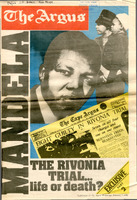 A retrospective report published in February 1990 reflecting on the commencement of the Rivonia Trial on October 9, 1963. The article highlights the social climate of the time, contrasting the trial of the "Rivonia 11" with the front-page news of Cape Town singer Danny Williams marrying a white woman in London—an act then criminalised in South Africa under the Prohibition of Mixed Marriages Act. It notes the archaic racial terminology used in 1963 press reports ("Natives") and the specific charges of sabotage and communism.
 -
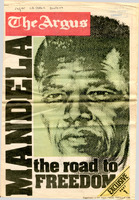 The inaugural installment of a four-part exclusive series by staff writer Dennis Cruywagen. Prepared over several months, the supplement reconstructs over 25 years of Nelson Mandela's life and the history of the ANC. The piece includes firsthand interviews with Rivonia Trial veterans, the Mandela family (including an impromptu interview with Winnie Mandela in a Johannesburg traffic jam), and various legal and political experts. It aims to provide an overview of the political drama and personal poignancy of Mandela’s life-term imprisonment.
 -
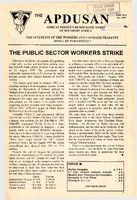 An analytical report on the 1999 Public Sector strike involving over 600,000 workers. The text details the breakdown of negotiations between the government and COSATU-affiliated unions. It critiques the "Medium-Term Expenditure Framework" (MTEF) as a tool for enforcing wage cuts and "non-negotiability." The article highlights the irony of COSATU supporting the ANC's election campaign in June 1999, only for the government to unilaterally implement a 6.3% wage increase in August, which was well below the workers' demands. It further exposes the government's "ideological media campaign" regarding parliamentary salary increases.
 -
 A civic education guide explaining the role and structure of the South African Parliament under the 1996 Constitution. It defines Parliament as an independent law-making body composed of elected Members of Parliament (MPs). The document details the bicameral system consisting of the National Assembly (NA) and the National Council of Provinces (NCOP). It further outlines the functions of parliamentary committees and the oversight role of MPs in monitoring government departments.
 -
 An editorial essay analyzing the internal contradictions of the National Party Cabinet in 1969. It contrasts the "altruistic" rhetoric of Dr. Piet Koornhof (who argued for the moral development of homelands) with the "callous" pragmatism of Mr. G.F. van L. Froneman (who viewed black South Africans as "surplus appendages"). The journal argues that despite their stylistic differences—labeled here as the "sissy" and the "barbarian"—both men serve the same fundamental goal: the preservation of white supremacy. The text concludes by asserting that the wealth of South Africa belongs to all its people jointly, rejecting the "blueprint" of separate development.
 -
 The South African Parliament has set up a programme to inform and educate the public about Parliament and to build democracy. Our country has only recently become a democracy. Previously, people were not allowed to vote nor participate in making decisions that affected their lives. Organisations such as Parliament were not open and did not answer to the public. As a result, the majority of the people do not have the experience and the skills to participate in the new democracy. This places a major challenge on all those who are committed to developing democracy in the country. The growing democratic culture can only be built upon if the public participate in issues that affect them. This requires that people are made aware of what is happening in organisations like Parliament and understand how they can become involved. People need to know how to raise their concerns when decisions affecting them are being taken. Once decisions are made, the public should be informed about their rights and responsibilities and how to hold government accountable. In building a democratic culture, the right of individuals to hold differing political views must be promoted. Parliament, as a national representative body, has a responsibility to contribute to deepening the democracy we have achieved. To do this the public education programme that has been set up will: * inform people about what happens in Parliament and about democracy generally; * educate people about how Parliament and democracy work and about their rights and responsibilities; * motivate people to participate in democratic processes and engage with decision making bodies, especially Parliament; and' * promote a culture of democracy and human rights. To achieve the above, the Public Education Department (PED) has been established to coordinate the implementation of the programme. The PED will undertake a number of activities including workshops, public meetings, the distribution of publications and audiovisuals. campaigns, outreach to the youth and educational tours of Parliament. In undertaking the programme. Parliament will work closely with Provincial Legislatures, Government Departments, civil society and the media. To consult with these agencies and to build support for the programme, a national conference will be held early next year. Prior to this conference, preparatory conferences will be held in each province. The provincial conferences will also design strategies for outreach to the different sectors within the province and plan for the implementation of joint activities. Parliament calls on all members of the public, organisations and the different sectors of society to become actively involved in the programme and the drive to deepen democracy in our country. Individuals and organisations requiring more information or wanting to make an input into the programme can telephone the PED on (021) 403 2460.
 -
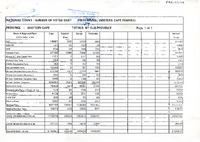
 A technical budgetary document providing estimates for the RDP "Kick-start" program for the 1994/95 fiscal year. It details the "Coefficient of Adjustment" applied to pre-election budgets to reallocate funds toward RDP initiatives. Includes line-item breakdowns for the State President, Parliament, Foreign Affairs, Water Affairs, Education, Justice, and Defence.
 -
 A compilation of papers from the Marxist Theory Seminar (MTS) held at the University of the Western Cape in April/May 1993. The series investigates whether the fundamental aspirations of the South African majority—regarding land, gender, education, and labour—can be met within a capitalist framework, or if the transition to a market economy places inherent limits on social justice.
 -
 A joint regional declaration addressing the industrial crisis in Southern Africa. It highlights massive job losses, factory closures, and the decline of workers' living standards. The document calls for government intervention, the establishment of social security nets for the unemployed, and tripartite cooperation (government, labor, and employers) to secure the future of the manufacturing sector.
 -
 A working paper analysing the feasibility of a "National Accord" between government, labour, and business following the 1996 release of the GEAR (Growth, Employment and Redistribution) strategy and the Labour Market Commission (LMC) report. It evaluates South African interest group dynamics through the dual theoretical lenses of Corporatism and Public Choice theory, questioning if a social pact is possible given the fragmented nature of local interest groups and the ANC-COSATU alliance.