
Items
-
 The aim of this paper is to provide updated figures on women's representation in leadership structures in COSATU. These figures enable the federation to review progress and to set targets for women's leadership, as resolved in the 1997 COSATU Congress. The paper provides the most recent statistics (for 1998) on women's leadership in COSATU at regional and national level. The intention of this report was to focus on collecting the actual figures and is therefore confined to a more quantitative (statistical) reflection on women's leadership. It will be valuable to embark on further research that examines the qualitative aspects, in other words, women's experiences of leadership.
 -
 This research report was commissioned by NALEDI as part of its long term research project on Co-determination and Tripartism in South Africa. The transition to democracy in South Africa has been accompanied by a range of institutions and processes through which ordinary workers and their organisations may gain varying degrees of control over economic decisions that directly affect their lives. Scholars and practitioners have focussed attention on parts of these changes - such as NEDLAC or the workplace forum provisions of the Labour Relations Act - while missing its more systematic features: its wide scope from the factory floor to the societal level, and the extent to which labour has obtained strong decisionmaking and consultation rights founded in both statute and agreement. Taken together these features have the potential to deepen dramatically the political democracy won in 1994. Yet these developments are generally untheorised and remain seriously underresearched. In mid-1996 NALEDI embarked on this long term research project to investigate the dramatic changes that are occurring regarding worker representation at the workplace, industry, and societal levels. The full list of reports produced by this project is set out below. While the contributions are academically informed, they are aimed at examining key issues in a critical fashion to inform trade unionists and contribute to labour movement policy debates.
 -
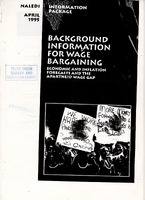 This booklet'contains information to assist unions in the coming wage round. It was prepared as an information package for a wage bargaining workshop. It begins with a section that reviews economic trends, including growth, unemployment and inflation. At the end of the booklet is a more detailed article on inflation taken from the South African Labour Bulletin, showing why the official inflation rate underestimates the level of inflation for the poor. The next section covers employer comments regarding the coming wage negotiations. It includes information on wage levels, the apartheid wage gap and estimates on labour as a proportion of costs. Lastly there is a calendar showing when Cosatu members, and their unions implement wage increases.
 -
 To my knowledge the author of this adage was Brother Davadoss. Better known to many, far and wide, as “DAVVYâ€. Lesley Davadoss was one of nine children of a working class family. Grew up and spent his formative years in Bokmakierie, Athlone. Devout in his Catholic upbringing, later to be ordained as a Deacon at St. Mary of the Angels. Lesley was a very sincere person who concerned himself with the needs of the Community, which naturally resulted in his involvement at the Company where he worked with the problems of his workmates. Along with other like thinking persons, he formed the E.I.W.U. in the Cape, holding meetings at his home in Kayter Road Crawford. The Branch in Durban, along with the Cape Town Branch formed E.I.W.U.S.A.
 -
 The National Labour & Economic Development Institute (NALEDI) opened its doors in October 1993 and began its research programme at the beginning of 1994. NALEDI is an initiative of the Congress of South African Trade Unions (Cosatu). Its aim is to conduct policy-relevant research of interest to the labour movement. The origins of the institute date back to Cosatu's 1991 national congress which recognised the need to improve the research capacity of the federation. A feasibility study was conducted. This attempted to define the research needs of the federation and its affiliates. It also examined the experience of other union- linked institutes such as FAFO in Norway and DESEP in Brazil, and explored Cosatu's experience with service organisations and associated research groups. In early 1993 Cosatu's central executive committee endorsed the establishment of a labour research institute and raised funds (primarily from the Dutch union movement the FNV) to commence operations. Jeremy Baskin was appointed to get the institute functioning and a board was appointed to assist.
 -
 Since the formation of our Union the NUM has participated in a number of campaigns ranging from local and union specific to national political campaigns
 -
 COSATU must intervene in affiliates where it has identified problems, where problems have been brought to its attention and / or has been requested to do so. The CEC should draw guidelines on how and under which circumstances the federation and its structures may intervene taking into account clauses 3.9 and 3.10 of the constitution. Such intervention should not undermine affiliates where such problems exist. COSATU leadership must be visible during major disputes between affiliates and employers and co-ordinate solidarity with workers involved in such disputes.
 -
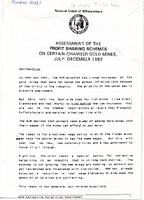 In 1991 and 1992, the NUM accepted basic wage Increases on the gold mines that were far below the annual Inflation rate because of the crisis in the industry. The priority of the union was to preserve employment. But this left the door wide open for rich mines (like Kloof, Elandsrand and Vaal Reefs) to hide behind the low increases that are set in the Chamber negotiations at levels that Freegold, Buffelsfontein and marginal mines can live with. The NUM decided that workers need a way of adding more money onto their wages If the mines can afford to pay more.
 -
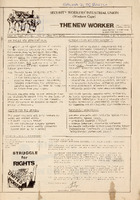 Our union is an organisation of workers in the security industry who work at: Pritchards,Grey's,Peninsula Security,Delta,Sector three,Coin,Fidelity etc. Workers alone in these companies are weak and cannot protect themselves from exploitation. All workers need to be protected and defended against unfair labour practises.
 -
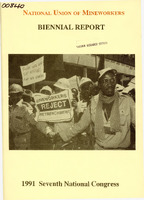 Over two years have passed since our last Congress and many developments have taken place in our industry and the country. Most significant of these developments was the release of our Honorory Life President Comrade Nelson Mandela and the other political prisoners together with the unbanning of the the African National Congress and other political parties. These developments are the fruits of our struggle, a struggle so many have sacrificed so much for. These developments are the culmination of our victory over the evil system of apartheid. These developments came about as a result of the sustained assault against the edifice of apartheid mounted by our people and the international community. It is true that the political and social landscape in the country has changed and that new challenges await mineworkers, our union and all the patriotic forces in the struggle to transform our country into a genuine democracy and a prosperous country. The edifice of Aparthied has been under constant siege forcing the government to sytematically dismantle discriminatory legislation. Whilst we have to fully acknowledge that this process is taking place, we will be naive to believe that the institutions, legacy and culture that was fostered over decades will vanish with the removal of apartheid laws. We need to be constantly vigilant against the introduction of neo-apartheid in the place of apartheid. It requires much more than the removal of laws to address the historical inequities of Apartheid and racism that remains deep in the fabric of our social, economic and political life. Through all the developments we are proud to state that mineworkers have not only made their contribution in bringing about the demise of the apartheid system but have made their mark as one of the most militant sectors of the struggling masses. Together with thousands of others we have been able to shift the balance of power near to our goal of a non racial democracy. Our assessment of these developments and what the implications are for the future will be assessed in this report to Congress. As these historic developments have been taking place our industry has been experiencing severe problems with increased job losses and a low gold price. The fight for job security and the restructuring of the mining industry requires immediate attention. Our endeavours over the last two years will be evaluated and some suggestions of a future strategy will be outlined for consideration. Progess and development is often accompanied with setbacks and diversions. It is important that we acknowleges these so that our union can strenghten where it is weak and consolidate where it must. This biennial report examines the socio-economic and socio-political developments in the country and the industry since our last Congress, and assesses the achievements and future possibilities and challenges for the union.
 -
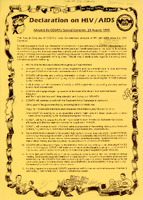 This Special Congress of COSATU notes the relentless advance of HIV and AIDS since the 1997 Congress. 3,5 million people in South are infected with the Human Immuno-deficiency Virus (HIV). Life expectant South Africa will reduce to 40-45 over the next ten years and health care costs will be beyond the cape of survivors to pay for. It is now clear that publicity and condom distribution, though important, are enough. This requires a new approach and strategy, based on a partnership between government and society in which the organised working class should play a leading role.
 -
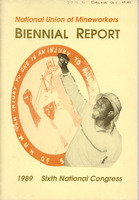 Since the Fifth National Congress in 1987 where our union adopted the Freedom Charter and charted a clear political direction for the NUM, many gallant battles have been waged by the mineworkers on many fronts. 1987 was the year in which our union launched its campaign to effect control of miners working lives. It was a year when mineworkers took control indeed in keeping with the Fifth Congress Slogan -"1987 THE YEAR MINEWORKERS TAKE CONTROL", as many comrades began to take over the hostels, particularly in the Witbank Region which resulted in families moving into the hostels for a period of time. Although the process remained uneven, the initiative was an important indicator of the willingness of the workers to take action and implement resolutions adopted by our union. In spite of the existence of the State of Emergency, the dedication, commitment, spirit and enthusiasm of mineworkers remained high. 1987 was also the year in which the NUM made its mark on the mining industry with the historic Great Miners Strike. This action, involving over 340 000 workers was the biggest of its kind in South African Labour History, and also the biggest action by workers of its kind on the African continent. We challenged some of the fundamental policies of the mining industry, in particular, the concept of poverty wages which has become one of the major battle grounds for our union. Despite mass dismissals of 50 000 workers, our union has remained and continues to mobilise and organise mineworkers against the oppressive and exploitative conditions. 1987 will certainly go down in history as the year of mass action by mineworkers throughout South Africa. It is well known that the strike did affect our organisation in many areas. Actions by management to roll back the gains of our union continued unabated after the strike right through until now.
 -
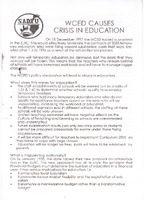 On 15 December 1997 the WCED tabled a proposal in the ELRC. This would effectively terminate the contracts of 3333 temporary educators who were filling vacant substantive posts that were created after 1 July 1996 as a result of the rationalisation process. Not only will temporary educators be dismissed, but the posts that they occupy will be frozen. This means that the teachers who remain behind at schools will have increased workloads and will have to manage bigger class sizes
 -
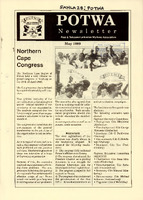 An official newsletter of the Post and Telecommunication Workers Association. Key content includes a report on the Northern Cape Regional Congress in Vryburg, campaigns to save political prisoners ("the ANC Three") from the death penalty, expressions of solidarity with Namibia’s liberation struggle and SWAPO, arguments against the privatization of the South African Post Office, plans to merge with SAPOEA and SAPTEA into one giant union, and a tribute to assassinated activist David Webster.
 -
 To most of us, speech comes more readily than writing, and when information has to be passed on, the obvious way of doing it is by word of mouth. The telephone has greatly widened the opportunity of conducting business in this way. But a trade unionist is well advised not to rely on this method alone. In the affairs of the heart, it may be good advice never to put anything in writing. The reverse is often true in business. What is written, especially if carbon copies are kept, survives as a record. The record remains as a reminder of what has happened, and a check in the event of a dispute. It is only too easy during transactions which may take some months, to forget exactly what had happened at any one time. Written records will provide exact information, not only about what happened but — what is often as important — when it happened. When it is remembered that the actions of shop stewards and branch officers may be vital evidence in a Court of Law, as for example in the pursuit of claims for damages on behalf of union members, exact records are extremely important. For this reason, a duplicate copy of letters provides branch officials with lasting evidence of their own communications. All branch letters, therefore, should be written in duplicate. If letters are typed or written in an interleaved correspondence book, it is easy to make carbon copies. But even if letters are hand written on loose sheets, ordinary carbon paper will make clear copies providing a fountain pen with a fairly hard nib or a bail-point pen is used.
 -
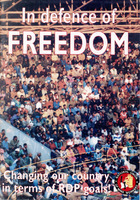 This book was produced to respond to questions asked by our members during the president's national RDP mass education tour. It covers our struggle history from as early as 1652 up until the time when Nelson Mandela was inaugurated the first president of a democratic South Africa. The book also attempts to assist comrades to understand what the RDP is and find ways of rebuilding our country after the hard years of apartheid. Workers, particularly from the mining industry will be able to use this book in understanding how their contribution will assist in creating jobs, building more houses etc. We would like you to read this book over and over again and discuss the content with comrades in your branch. The committee will appriaciate any suggestions that you may come up with.
 -
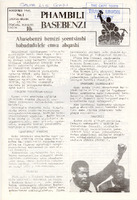 Abasebenzi kwinkampani ezintathu zeentsimbi kweli lase Kapa - Trident Marine, Consani Engineering no Dorman Long bathathe inyathelo elibanzi ekukhabeni inkqubo yom- butho wabarwebi ebizwa ngokuba yi Industrial Council. Lo mbutho kwimizi yeentsimbi ngowona mkhulu apha kweli lo mzantsi Afrika. Aba baqashi bamelwe ngumbutho wabo oyi SEIFSA, ngumbutho onamandla kakhulu lo woongxowa-nkulu apha kweli lethu.
 -
-
 This Induction Course is the most important education programme in the National Union of Mineworkers. It is the beginning of a development programme for shaft/shop stewards as cadres of the labour movement and cadres of the working class movement. The Induction Course is part of a programme to organise, deepen organisational understanding, raise class-consciousness and develop working class leadership. Once a shaft/shop steward has completed the course, he/she must demand progression through the intermediate course to the leadership school. Development and desire for selfgrowth should be in the hands of stewards themselves. We train shaft/shop stewards because we are committed to ensuring that Mine and Energy workers themselves determine their destiny. They must lead and control their own union. This can only become reality if it translates into these workers taking over all strategic positions in the union. The Induction Course must instill ambition and make our members develop dreams about the union.
 -
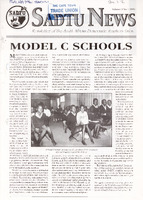 Model C Schools have created great controversy in recent educational policy debate. SADTU has joined the fray in opposition to the retention of these schools. Model C is a particular type of state aided school which is different to state aided schools like the farm schools that came under the authority of the former black Department of Education and Training (DET). The latter schools were mostly poorly resourced and inadequately staffed. Model C schools are state aided schools that have governing bodies elected by the parents, with power over a number of key functions of the school. These include control over admissions policy, the power to charge compulsory school fees and to raise funds by other means (e.g. renting out the school's property), the power to decide how the school's money is to be spent (e.g. school maintenance, the hiring of additional teachers and other staff, the buying of books and equipment, and the power to exercise influence over the hiring and disciplining of teachers). The system is unique among state- aided schools in that Model Cs are all former state schools in the privileged white school system. Nearly all inherited a sound infrastructure provided largely by the state in the form of school buildings, grounds, libraries, laboratories etc. They also inherited a well qualified teaching staff, whose training (the best in the country) was also partly the result of public subsidies. Model C has several strengths which has led to the ongoing controversy. Parental participation in the schooling of their children has been mobilised. The governing bodies actually have power over important aspects of the school in contrast to the old comparatively toothless management councils. This, it appears, has ensured that parents, whether they approve of Model C or not, take them much more seriously since the governing bodies can take decisions which materially affect them and their children's education. In addition, this model has mobilised private resources for education and ensured that a relatively high level of provision can be maintained while state funding is decreased. Money thus saved by the state - reportedly about R1 billion - can be diverted to redressing the inadequacies of African education.
 -
 U.I.F. (Unemployment Insurance Fund) is an insurance scheme. The scheme pays money to a worker who has contributed to the fund and who is temporarily unemployed. Money paid into the Fund is paid out to workers who have become unemployed and under certain other circumstances that we will set out below.
 -
 Many workers do not know they can get money from the Unemployment Insurance Fund when they are unemployed. Older workers have trouble getting their pensions. If "you are sick or pregnant you will need some sick pay to help you. Sometimes workers have the right to get get money but do not get it. The union can help and advise its members .
 -
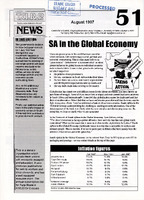 There are growing ties in the world between countries which coincides with current major social, political and economic restructuring. This is what many refer to as “globalisationâ€. Globalisation is a process which involves greater influence by global forces on individual countries such as South Africa. It means that global rules are being set which impact on: the policies of our government, the way companies in South Africa make their plans, the way that trade unions, community organisations and development organisations take up issues, and the way individuals make a living in the country. Globalisation has raised new and difficult issues for the labour movement and have thrown up new forms of struggle. Some of these issues have stumped and even demobilised some unionists in South Africa and internationally. Some feel that globalisation cannot be challenged and that there is no alternative. Others feel that we have not become powerless and that there are ways to fight its negative effects. Turp has published a book on these issues entitled, South Africa in the Global Economy: understanding the challenges, working towards alternatives. One of the main purposes of the book is to clarify what the new complex and challenging issues are. By doing this, we hope to clarify what we are up against.
 -
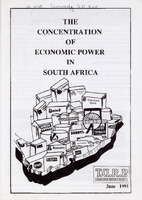 Debate on a post-apartheid economy has once again raised the question of the concentration of economic power in South Africa. It is a known fact that the wealth of South Africa is concentrated in a few hands. For example, it is estimated that 5 % of the population owns 80% of the wealth in the country. At the same time, millions of our people live in poverty. Over half the population in South Africa live below the poverty datum lines (amounts needed for very basic subsistence).
 -
 COSATU must intervene in affiliates where it has identified problems, where problems have been brought to its attention and / or has been requested to do so. The CEC should draw guidelines on how and under which circumstances the federation and its structures may intervene taking into account clauses 3.9 and 3.10 of the constitution. Such intervention should not undermine affiliates where such problems exist. COSATU leadership must be visible during major disputes between affiliates and employers and co-ordinate solidarity with workers involved in such disputes.