
Workers' News
Item set
- Title
- Workers' News
- Alternative Title
- Workers' News : the magazine of the South African Municipal Workers' Union
- Description
- The official periodic publication of the South African Municipal Workers' Union (SAMWU). Workers' News served as a vital communication tool for municipal workers, covering shop-floor struggles, national policy debates (such as the privatisation of water and electricity), and union constitutional matters. It provided a platform for worker voices across the various local government sectors in South Africa.
- Date Issued
- 1997-
- Language
- English
- Type
- Collection
- Genre
- Periodicals
- Subject
- Municipal services—South Africa—Periodicals
- Labour unions—South Africa—Periodicals
- Collective bargaining—Municipal government—South Africa
- Local government--South AfricaSee all item sets with this value
- Access Rights
- The materials are made available explicitly for research and educational purposes. Any use of these materials must be cleared with the rights holder.
Items
-
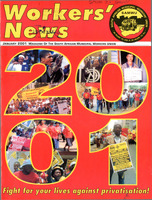 The focus is on mass mobilization, featuring the "Phantsi Goli 2002" rally at Library Gardens. It covers victories against privatization in Port Elizabeth (Nelson Mandela Bay) and Upington, and criticizes municipalities that refuse to transform their labor practices. It also sets the implementation goals for resolutions passed at the union congress.
 -
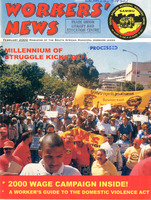 Entering the new millennium, this issue outlines the 2000 Wage Campaign and the union's continued resistance to iGoli 2002. Notably, it includes a worker's guide to the Domestic Violence Act, showing the union's expansion into social justice issues outside the immediate workplace. It also reports on international solidarity from unions in Canada and Australia.
 -
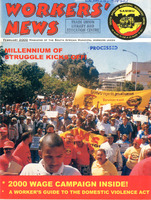 Lead article for the February 2000 issue detailing SAMWU's national wage demands. The union has submitted a demand for a R1600 minimum wage and a sliding scale increase (15% for lower earners to 8% for high earners). A critical focus of the issue is the union's opposition to the 6% cap on municipal expenditure, which SAMWU argues unconstitutionally limits collective bargaining and wage improvements.
 -
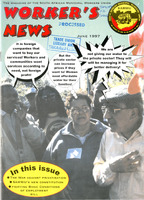 This inaugural issue of the magazine focuses heavily on the transition of local government in post-apartheid South Africa. It outlines the union's new constitution and takes a hardline stance against the privatization of water and emergency services, specifically in Benoni. It also provides a critical analysis of the Basic Conditions of Employment Bill and its potential impact on municipal workers.
 -
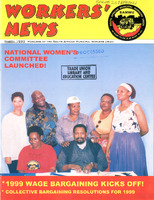 This issue marks the launch of the National Women’s Committee, emphasizing the union's commitment to gender equality. It provides a detailed guide to the "Framework Agreement" on restructuring and includes a "Workers of the World" segment on unionists in Sierra Leone and Uganda. It also features a guide for shopstewards on stopping sexual harassment.
 -
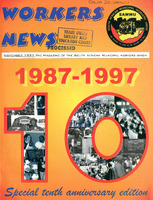 This commemorative issue serves as a historical record of SAMWU from 1987 to 1997. It traces the union's roots from the Cape Town Municipal Workers' Association (CTMWA) and other forerunners. It features an oral history-style interview between then-General Secretary Roger Ronnie and former leader John Erntzen, and highlights the union’s role in the anti-apartheid struggle.
 -
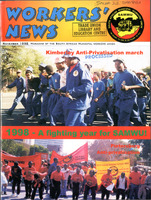 A review of a "fighting year," this issue focuses on collective bargaining successes and failures. It provides updates on deadlocks in Greater Johannesburg over wage exemptions and reports on the PSI (Public Services International) Africa Conference. A significant section is dedicated to the "Jobs Summit" and COSATU's strategy for employment creation.
 -
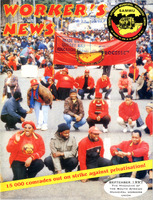 A militant issue documenting the strike of 15,000 workers against privatisation. It features significant political engagement, including interviews with Minister of Provincial Affairs and Constitutional Development Valli Moosa and Minister of Labour Tito Mboweni regarding the future of the public sector. It also includes an educational section on the history of the "Bread and Roses" strike.
 -
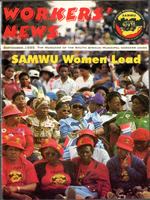 This issue highlights the "SAMWU Women Lead" conference and the ongoing battle against the "iGoli 2002" plan to privatize Johannesburg's municipal services. It also reports on a major occupational health crisis where workers were poisoned by chemicals in the Northern Cape, emphasizing the union's role in health and safety.
 -
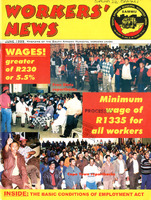 Published during the 1999 national elections, this issue analyzes the manifestos of various political parties (ANC, DP, IFP, NNP) from a labor perspective. It celebrates a wage settlement and provides an in-depth educational guide to the Basic Conditions of Employment Act (BCEA) to ensure workers understand their new statutory rights.
 -
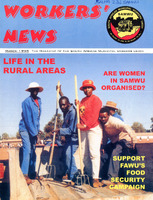 This issue shifts focus toward the challenges of municipal workers in rural areas and the specific struggles of women within the union. It details the National Anti-Privatisation Workshop and reports on international solidarity with workers in Cuba and Botswana. It also contains practical advice for workers facing retrenchment under the Labour Relations Act (LRA).
 -
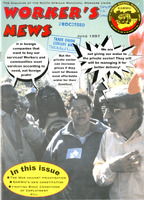 The inaugural issue of the SAMWU Magazine serves as a foundational document for the South African Municipal Workers' Union, following its formation in 1987. Published during a critical period of transition in South African labour history, the issue outlines the union’s militant stance against the privatisation of local government services and highlights its leadership in the National Living Wage Campaign. The content reflects a dual focus on internal organisational building—featuring the new union constitution and the role of service committees—and broader socio-economic advocacy, including critiques of the Employment Standards Bill and the Labour Relations Act (LRA). Notably, the issue integrates technical workplace safety concerns, such as the environmental hazards of municipal sludge, with political education and international worker solidarity. By documenting the early policies of the union and its affiliation with COSATU, this issue captures the emergence of a unified, worker-controlled movement dedicated to transforming municipal service delivery in a post-apartheid South Africa.