
Training Manuals and Workshops
Item set
- Title
- Training Manuals and Workshops
- Alternative Title
- LRS Training Manuals and Workshops
- Creator
- Labour Research Service (LRS)
Items
-
 This document, titled "Action Notes: No. 6: Constitutions", is a practical guide for activists in South Africa on the legal and structural formation of organisations. It focuses on the crucial distinction between entities that require formal government registration (such as Close Corporations or Trusts) and grassroots bodies, like civic organisations and advice offices, which operate primarily through a self-authored constitution. The pamphlet explains that for many non-profit and community groups, a well-drafted constitution is sufficient to grant the organisation its own "legal personality." This status allows the group to enter into contracts, incur debt, or be sued as a distinct entity from its individual members—a concept known in South African law as a Voluntary Association. The guide provides a framework for drafting these foundational documents to ensure clear governance and legal protection for members.
 -
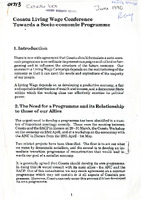 This document outlines the Socio-economic Programme of the Congress of South African Trade Unions (COSATU). It articulates a strategic shift toward a coordinated policy framework intended to align the federation’s collective bargaining efforts with broader macroeconomic restructuring. The programme asserts that the success of the "Living Wage Campaign" is contingent upon fundamental changes to the South African economy. It advocates for a transition towards a productive and equitable economic system, the redistribution of wealth, and the establishment of a democratic state where the working class holds significant political influence.
 -
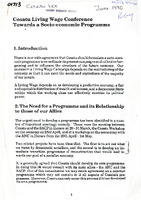 This document outlines the Socio-economic Programme of the Congress of South African Trade Unions (COSATU). It articulates a strategic shift toward a coordinated policy framework intended to align the federation’s collective bargaining efforts with broader macroeconomic restructuring. The programme asserts that the success of the "Living Wage Campaign" is contingent upon fundamental changes to the South African economy. It advocates for a transition towards a productive and equitable economic system, the redistribution of wealth, and the establishment of a democratic state where the working class holds significant political influence.
 -
 This document, titled "Action Notes: No. 3: Workshops", is a practical instructional pamphlet designed to assist activists and community organisers in the systematic planning of educational and strategic sessions. It serves as a methodology guide for the "popular education" style frequently employed by South African trade unions and political organisations. The text emphasises that the foundation of any successful workshop is a clearly defined objective. It categorises workshops into five primary functions: skill-building (e.g., media production), political analysis (e.g., responding to new legislation), strategic planning, evaluation of past campaigns, and internal conflict resolution. The pamphlet provides a step-by-step framework for managing both the intellectual content and the logistical arrangements once the core aim has been established.
 -
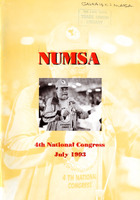 This document is a formal record of the Fourth National Congress of the National Union of Metalworkers of South Africa (NUMSA), which was held in Johannesburg from July 1 to 4, 1993. The congress served as a critical constitutional meeting, bringing together 773 delegates from across the union's eleven regions. The primary function of the congress was to determine the union's leadership and strategic direction for the following three-year term. It represents a significant historical snapshot of the metalworkers' movement during the final stages of South Africa's transition to democracy, highlighting the union's democratic processes and regional representation.
 -
 This document is an educational resource titled "The Johannesburg Stock Exchange: What it is, How it Works", specifically tailored as an information booklet for the South African working class. It aims to demystify the complexities of the financial markets for employees who are increasingly becoming stakeholders in the Johannesburg Stock Exchange (JSE) through direct share ownership and institutional investments. The booklet addresses the practical and political implications of the JSE for workers, particularly as "bosses" began promoting employee share ownership schemes. It explains the mechanics of the stock market while framing the discussion within the broader context of post-apartheid economic restructuring, questioning the utility of a stock exchange in a future, more equitable South African economy.
 -
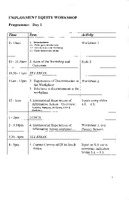 This document is an Employment Equity Workshop Programme, designed as a strategic training tool for trade unionists to navigate and implement the Employment Equity Act (EEA) of 1998. The workshop serves as a critical forum for assessing workplace discrimination and developing a unified union approach to affirmative action in the post-apartheid era. The programme emphasises that affirmative action is not merely a compliance exercise but a proactive method for redressing historical imbalances. By analysing international precedents and the specific strengths and limitations of South African legislation, the workshop aims to empower shop stewards and union officials to drive genuine transformation on the shop floor.
 -
 This document is a Gender Policy Discussion Document issued by the Congress of South African Trade Unions (COSATU) for a session held between 27 and 29 March 2012. It serves to consolidate historical resolutions into a unified policy framework designed to address gender inequality within the workplace, the economy, the trade union movement, and broader society. The text acknowledges that while gender equality has been a foundational objective since COSATU's inception, progress across different union affiliates has been inconsistent. The policy outlines a vision for a society free from sexism, racism, and class exploitation, specifically seeking the emancipation of women from oppression within both domestic and professional spheres. Originally debated at the National Gender Conference in July 2000, this version was tabled for formal adoption to ensure all affiliates implement these principles within their own internal structures.
 -
 This document is a Socio-economic Discussion Paper produced by the Congress of South African Trade Unions (COSATU) for a session held between 27 and 29 March 2012. It argues for the decriminalisation of sex work in South Africa, framing the issue as a matter of human rights, labour protection, and social justice. The text critiques the continued use of the apartheid-era Sexual Offences Act of 1957, asserting that criminalisation exacerbates the "miserable conditions" of the poor and the working class—specifically black women—who are disproportionately driven into the industry by unemployment and the "feminisation of poverty." COSATU advocates for a rights-based approach that recognises sex work as work, thereby allowing individuals to access the protection of national labour laws and occupational health and safety regulations.
 -
 This document is a Maternity Protection Discussion Document produced by the Congress of South African Trade Unions (COSATU) for a session held between 27 and 29 March 2012. Developed in collaboration with the Solidarity Centre (AFL-CIO), the booklet serves as a comprehensive policy resource intended to strengthen the rights of pregnant and nursing workers in South Africa. The text acknowledges a wide-ranging partnership of contributors, including statutory bodies such as the Commission for Gender Equality (CGE), legal advocacy groups like the Legal Resources Centre (LRC), and international bodies like the International Labour Organisation (ILO). It specifically highlights the inclusion of vulnerable sectors through the involvement of the African Diaspora Women Workers Network and the South African Self-Employed Women’s Association (SASEWA).
 -
 This document is a Socioeconomic Discussion Paper produced by the Congress of South African Trade Unions (COSATU) for a session held from 27 to 29 March 2012. It focuses on the strategic organisation and protection of domestic workers, following mandates established at the 5th COSATU Congress and the 2011 Domestic Workers' Summit. The paper evaluates the feasibility of establishing advice centres to assist domestic workers and explores the creation of a "viable home" or dedicated union structure for these employees within the federation. A central theme is the alignment of South African labour practices with international standards, specifically the ILO Convention 189 (C189) on Decent Work for Domestic Workers. The document represents a collaborative effort between COSATU, the South African Domestic Service and Allied Workers Union (SADSAWU), and the National Labour and Economic Development Institute (NALEDI).
 -
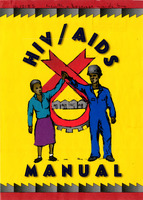 This document is a Project Proposal for an HIV/AIDS Manual, designed to integrate public health advocacy into the core functions of the South African trade union movement. The proposal recognises that the HIV/AIDS epidemic is not merely a medical issue but a critical industrial and social challenge that threatens the well-being of the workforce and the stability of the economy. The manual’s primary objective is to move HIV/AIDS awareness from the periphery of union activity to the centre of the mandate of shop stewards and negotiators. By framing the epidemic as a labour issue, the proposal seeks to ensure that protections for HIV-positive workers—such as non-discrimination, access to treatment, and sick leave—become standard components of collective bargaining agreements.
 -
 This document is an educational resource titled "Regional Educators' Workshop on Trade Union History in South Africa." It contains a first-hand account from a migrant worker at Rely Precision Castings in the East Rand, covering the period between the late 1970s and early 1980s. The text documents the development of collective bargaining and industrial action within the Metal and Allied Workers Union (MAWU). It describes the working conditions in the foundry industry and the socio-economic pressures of the migrant labour system, specifically the relationship between employment and residency rights under the pass laws. Key subjects include: Union Organisation: The process of recruiting members and transitioning from informal grievances to formal representation. Labour Relations: The role of factory management, indunas (foremen), and the South African Police during labour disputes. The 1980 Rely Precision Strike: The events leading to the dismissal and subsequent prosecution of 55 workers for illegal striking. Historical Context: The broader strike wave in the East Rand metal industry during 1980 and 1981. Solidarity Models: The concluding arguments for inter-factory unity and community-based labour mobilisation.
 -
 This document is an instructional manual titled "Wage Negotiations Workbook." It outlines the preparatory requirements for trade unions engaging in collective bargaining with employers. The text emphasises a structural approach to labour relations, asserting that effective negotiation outcomes are dependent on organisational groundwork established well in advance of formal meetings. It identifies a lack of preparation—rather than a lack of recognition—as a primary cause of union failure during the bargaining process.
 -
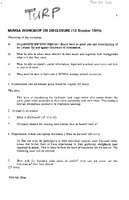 This document serves as a facilitator’s guide for a workshop on disclosure, hosted by the National Union of Metalworkers of South Africa (NUMSA) on 12 October 1995. The material was developed by the Trade Union Research Project (TURP) and details the pedagogical methods and introductory procedures for the session. The guide outlines a participatory approach to labour education, emphasising the value of the workers' existing life experiences and technical knowledge. It provides a structured icebreaker activity—the "picnic game"—designed to build group cohesion and test memory without the use of written notes, followed by a discussion on the workshop's objectives and TURP’s educational philosophy.
 -
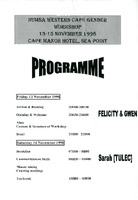 Programme for the NUMSA Western Cape Gender Workshop, 13-15 November 1998 Cape Manor Hotel, Sea Point.
 -
 This document outlines a week-long curriculum for the NUMSA KwaZulu-Natal Gender Workshop, held from July 20 to July 24, 1998. The program was facilitated by the International Labour Resource and Information Group (ILRIG) and focuses on the intersection of gender, labour rights, and macroeconomic trends. The workshop aims to analyse the impact of globalisation on the South African economy, specifically regarding its effects on women workers. It provides a critical evaluation of South African labour legislation, identifying both the protections and the limitations for the labour movement. The curriculum is designed to build the capacity of women within the union to navigate global economic challenges and utilise legal frameworks to secure workplace gains.
 -
 This document outlines a workshop focused on the evolution of Occupational Health and Safety (OHS) in South Africa during the post-apartheid transition. It assesses the effectiveness of new legislative frameworks and the role of state enforcement agencies in promoting workplace safety.
 -
 This document serves as a mission statement and service outline for Azaad, a race consultancy focused on promoting racial equality and empowerment within post-apartheid South Africa. The text details a strategic framework for implementing anti-discrimination training through informal education and participatory learning. The consultancy’s mandate centres on challenging systemic oppression while celebrating cultural, linguistic, and social diversity. Azaad advocates for a collaborative "partnership" model between Black and White South Africans in decision-making and learning processes. The curriculum is delivered through a variety of formats, including workshops, seminars, and role-play exercises, designed to equip individuals with the skills to advocate for their rights.
 -
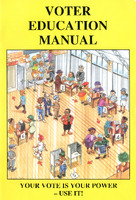 This document is a pedagogical guide titled "Voter Education Manual," designed for activists and volunteers conducting community outreach in preparation for South Africa’s first democratic elections. It addresses the historical disenfranchisement of the majority of the population under the apartheid-era white minority government and the limited participation in the subsequent tricameral parliament. The manual serves as a strategic toolkit to reach an estimated 18 million new voters, focusing on overcoming political apathy and procedural barriers. It provides a framework for explaining the democratic process, the mechanics of casting a ballot, and the significance of the vote as a tool for social and political change.
 -
This document serves as the introductory curriculum for the Shop Steward Foundation Course, developed by the Chemical Workers Industrial Union (CWIU). It is designed to equip newly elected union representatives with the fundamental skills and knowledge required to perform their duties within the chemical and petroleum industries. The course establishes the shop steward as the primary link between the union leadership and the rank-and-file membership. It provides a structured framework for understanding the rights and responsibilities of stewards, the principles of worker democracy, and the technical aspects of grievance handling and shop floor representation.
-
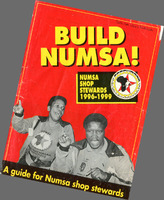 The manual serves as a guide for shopstewards of the National Union of Metalworkers of South Africa (NUMSA), in enabling shopstewards to support the union members. Included is the duties of a shopsteward, information pertaining to NUMSA, as well as an outline of the activities of NUMSA.
 -
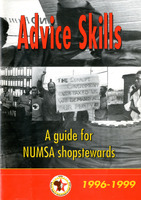 This document is a technical training manual titled "Advice Skills: A Guide for NUMSA Shop Stewards," produced between 1996 and 1999. It is designed to equip representatives of the National Union of Metalworkers of South Africa (NUMSA) with the practical knowledge required to advise members on statutory rights, social security benefits, and workplace legalities during the early post-apartheid era. The guide focuses on the "paralegal" role of the shop steward, providing a structured approach to navigating complex South African labour and welfare legislation. It bridges the gap between high-level policy and the immediate, individual needs of union members regarding financial security and job protection.
 -
 This document is a Discussion Document on economic policy, prepared for the African National Congress (ANC) Department of Economic Policy (DEP) workshop held in Harare from 20 to 23 September 1990. It represents a significant historical contribution to the democratic formulation of economic strategy during the early transition period following the unbanning of political organisations in South Africa. The text frames economic policy as an essential component of national liberation, asserting that constitutional changes must be accompanied by fundamental socio-economic transformation. Grounded in the principles of the Freedom Charter, the document outlines a vision for the redistribution of land and wealth, the provision of universal housing and security, and the restructuring of the economy to serve the needs of the majority.
 -
 This document is a Workshop Package on the Discussion Document on Economic Policy, produced by the African National Congress (ANC) Department of Economic Policy (DEP) in the early 1990s. It is designed as a facilitator's toolkit to assist local branches in conducting structured debates on the movement's emerging economic strategies. The package serves as a pedagogical bridge between high-level policy documents and grassroots political education. It emphasises a participatory approach to policy-making, providing activists with visual aids—such as templates for wall charts and overhead transparencies—and guided questions to ensure that branch members could actively shape the ANC’s socio-economic agenda during the transition from apartheid.