
General Materials
Item set
- Title
- General Materials
- Alternative Title
- LRS General Materials
- Creator
- Labour Research Service (LRS)
Items
-
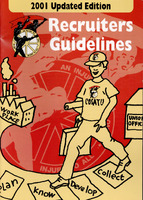 The purpose of this booklet is to touch in number of areas, which are important at this point for the recruitment campaign of the federation. It is not meant even by implication to provide details of how to handle the campaign what it does is to highlight issues and areas that we must think in the preparation for this campaign. More importantly is the fact that COSATU remains the biggest federation in South Africa and fastest growing international. Beside a loss of membership from + 2 million to + 1.8 million members. The decrease in membership is mostly because of retrenchments. The well known fact is that only about 40% of the workforce that is unionized. The aim of the recruitment drive is to access this 60% that is not unionized. The mistake must not be committed to think that the 40%, which is unionized, belong to COSATU. There are two other federations plus number of non-affiliated unions. Our commitment to One Country One Federation does not stop us to recruit from other unions as long as we remain under different bodies. This October campaign coincides with Red October campaign of the SACP and Health and Safety month of the federation this must be seen as strength than lack of co-ordination. One area that is link to recruitment is the servicing of membership. It is useless to recruit and fail to service membership because every campaign that we will take around recruitment we may find ourselves had to fight with disgruntled members and obviously it will be difficult to attract new members. This must say to us that members come first.
 -
 This document serves as the foundational framework for the National Union of Mineworkers (NUM) educational initiatives. It outlines a systematic approach to trade union education, designed to align the union’s developmental goals with its available resources and internal capacity. The plan is structured to provide a clear reference point for the ongoing assessment of progress, ensuring that educational outcomes are both measurable and realistic. By analysing both internal organisational conditions and external socio-economic factors, the document articulates a long-term vision intended to inspire and motivate union members. Key objectives include the formulation of manageable strategies, the optimisation of resource allocation, and the accurate measurement of educational impact on the union's overall success.
 -
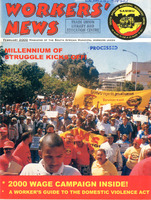 Lead article for the February 2000 issue detailing SAMWU's national wage demands. The union has submitted a demand for a R1600 minimum wage and a sliding scale increase (15% for lower earners to 8% for high earners). A critical focus of the issue is the union's opposition to the 6% cap on municipal expenditure, which SAMWU argues unconstitutionally limits collective bargaining and wage improvements.
 -
-
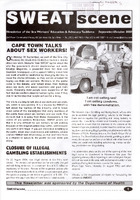 On Monday 25 September,, as- part of the One City Festival, the Black Arts Collective hosted a debate about sex work. Natasha from SWEAT spoke about the why the government should decriminalize sex work. Khadija Magardie, a journalist from the Mail and Guardian newspaper, sent a speech talking about how sex work should be abolished by changing the law to make the clients criminals, so they can be arrested for buying sex from sex workers. Members of the public came to the debate, and talked about their feelings about sex work, and asked questions and gave comments. Generally most people were supportive of the fact that sex workers deserve human rights, even if they didn't like the idea that people sell sex for a living. The city is starting to talk about sex work and sex workers, which is very exciting. It is a chance for SWEAT to talk about the realities of the industry, and to break down some of the stereotypes that many members of the public have about sex workers and sex work. One element that is missing from these discussions is the voices of sex workers themselves. SWEAT points out that it is very difficult for sex workers to talk publicly because of the stigmatization they suffer, and because sex work is still illegal. If you are interested in talking to the public about your experiences and opinions, please contact SWEAT and let us know, so that next time there is a chance to speak to the public we can invite you along.
 -
-
 Despite the massive contribution women make around the world, they still fall into the category of the poorest and the most oppressed. Women have borne the brunt of the social costs of the changes in the world economy such as globalisation, increased international competition, structural adjustment and the deregulation of labour legislation. Massive technological advances have done little to benefit women around the world. In fact, in many instances it has actually increased their hardships. Multinational companies search the globe for areas that offer cheap labour and poor working conditions. Globally, women make up the bulk of the army of so-called “flexibleâ€, cheap workers sought after by employers anxious to increase their profits. It is women who are mostly to be found in sweatshops and who are least likely to be organised. In South Africa, there is already a significant trend of homeworking in the clothing sector and casualisation in the retail and other sectors. And when they are organised into unions, women struggle to be recognised as leaders in those movements.
 -
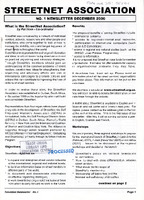 StreetNet was conceived by a network of individual vendors, activists, researchers and other people and institutions, who came together to look at how to increase the visibility, voice and bargaining power of street vendors throughout the world. StreetNet aims to promote the exchange of information and ideas on critical issues facing street vendors and on practical organizing and advocacy strategies. Through StreetNet, members should gain an understanding of the common problems of street vendors, develop new ideas for strengthening their organizing and advocacy efforts and join in international campaigns to promote policies and actions that can contribute to improving the lives of millions of street vendors.
 -
 This information and policy document has been produced in response to a resolution adopted by the SASBO National Congress in October 1998. The information provided is a summary of the rights of employees with regard to strike and other industrial actions, and of their employers' recourse to lockout. SASBO members wishing to acquire a more detailed knowledge of strikes and lock-outs should refer to Chapter IV of the Labour Relations Act of 1995 for the full text of the relevant legislation.
 -
 Formed as a trade union in 1916, SASBO's primary objectives are to improve the conditions of service and protect the interests of its members, individually and collectively, in relation to their employers and otherwise, and generally to raise their status. Operating in the South African finance sector, SASBO identifies with the ethics and conventions of finance professionals and has always encouraged sound industrial relations with employers and/or their organisations, with the intention of regulating conflict as peacefully and constructively as possible by endeavouring to settle disputes by conciliatory methods. The union has always been, and continues to be, committed to fair and honest dealings, and integrity, in its interaction with all its stakeholders, this in the fundamental belief that SASBO's operation and business should be conducted honestly, fairly and within the parameters of labour and other laws.
 -
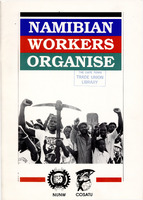 In 1987, long before Namibian independence was even on the agenda, the Congress of South African Trade Unions (COSATU) and the National Union of Namibian Workers (NUNW) decided to produce a joint book on the Namibian trade union movement. At that stage the Namibian trade unions had just begun to assert themselves. The idea of the book was to provide information useful for both Namibian and South African workers on the history of the working class struggle in Namibia. It was hoped that this would help to build a powerful working class solidarity between South African and Namibian workers. The International Labour Research and Information Group (ILRIG) - a research and educational service organisation specialising in working class struggles internationally — was commissioned by COSATU and NUNW to research, write and produce the book. Work on the book started in 1988. Between then and May 1989, two ILRIG workers visited Namibia a number of times - once with comrades from COSATU - and gathered a vast amount of information on the struggle in Namibia. Information came from workers, from trade unionists, from SWAPO, from documents and from observation. At all times in the process of writing the book, material was referred back to COSATU and NUNW for discussion and approval. The final chapter on solidarity was done at the end of August 1989, when a delegation of COSATU leaders visited Namibia to discuss setting up a permanent Working Committee with the NUNW. The book is coming at a time when Namibia is about to achieve her independence from South African colonial occupation under UN Resolution 435. The Namibian workers' struggle for a living wage, for the right to strike, for decent houses, for jobs for all and against privatisation will not end with independence. The need for strengthening and extending trade union organisation in Namibia will not end with independence. The necessity for building solidarity between the Namibian and South African working class will not end with independence.
 -
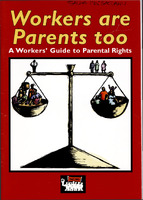 This booklet is a follow-up to the Parental Rights' Manual for negotiators produced by SACCAWU in 1 999. These publications have been the product of painful soul- searching. They are attempts to highlight the plight of women in the workplace and represent the uncompromising resolve of the union to challenge the inequalities and discrimination that workers, especially women, suffer as parents. This booklet is intended to assist negotiators, shop stewards and ordinary workers in knowing and exercising their parental rights. In order to win the struggle for parental rights, the understanding of worker rights must reach all the way to the shop floor. This booklet will help to make that understanding a reality. We wish to thank the commitment and dedication by all workers and union officials who have worked tirelessly for the realisation of the noble goal of parental rights and have forced the bosses to reason beyond dogmatic greed to maximise profits. Achievements won thus far have not been easy victories, nor can they be attributed to kindness or a change of heart by the employers. This booklet builds on our manual and further inspires us to translate our dreams into reality. We would like to thank everyone who contributed to the writing of this booklet, especially the SACCAWU Reference Group of Fihliwe Lusu, Brenita Cloete, Bella Maneli, Judy Piti, Abduragmann Jacobs, the SACCAWU National Gender Co-ordinator, Patricia Appolis, and those involved directly in production: John Pape of ILRIG, Meg Jordi, William Matlala, Rosie Campbell, Jon Berndt and Logo Print.
 -
-
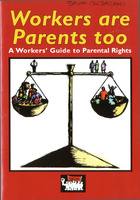 This booklet is a follow-up to the Parental Rights' Manual for negotiators produced by SACCAWU in 1999. These publications have been the product of painful soul- searching. They are attempts to highlight the plight of women in the workplace and represent the uncompromising resolve of the union to challenge the inequalities and discrimination that workers, especially women, suffer as parents. This booklet is intended to assist negotiators, shop stewards and ordinary workers in knowing and exercising their parental rights. In order to win the struggle for parental rights, the understanding of worker rights must reach all the way to the shop floor. This booklet will help to make that understanding a reality. We wish to thank the commitment and dedication by all workers and union officials who have worked tirelessly for the realisation of the noble goal of parental rights and have forced the bosses to reason beyond dogmatic greed to maximise profits. Achievements won thus far have not been easy victories, nor can they be attributed to kindness or a change of heart by the employers. This booklet builds on our manual and further inspires us to translate our dreams into reality.
 -
 When the National Union of Mineworkers was formed an experienced unionist said to me "organising workers in South Africa is the art of the possible". But organising workers in the mining industry is the art of the impossible. It has been the art of the impossible because it has been the art of trying to make a fundamental change in a system by using structures and instruments that were designed to perpetuate that system. It lias been the art of the impossible because it has been the art of trying to make a revolution with moderate tools tli at were invented to prevent a revolution. Because of the nature of the mining industry, which is conservative or ultraconservative by any definition, the black miner has been condemned to seek radical ends within a framework which was designed to prevent sudden and radical changes. For almost one hundred years now, black miners have not been able to change their status. The African Miners' Union in 1946 under J B Marks made an attempt but was brutally crushed by a combination of employer and government forces. It is against this background that our union has developed its organising strategies. Organising has taken place around a number of issues, some of which are safety, wages, and working- class unity.
 -
-
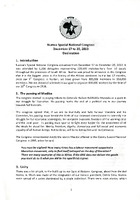 Numsa's Special National Congress convened from December 17 to December 20, 2013. It was attended by 1,200 delegates representing 338,000 metalworkers from 50 Locals throughout the provinces of South Africa. Numsa was proud to announce in the Congress that it is the biggest union in the history of the African continent. In the last 17 months, since our 9th Congress in Durban, we have grown from 300,000 members to 338,000 members. We are ahead of schedule in our goal to organise 400,000 workers by the time of our 10th Congress in 2016.
 -
-
 COSATU, along with other alliance partners, was very instrumental in the creation of national gender machinery that was put in place by the democratic state after 1994. COSATU was part of a very important meeting held in 1995 to discuss national gender machinery which was held at the World Trade Centre. This meeting concluded on a Commission for Gender Equality, the Office of the Status of Women and the mainstreaming of gender in society. The South African women's conference held in Amsterdam from 13-18 January 1990 and tagged, “Malibongwe Women's Conference†was a pivotal point in South African women's history. This conference was able to discuss the preferred role of women in South African politics and society. The conference analysed the challenges faced by women and proposed a number of resolutions to address with women's emancipation as well as gender equality. These focused on working women; education, health, culture, family, women's unity, natal violence and repression. “The subsequent programme of action gave the notion of a struggle for 'non-sexism' greater prominence, and recognised that national liberation did 'not automatically guarantee the emancipation of women.'†This was a pioneered the discussions on the establishment of national gender machinery in line with global democratic practice and the mainstreaming of gender across society and its institutions in order to avoid the “ghettoisation†or marginalization of women and women's issues in South African society. These discussions were initiated by the Women's National Coalition (WNC). As the negotiations for South Africa's transition to democracy started two to three years before democracy, women found themselves marginalized once again. They quickly formed the Women National Coalition which was able to push for women's inclusion in the negotiations processes as well s to fight for women'sissues to find their way onto the negotiations' agenda. The Women National Coalition was able to do this very effectively as it had established a “Negotiations Monitoring Team which provided reports and information to Women National Coalition member organisationsâ€. Through this coalition, a “Women's Charter for Effective Equality†was developed built on the back of the “Women's Charter†that was developed in 1954 by the Federation of South African Women (FEDSAW). The coalition continued to exist and to provide leadership and to draw on the resolutions of the Amsterdam Women's Conference. This ensured that an even broader consultation took place amongst women back home in South Africa to strengthen the Amsterdam resolutions and to put a plan in place for the implementation of new WNC resolutions, hence the constitution was able to include women's concerns including the inclusion of a Commission for Gender Equality amongst the institutions referred to in Chapter 9 of the South African constitution. The Presidency was also given the mandate of being in charge of the gender programme and in this office the Office of the Status of Women was located.
 -
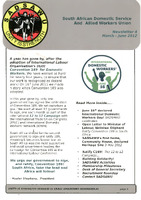 A year has gone by, after the adoption of International Labour Organisation's (ILO) Convention 189 for Domestic Workers. We have worked so hard for nearly four years, to ensure that our work is recognised as decent work! On 16th June 2011 we made history when Convention 189 was adopted. In this year gone by, only one government has signed the ratification of Convention 189. We set ourselves a goal: We want at least 12 governments to sign, one each month as part of the international 12 to 12 Campaign with the International Trade Union Congress (ITUC) and International Domestic Workers' Network (IDWN). South Africa shcAild be the second government to sign and ratify 189, meaning it becomes labour law, as South Africa was the most supportive and vocal government leading the campaign for Convention 189 at the International Labour Conference.
 -
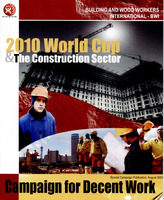 The BWI is the global union federation grouping of free and democratic unions, with members in the » building, building materials, wood, forestry and allied sectors. The BWI groups together around 318 trade unions representing around 12 million members in 130 countries. The headquarters is in Geneva, Switzerland. Regional and Project offices are located in Panama and Malaysia, South Africa, India, Australia, Burkina Faso, Bulgaria, Lebanon, Kenya, South Korea, Russia, Argentina, Peru and Brazil. Our mission is to promote the development of trade unions in our sectors throughout the world, and to promote and enforce workers' rights in the context of sustainable development. The President of the International is Klaus Wiesehugel from the Building and Forest Workers Union in Germany. The Deputy President is Stefaan Vantourenhout from the Building and Wood Workers union in Belgium and the General Secretary is Anita Normark from Sweden.
 -
-
 Comrades National Office Bearers of SACCAWU, other leadership of the Union at various level, the Wits Regional leadership of SACCAWU, the Shoprite Checkers NSSC NOBs, Officials, esteemed guests and delegates to this Summit, a substructure to the NSSC, I bring you warm and revolutionary greetings on behalf of the Shoprite Checkers NOBs and the entire NSSC and the entire SACCAWU membership. We are indeed honoured that you have all, particularly the SACCAWU NOBs, Officials and Guests, went to great length and sacrifices to ensure that you form part of this historic Summit. It is historic in that it is the only meeting of national competence convened in the year the NSSC turns twenty. Lest we forget, the Shoprite Council was launched in 1987, and has over the years relaunched to match the developments that were taking place within the company as it was growing its brands. Without your presence, we have no doubt that our debates would be poorer, leading to decisions that might in the long run prove inappropriate. You are once more welcome and assured that you are free to participate in the deliberations over the next few days. The Council have seen various onslaughts through the years and survived the iron-fisted resolve of the brutal apartheid regime and the capitalist system in its changing forms. It is the experiences of the time that has moulded numerous Shopstewards to an extent of understanding the necessity of participating within the Union and Federation structures. It is no coincidence that today, this Council has many of its Shopstewards in the CEC of the Union. It is of course worthless to have numbers in such structures if we do not play a positive and constructive role in shaping the direction of the Union. We can only do so if we are really grounded on the traditions of the mass democratic movement and the national democratic revolution.
 -
 Comrades National Office Bearers of SACCAWU, leadership of the Company Council, distinguished guests & delegates to this Summit, we extend to you revolutionary greetings from the National Office Bearers of Shoprite Checkers, and the masses of Shoprite Checkers workers who are SACCAWU members. This gathering takes place exactly a year after our national strike. It also takes place after lot of significant gatherings of all the Alliance Partners i.e. COSATU Central Committee, SACP National Conference, ANC National Policy Conference, and on fhe home front, the SACCAWU National Bargaining Conference. It is the important that the deliberations in this gathering should look at all decisions taken during this significant event, the Bargaining Conference, and put them into practicality. This Secretariat Report will cover the activities since the National Shopstewards Council of June 2006 in Durban.
 -
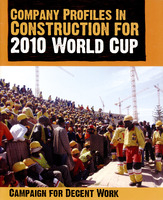 This booklet is a resource for construction trade unions, shop stewards, workers and allied organisations involved in the struggle to improve working conditions for those involved in FIFA World Cup 2010 construction projects, it also serves as a resource for the construction sector as a whole. This booklet provides profile 'snapshots' of the major companies, national and international, involved in World Cup 2010 construction projects. These 'snapshots' include a description of history and operations, profits for the 2006 financial year, executive and non-executive remuneration and state the specific 2010 contract awarded to each company. To give a broader picture of profitability in the construction sector, we have included other companies (in Annexure 1), that may not be involved in 2010 projects directly. We also provide information on the minimum wages for the civil engineering sector, which is contrasted to the remuneration packages of executives in the industry. Through this booklet, we aim to arm those involved in the struggle for decent work with information to be used for discussion, debate and action amongst workers; and contribute to the building of the independent knowledge of the working class. After all, 'knowledge is too important to be left in the hands of the bosses'.