
General Materials
Item set
- Title
- General Materials
- Alternative Title
- LRS General Materials
- Creator
- Labour Research Service (LRS)
Items
-
 The BWI is the global union federation grouping of free and democratic unions, with members in the building, building materials, wood, forestry and allied sectors. The BWI groups together around 318 trade unions representing around 12 million members in 130 countries. The headquarters is in Geneva, Switzerland. Regional and Project offices are located in Panama and Malaysia, South Africa, India, Australia, Burkina Faso, Bulgaria, Lebanon, Kenya, South Korea, Russia, Argentina, Peru and Brazil. Our mission is to promote the development of trade unions in our sectors throughout the world, and to promote and enforce workers' rights in the context of sustainable development. The President of the International is Klaus Wiesehiigel from the Building and Forest Workers Union in Germany. The Deputy President is Stefaan Vantourenhout from the Building and Wood Workers union in Belgium and the General Secretary is Anita Normark from Sweden.
 -
 The 2010 World Cup is upon us, an event of great socio economic import to South Africa and indeed the African Continent. Not only is South Africa on the pedestal, but so is the African Continent. It is all systems go, so says major role players involved in delivering the 2010 FIFA World Cup to the World. However, we wonder if the same holds true for labour, that we can say it is all systems go, when, on the eve of the infrastructure roll out, we are grappling with issues of how we can stake a claim on behalf of the millions of construction workers that we represent.
 -
 Comrades, this historical 3rd National Summit is convened at a time when the National Democratic Revolution is under attack left, right and centre. We have recently held an ANC Policy Conference; SACP National Congress and COSATU Central Committee, as well as SACCAWU National Bargaining Conference. These Alliance meetings took a number of resolutions for implementation. One has observed a very sorry state of affairs in that some shopstewards who are seen to be very prominent in Shoprite meetings, do not attend SACCAWU structures, let alone COSATU, ANC & SACP structures. This Summit will have to discuss on how we are to revive structures at Shoprite and participation in the aforementioned structures.
 -
-
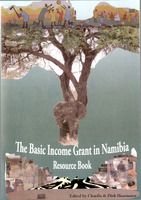 In recent months, the Basic Income Grant proposal has generated an overwhelming response in Namibia, and the launch of the Basic Income Grant Coalition has added further public debate. This resource book is compiled in order to inform policy makers and civil society role players about the background and the details of the proposal for a Basic Income Grant in Namibia. In addition, it provides the results of research of the social, economic and financial implications of a BIG in Namibia. The first section of the book documents the launch of the Basic Income Grant Coalition. The Council of Churches, the National Union of Namibian Workers, the National NGO Forum, the Namibian Network of AIDS Service Organisations, the Legal Assistance Centre, and the Labour, Resource and Research Institute committed themselves to the common platform on April 27th 2005. The platform of the coalition as well as the speeches at the launch of Bishop Dr. Z. Kameeta (Evangelical Lutheran Church in the Republic of Namibia (ELCRN) and Vice President of the Council of Churches in Namibia (CCN)), Mr. P. Naholo, Acting General Secretary of the National Union of Namibian Workers (NUNW), and Mr. S. Tjaronda, Chairperson of the Namibian NGO Forum (NANGOF), are published in this first section. This resource book is compiled in order to inform policy makers and civil society role players about the background and the details of the proposal for a Basic Income Grant in Namibia. The second section explains the underlying concept of the Basic Income Grant. Crucial questions of understanding and clarification are addressed in order to form the basis for an informed debate about the concept. The third section introduces the key passages of the findings and recommendations made by the Government appointed Namibia Tax Consortium (NAMTAX). In 2002 the tax consortium “found that by far the best method of addressing poverty and inequality would be a universal income grant [= Basic Income Grantf (NAMTAX, 2002:60). This research is crucial as it lays the foundation on the basis of which the churches, unions, NGOs and AIDS Service organisations have now formed the coalition to join hands with Government to see that this proposal can be implemented effectively. The fourth and fifth sections provide relevant results stemming from social and economic analysis. The fourth section by Dr. C. and Dr. D. Haarmann is based on a Microsimulation Model modelling the developmental impact of a Basic Income Grant on poverty and inequality. The fifth and final section by Prof. M. Samson and Ms. I. van Niekerk calculates the costs of the Basic Income Grant and its various financing options. Based on a comparative international Tax Effort Analysis, the affordability given Namibia's current economic capacity is assessed. This section concludes by looking at likely second round effects on Namibia's economy if a Basic Income Grant is to be introduced.
 -
 Women in both the trade union movement and the formal work environment face obstacles which inhibit the progress of their concerns. Despite a range of gender resolutions passed at trade union congresses and the equality clauses inherent in the constitution and labour legislation, issues of particular concern to women are not mainstreamed in trade union negotiations. In instances where issues such as maternity benefits are fully integrated, women workers may still face difficult choices when it comes to ensuring that rights and labour laws are adhered to in the workplace. Many women workers often find that their position at work has been changed while they have been off on maternity leave, or they have been included in a retrenchment negotiation while away. An important question to ask in building a framework of gender indicators for collective bargaining, are what are the obstacles in trade unions which inhibit women's active participation in collective bargaining?
 -
 The apartheid system and capitalism used the patriarchal nature of the South African society through the sexual division of labour and divided the labour force on the grounds of class, race and gender to exploit them for cheap labour to maximize their profits. They exploited the notion of men as the head of the family to force men to become migrant labourers and disregarded the reproductive and domestic role of women.
 -
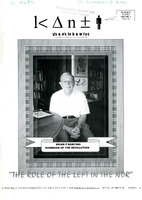 A community-focused independent publication (kapsamizdat) featuring an extensive interview with Brian Bunting regarding the history of the SACP, the Bunting family legacy, and the Tripartite Alliance. The issue critiques post-apartheid racial classification, the government's AIDS strategy, and the arms deal. It includes a "Faith Collective" section advocating for interfaith unity, as well as a historical profile of Sidney Percival (SP) Bunting.
 -
 Accelerated transformation means eradicating poverty in one generation. The purpose of this document is to stimulate debate, discussion and critical comment on the development path in South Africa in order to achieve this goal. In so doing, we hope to impact on the thinking and actions of the democratic government. This input is intended for the 2003 / 2004 financial year. This enables the following: • Sustained dialogue with government: By producing this document a full year ahead of the 2003 / 2004 budget speech, we look forward to a constructive engagement with government • Encouraging engagement: This document opens up space for critical comment from all sections of society. This will enable us to refine proposals and to contest proposals with which we disagree. All are invited to critique, comment on and sharpen our proposals.
 -
 Organising new and maintaining existing members is central to the strength of trade unions. In a context where union densities are in decline across the world, the focus on organising, and especially on maintaining members, has increased. To maintain membership, unions are increasingly focusing their attention on the provision of services to members. The September Commission report and the Congress of South African Trade Unions (COSATU) National Congress in 2000 resolved that there must be organisational renewal within COSATU affiliates. Organisational renewal includes providing members with a high level of service. Resolutions envisaged each COSATU affiliate establishing capacity to monitor service delivery to members on a regular basis and deal with problems and complaints as soon as they arise. Improved service starts by listening to members and understanding what they want, why they joined the union and how the union addresses their needs, both at the workplace and, more broadly, in society as a whole. This survey was undertaken to assist four affiliates in evaluating their members' perception of the service that they receive from their union.
 -
 The new government faced enormous challenges when it came into office in 1994. For starters, the outgoing Apartheid leaders had thoroughly plundered the state coffers, awarding themselves and white civil servants massive pensions and 'golden handshakes'. The budget deficit was almost 9% of GDP The country/ had barely three weeks foreign exchange reserves, with a balance of payments crisis looming. The majority of inherited civil servants were generally hostile to the new government. The 'deep structures' of the State — by which I mean the ingrained habits and behaviour — were also generally hostile to the objectives of the democratic State. In addition, poverty levels were very high, and income inequality was among the worst in the world. And, of course, South Africa had the most institutionalised forms of racism in the world, which permeated through every law' and practice.
 -
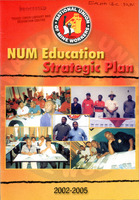 The Education Department believes it is important that when assembling a strategic education plan for the next three years, a thorough discussion needs to take place within the Union as a whole about the context that we find ourselves in, and the challenges, which emerge, for our members. What follows are the observations of the Education Department informed by the Unions Ten Year plan and other policy engagements. It is not an exhaustive survey that is offered here, but what are considered key points.
 -
 This booklet is about the way in which work is being restructured in the workplaces of South Africa. It is the first in a series of booklets dealing with various restructuring issues faced by workers. There are major changes being made in the workplace that impact on the lives of workers. For workers, restructuring brings changes to the way that their workplace is organised and this will impact on their working lives. These changes could hold threats or opportunities for workers. This first book will explain what is meant by restructuring and look at why many companies in South Africa are considering restructuring. It will also look at some trade union strategies around restructuring and some suggestions for negotiating restructuring.
 -
 This paper represents an initial set of ideas focused on employee ownership within the developing country context. The central question being explored is 'To what extent can employee ownership support the broader goal of poverty reduction in South Africa (and, by extension, in the developing country context)?'. This is a rather broad question, and as such this note sets out to begin the discussion on this question, rather than seek to provide a definite set of answers. The critical perspectives put forward in this note draw heavily on experiences and debates in South Africa, and particularly those within the labour movement.
 -
 Three years ago this Province under the banner of the Western Cape National Union of Mineworkers gathered in this constitutional structure, the Regional conference under the slogan “Develop Leadership to Advance Socialismâ€. That conference then declared and adopted a comprehensive programme of action to take forward that Regional conference declaration. That the regional committee should and within the broad framework of the declaration ensure that the NUM in a regional context fight for better working conditions of our members. That the RC develops concrete programmes for the broader structures and membership to understand and ultimately be implemented at those levels. This conference has to deal with the assessment of the progress made during this period under review. Within the context of contestation forward mobility is ensured that seeks to help build the working class leadership which is ultimately or essentially political leadership. Worker control is one of the key founding principles of our union which will be better understood and implemented when we are to begin to find synergy between the worker leadership and the intellectual capacity within our organisation. This report will deal with the different chapters as identified. This report will also deal with our participation in COSATU structures as well as lack of cohesiveness between branch leaders and general membership and also the possible fear to engage. We will also try and attempt to discuss the lack of information flow from our structures to the broader membership. As we engage this report, let us try to use our organisational tools to resolve the problems facing our region and in particular the branches and as a result find suitable solutions to build and strengthen the organisation.
 -
 AIDS is a trade union issue and must be discussed and placed on the agendas of all union meetings. We have committed ourselves to campaign for HIV prevention, care and treatment with the same determination and energy with which we fight many other working class struggles. COSATU has also committed to work in partnership with other trade unions, government, business and organs of civil society in the fight against the disease.â€
AIDS is a trade union issue and must be discussed and placed on the agendas of all union meetings. We have committed ourselves to campaign for HIV prevention, care and treatment with the same determination and energy with which we fight many other working class struggles. COSATU has also committed to work in partnership with other trade unions, government, business and organs of civil society in the fight against the disease.†-
 A policy paper analyzing the integration of land reform with social development on commercial farms. It critiques the "brutal past" of farm labor relations and introduces the Land Bank’s "Social Discount Product"—a financial incentive for farmers to improve worker conditions. The authors argue that since redistribution only reaches a minority, broad-based "farm-based development" is essential for systemic poverty alleviation.
 -
 This volume of Bargaining Indicators for 2002 comes in the context of the September 11 attacks on the World Trade Center in New York, the United States' war on Afghanistan, the collapse of the economy of Argentina and with it the biggest sovereign bankruptcy in history. All these historic events are unfolding within the first synchronised global recession since the 1970s, and have in turn deepened this recession. Within South Africa, this edition of Bargaining Indicators comes in the context of the first anti-government national strike by organised labour since the 1994 elections, and a deepening of the economic slowdown that we noted in the last edition of Bargaining Indicators. In this review of economic developments during 2001 we shine the spotlight on the global recession and its dynamics, and we look in particular at the slide of the world's largest economy - that of the United States - into its first serious economic crisis since the end of the cold war, and we take a look at the significance of the attacks of September 11 and their aftermath on the dynamics of the global recession. We conclude our discussion of the global recession by discussing the responses of the Bush government and its allies, and at the meaning of these responses for neoliberal economic orthodoxy. We continue our analysis by looking at developments within the South African economy. In particular, we look at the implications of the global recession on the South African economy, and at how the currency crisis that has unfolded since the last quarter of 2001 forms an important moment in the dynamics of the unfolding global recession. Within this context we look at the main economic indicators (GDP; GDE; fixed capital formation, operating surpluses, wages, employment, savings and so on). Lastly, we look at the year ahead, and in particular at the implications of the global and domestic economic developments for the 2002 bargaining season.
 -
 SADTU welcomes the release of White Paper No. 5 on Early Childhood Development. We thank the Ministry and Department of Education for affording us this opportunity to make an input. We are however concerned that the process during its development excluded stakeholder participation.
 -
 As a SACCAWU Staff Member it is important to know exactly what your Conditions of Service are hence this booklet. The Union believes in the principle of good and fair treatment of Staff and sees this as encouraging motivated and dedicated Officials. We have therefore tried to make Conditions as favourable as possible within the constraints of being a no-profit making organisation. In return, however the organisation does expect diligence, commitment and efficiency. Staff have the right before 1st March, every year to put forward proposals to* National Finance Committee in order to improve Working Conditions. Two Representatives elected from each Region will attend National Discussions/Engagements which shall put together a national mandate and elect Representatives to meet with NFC.
 -
 The StreetNet offices were opened in February 2000, eighteen months ago. We are now half-way through our three-year programme to launch StreetNet as an international organisation of street vendors all over the world. tVhat progress has been made in the first eighteen months ? We have two people working part-time in the StreetNet office since February 2000. Pat Horn is the International Co-ordinator while Nozipho Lembethe is the International Administrator. We have been trying unsuccessfully to find a website manager/researcher to start working with us this year.
 -
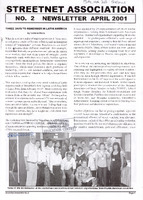 What do a street vendor of traditional sweets in Venezuela, an indigenous vendor of flowers in Bolivia and an immigrant vendor of “empanadas†in Costa Rica have in common? A lot despite their different realities! For example, livelihoods that rely on production and sale on the streets or at markets that cost them years of struggle; goods frequently made with their own hands, battles against unsympathetic municipalities; harassment -sometimes violent - from the local police; the desire to organise themselves, which must overcome daily problems of leadership, politics and internal conflicts, and lack of resources to improve their situation or to help solve problems of their fellow vendors.
 -
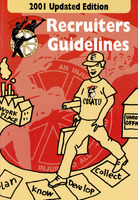 The purpose of this booklet is to touch in number of areas, which are important at this point for the recruitment campaign of the federation. It is not meant even by implication to provide details of how to handle the campaign what it does is to highlight issues and areas that we must think in the preparation for this campaign. More importantly is the fact that COSATU remains the biggest federation in South Africa and fastest growing international. Beside a loss of membership from + 2 million to + 1.8 million members. The decrease in membership is mostly because of retrenchments. The well known fact is that only about 40% of the workforce that is unionized. The aim of the recruitment drive is to access this 60% that is not unionized. The mistake must not be committed to think that the 40%, which is unionized, belong to COSATU. There are two other federations plus number of non-affiliated unions. Our commitment to One Country One Federation does not stop us to recruit from other unions as long as we remain under different bodies. This October campaign coincides with Red October campaign of the SACP and Health and Safety month of the federation this must be seen as strength than lack of co-ordination. One area that is link to recruitment is the servicing of membership. It is useless to recruit and fail to service membership because every campaign that we will take around recruitment we may find ourselves had to fight with disgruntled members and obviously it will be difficult to attract new members. This must say to us that members come first.
 -
 Whereas the SOUTHERN AFRICAN CLOTHING AND TEXTILE WORKERS' UNION is an association not for gain, non-racial registered trade union, unaffiliated to any political party and whereas the SOUTHERN AFRICAN CLOTHING AND TEXTILE WORKERS' UNION is dedicated and committed - irrespective of race, colour, creed or sex: to promote and maintain free democratic trade unionism for all workers in Southern Africa and to oppose the exploitation of cheap labour; to advance the dignity, rights, socio-economic and cultural well-being of all workers in Southern Africa through collective bargaining and free negotiation; to do all in our power to assist in fully developing the full potential of workers and their children in the economic, social, political and cultural fields; to oppose any forms of discrimination which could prevent all the people of this land from being able to trade, manufacture, practise all crafts, trades and professions and own land, live and be educated where and as they choose; to defend the right to equal status in the eyes of the law for all people and to support the rule of just law; to maintain the right to free compulsory and equal education for all children and the opportunity for all students to receive the highest specialised training; to promote the right to full employment for all people of Southern Africa; to promote the right for all people to live where they choose, to be properly and decently housed, and to raise their families in security and comfort; to promote a system whereby the aged and infirm are supported regardless of income or status; to pursuing an enlightened programme to assist unorganised workers, and to develop educational facilities within the trade union movement; to disseminate as widely as possible press democratic trade union principles among all workers in the industry; to promote the sharing of the fruits of the labour of all workers in the industry.
 -
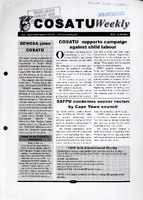 A 2001 issue of the COSATU newsletter reporting on the historic decision by the Democratic Nursing Organisation of South Africa (DENOSA) to join the federation. It highlights the vote of 200 delegates at the Pretoria congress under the theme "Nursing facing challenges: Development and HIV/Aids." The document frames this as a vital consolidation of public sector and white-collar workers, challenging the notion that COSATU only represents lower-ranked labourers.