
General Materials
Item set
- Title
- General Materials
- Alternative Title
- LRS General Materials
- Creator
- Labour Research Service (LRS)
Items
-
 During the past 12 months the South African Democratic Teachers' Union (SADTU) recruited 37 947 teachers to the union, making SADTU the biggest union in South Africa today. With completed membership forms in excess of 15 000 still to be collected, SADTU can talk of an effective membership of 50 000 teachers, the SADTU president, Shepherd Mdladlana said during his address to Congress at Nasrec, Johannesburg. The SADTU membership further consists of teachers from all departments all over the country, making SADTU the only unitary, non-racial teachers' union in the country. In his report to Congress, SADTU General Secretary, Randall van den Heever, pointed out that the most progressive members of all erstwhile organisations - newly emergent as well as established - occupied leadership positions within the union's branch and regional structures, making SADTU the most well represented union of teachers from all sectors.
 -
 Job grading is a way of saying how important different jobs are for management. Job grading is a way of comparing different jobs, and saying that some jobs are very important, and other jobs are not so important. Most job grading systems say that managers and engineers are very important, and that labourers and operators are not important. Wages are paid according to the workers' grade in the job grading system. A worker with an important job will earn higher wages that a worker with a job that is not so important.
 -
 Eskom increased the wages of general workers by 10% from 1 July- 1988, after the unions had rejected a 12% offer. The trade unions declared a dispute with Eskom, and have demanded a 20% wage increase (including the 10% increase implemented unilaterally), to be backdated to 1 July 1988. This document outlines the case for a higher wage increase than that granted by Eskom. All the wage calculations and projections assume that the increased wage will be back-dated to 1 July 1988. This report has been written by the Collective Bargaining Department of the National Union of Mineworkers in collaboration with the Labour Research Service in Cape Town.
 -
-
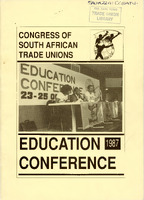 The education struggle has always had an important place in our liberation struggle. For as long as can be remembered, the oppressed and exploited have been fighting against bantu education and for control over our own education. As our struggles intensified, so our education demands became clearer. In the late 1980s the demand is for people's education which serves the needs of the oppressed. In the early 1980s the demand was for equal education. The growth of working class organisation in the factories and townships, coupled with the Frelimo and MPLA victories, encouraged deeper discussion of the role of education in the struggle for socialism. After the historic National Education Crisis Committee (NECC) conference, there came a clear and united call for people's education and for democratising all educational institutions so that students, teachers and parents could build joint control over education. In 1985 COSATU was launched with the words: "A giant has risen." COSATU has since grown very quickly, challenging the bosses and taking organised workers to the frontline of the struggle. The first National Congress in July 1987 showed that COSATU mergers and campaigns had made the federation much stronger. However, the conference noted that education structures in COSATU and within many affiliates remained weak. It was decided that an Education Conference be called to give direction and a new push to worker education in the federation. The conference looked at the main areas covered in our resolutions : COSATU Courses, Peoples Education, Media, Women and Culture. This booklet gives a record of the discussions and strong resolutions taken at the conference, where every union and every region of COSATU was represented. When we read this booklet, we must ask ourselves: Have we implemented the resolutions taken? How much progress has been made? We have a short time left until the next Education Conference (in October 1989) where we will assess what progress has been made. This booklet is for discussion and debate. It must be a tool that we use to build education in the unions. It must be a weapon for turning our resolutions into reality; our theory into practice; our commitment into struggle.
 -
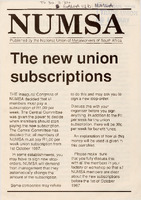 THE Inaugural Congress of NUMSA decided that all members must pay a subscription of R1,00 per week. The Central Committee was given the power to decide when members should start paying the new subscription. The Central Committee has decided that all members of NUMSA must pay R1,00 per week union subscription from 1st October 1987. In some establishments, you may have to sign new stop- orders. NUMSA will demand from management that they automatically change the amount of the subscription. Some companies may refuse to do this and may ask you to sign a new stop-order. Discuss this with your organiser before you sign anything. In addition to the R1 per week for the union subscription, there will be 30c per week for benefit funds. An explanation of how all this money will be used is given in this pamphlet. Please make sure that you fully discuss this with all the members in your factory or workshop so that all NUMSA members are clear about the new subscriptions before the 1st of October 1987.
 -
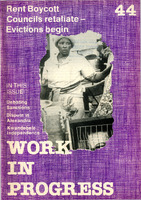 The themes of victory and defeat dominate this issue of Work In Progress. Despite the state of emergency, there have been some important recent popular victories. Popular pressure and massive resistance blocked proposed 'independence' for the KwaNdebele bantustan. The efforts needed to dissuade KwaNdebele Chief Minister Simon Skosana and his followers from accepting Pretoria-style independence were enormous. So were the costs: vigilante violence and torture, death and destruction, necklaces and burnings. Nonetheless, the blocking of KwaNdebele independence is a popular victory. Never before has pressure from below halted bantustan independence - not in the Transkei or Ciskei, Venda or Bophuthatswana. The massive wave of rent boycotts which began in the Vaal during 1984 have also involved some notable popular victories. In many townships the organisation necessary to sustain prolonged withdrawal of rent payments has strengthened and developed the structures of popular mobilisation. And the boycotts have totally destroyed the financial base of the discredited and rejected black local authorities, be they in the form of community or town councils. On the trade union front, many of the established industrial unions have shown remarkable strength under pressure. With leadership detained or in hiding, some unions have been able to carry on their task of organising the working class in a disciplined and democratic manner. But there have been defeats too. Undisciplined comrades, often acting with no organisational basis or mandate, have divided communities, setting workers against the unemployed, children against parents, trade unions against community groups. Some of the rent boycotts have been enforced with a high degree of anti-democratic authoritarianism. The youth has often acted without the necessary support from other townships groups, without the organisational structures necessary for democratic decision-making, and without adequate mandate or consultation. Recourse to 'discipline', - necklacings, beatings and other punishments - has come too easily to a group which often lacks a mandate to act on behalf of any major constituency. To claim success is a neccessary part of any broad progressive movement working to change society. But to admit defeat is as important. For it is the sign of a maturing politics which can learn from mistakes, and come back stronger from every failure. Defeat is as much part of political struggle as victory. Those who claim every activity, every campaign, every initiative as a victory do the progressive cause no good. Realistic assessments of strength and weakness, analysis and debate on failure, are part of the very process of building any powerful mass movement.
 -
-
 Summary Report on SADTU Organisation Building Workshop held on Friday 17 November - Bellville College of Education: There were approximately 40 participants representing the leadership of most SADTU branches in the Region. As per the programme, the purpose of the workshop was " to develop an organising and recruitment strategy with the aim of building capacity and to resuscitate union structures..." As with most strategy and organisational building attempts it is often difficult to ascertain what the organisational problems are which are within members/workshop participants own capabilities of solving. From the outset it is important to ensure the distinction between real organisational problems and perceived ones. Failure to ensure this would cause that the participants and the regional leadership could be found wanting, "barking up the wrong tree". It is for this reason that the opening exercise of the workshop was extremely usefull in ensuring an organisational assessment and isolating key problems. Participants were divided into five groups, A - E. Their task was to identify which animal most aptly represented SADTU, nationally and especially regionally. The groups were required to debate and reach concensus on the choice of animal and motivate fully. Participants tackled the task with enthusiasm, were very creative and seemed to enjoy the exercise. Groups were then to report back to a plenary session in the form of a drawing of their animals and a list of points motivating their choice. The idea was that the plenary session would debate the choices and try to reach concensus on the most representative animal.
 -
-
 Since 1988 most workers in South Africa have had their wages taxed under the SITE system. SITE stands for Standard Income Tax on Employees. Under SITE the employer is responsible for making sure that workers pay the correct amount of tax. The Receiver of Revenue is not directly involved. Workers are now the only people who can check up on their employers to make sure that the correct amount of tax is being taken off their wages. So, it has become very important that workers know about SITE and how it works.
 -
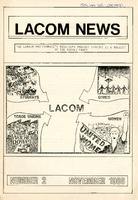 On June 16th 1976 the youth of Soweto once again opened the struggle against Bantu Education. On June 16th 1976 the youth of Soweto once again opened the struggle against Bantu Education. As we show in this booklet the struggles of the youth against Bantu Education are part of the struggle of the working class, part of the struggle against oppression and exploitation. On June 16th 1976, 20 000 students started a peaceful march through Soweto to protest against Afrikaans being used as the medium of instruction in schools. The police opened fire and were shot and killed. 1976 was the year in which the bitter anger of the youth of our land spilt over. The reaction of the state was violent and direct. Hundreds of our youth were murdered or maimed, others tortured and tried and many more had to flee the borders of the land to avoid the cruel sjambok of the police state. It was the year of SOWETO.
 -
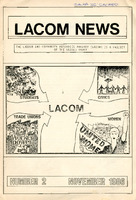 On June 16th 1976 the youth of Soweto once again opened the struggle against Bantu Education. It is now 10 years later and COSATU has united the workers movement more than ever before. Workers must now become active in the struggle against Bantu Education. As we show in this booklet the struggles of the youth against Bantu Education are part of the struggle of the working class, part of the struggle against oppression and exploitation. On June 16th 1976, 20 000 students started a peaceful march through Soweto to protest against Afrikaans being used as the medium of instruction in schools The police opened fire and were shot and killed. 1976 was the year in which the bitter anger of the youth of our land spilt over. The reaction of the state was violent and direct. Hundreds of our youth were murdered or maimed, others tortured and tried and many more had to flee the borders of the land to avoid the cruel sjambok of the police state. It was the year of SOWETO. It was the year in which students once again saw the need to protest against the rot in their education system. It was a year of blood, fire and bullets . Ten long years of determined struggle have followed since then and there has been no peace. Hundreds - even thousands - of our youth have died in ongoing State violence in our country. The working class has been drawn directly into this bitter struggle. It has suffered the loss of its sons and daughters. It has mourned their deaths. Together with the students, thousands of workers have been brutalized and attacked by the State and its collaborators. Sadly, these events have often left some workers confused, powerless and even divided. As workers we must clearly understand what June 16th means for the working class in this sick and violent society.
 -
 FOSATU BELIEVES: Industrial Councils were established and have been developed to serve the interests of employers and a minority of workers. That most Industrial Councils are presently unrepresentative of the majority of workers and therefore undemocratic. That the Constitution and structure of most Industrial Councils reflects this un-representativeness and authoritarian base and it would be difficult for any small and democratic union to have an effect on Industrial Councils as they presently exist. That some Industrial Councils., because they are dominated by employers, misdirect workers' money collected either in the form of a levy or in benefit funds. That some Industrial Councils have blocked speedy solution to industrial problems by placing cumbersome procedures and bureaucratic structures in the way of direct negotiation between employers and workers.
 -
-
 The COSATU Central Executive Committee met in its first session of the year over two days (5-6May 1998). The CEC received reports on a variety of issues and tool a number of policy decisions and approaches by on these matters. The CEC was characterised by anger and frustration on the scale of job losses in many industries and the failure of the current macro economic strategies to turn this tide around. Below are some of the issues discussed. The CEC endorsed the proposals submitted by Labour in NEDLAC on job 4^ creation in preparation for the Presidential Job Summit. The proposals will be further discussed in the coming Central Committee of COSATU scheduled for the 23-35 June 1998. COSATU shall use the Central Committee to further expand on the broad framework submitted in NEDLAC and get more proposals in line with how labour has categorised issues for the agenda of the Job Summit, i.e. (i) Measures to create jobs (ii) Measures to stop current job losses (iii) Measures to support the unemployed, (iv) Measures to assist the informal sector to be formal (v) Identification of long term issues to be negotiated beyond the Job Summit. COSATU is extremely concerned by the failure of both government and business to submit their proposals at NEDLAC. It is worth to note that various deadlines for them to submit proposals have passed. A million-dollar question is : Why does the government and business seem reluctant to submit their proposals? Clearly both government and business have abundance of capacity to deal with the proposals in a relatively short space of time. This is a major concern for COSATU. Whilst the delays continue, job losses are continuing unabated and the time bomb continue to click.
 -
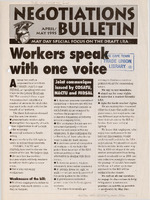 Almost two million organised workers from COSATU, NACTU and FEDSAL are speaking with one voice on the Labour Relations Bill. The country's three major federations have identified a number of areas in the draft LRA that need to be dealt with for the benefit of all workers.
 -
 COSATU and affiliates have committed themselves to preventing and addressing sexual harassment in the unions. The COSATU Sexual Harassment Code of Conduct is the outcome of a long process of debate within the federation. In 1989 the Transport and General Workers' Union (TGWU) raised the issue of sexual harassment when they submitted a resolution on harassment to the COSATU National Congress. The resolution was referred to affiliates for further discussion. In 1991 the COSATU National Congress discussed the TGWU resolution on sexual harassment again. No agreement was reached over the resolution. In 1994 the COSATU National Congress adopted a resolution to draw up a code of conduct on sexual harassment. In May 1995 the Executive Committee adopted the code of conduct on sexual harassment.
 -
 The main purpose of this report is to conduct an analysis with a view to determine the potential role and contribution of agriculture in region E. This report emphasises the agricultural impact in determining an economic development strategy for region E. It is therefore the aim of this report to provide a brief situation analysis and an interpretation of existing problems affecting development. The importance of the sector, implications of the spacial distribution, the structure, potential growth and the policy environment will be addressed. From the above, constraints, bottlenecks, the likely future demand, etc will be pointed out. The interpretation of the above and its implications for development is necessary to determine objectives for the aimed strategy. The strategy for region E is necessary in determining policies stressing economic growth and fair distribution of resources to enable the mass of the population to share in increased wealth and economic opportunities.,Region E economic development study
 -
 On Sunday, May 26, the Campaign for a Militant Sactwu called a meeting to form a steering committee to lead the fight for a programme to transform Sactwu into a militant union. This meeting was attended by workers from different factories all over the Peninsula. Comrades from the regional and national executive of Sactwu, including comrades Ebrahim Patel and Lionel October. They came to stop the Campaign for a militant Sactwu. The comrades from the Campaign did not oppose their attendance to discuss how Sactwu can be built into a fighting union. The intervention of the leadership resulted in chaos at the start of the meeting.
 -
 From 22 to 24 May 1990, 271 delegates from all COSATU affiliates gathered at the SAFARI HOTEL in Johannesburg at COSATU's first ECONOMIC POLICY CONFERENCE. Many workshops and discussions had taken place already within COSATU and affiliates in preparation for this Conference. The delegates to this Conference had the responsibility to develop a foundation from which the forthcoming COSATU Congress can adopt a comprehensive package of policies for economic reconstruction.
 -
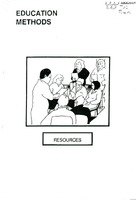 Trade Union education ia not like going back to school: it ia based on the belief that we should build on the ideas and experiences of members by working collectively, in small groups, to find solutions to our problems at work and in the Union. People learn by "doing" - not by sitting still and listening. So we use active methods of learning where everyone is encouraged to take part.
 -
-
 The ANC's May 9 ultimatum is effectively over and the organisation is unlikely to make any further demands of the government, at least until its July National Conference. At the same time, no major shift is expected in ANC policy between now and July. There now seems to be general agreement that government undertakings aimed at ending township violence this week addressed the ANC's most important demands contained in its open letter to FW de Klerk in early April. A meeting between ANC deputy president Nelson Mandela and De Klerk this week further confirmed that agreement had been reached on key demands made by the ANC. Mandela told a group of the ANC's Women's League, who had occupied the Johannesburg Magistrates' Court on Wednesday in a campaign to support the ultimatum, that the government had met two of the organisation's key demands. These included a ban on all weapons except assegais and sticks and the closure or conversion of hostels into family units. Attacks On the eve of the ultimatum, law and order minister Adriaan Vlok went further and announced plans for “Operation Stabilise†to end the violence. The new measures ban open air gatherings in unrest areas from May 9 onwards to May 22. Some of the bloodiest attacks on township residents have followed mass rallies of Inkatha supporters. Rallies could still be held in areas like George Goch near Johannesburg, where Inkatha has a strong presence. Vlok said permission to hold rallies in townships declared unrest areas could, however, still be obtained from police in the areas. Inkatha rallies were planned for Soweto and Tembisa yesterday. Vlok also announced stricter enforcement of curfews and the deployment of more troops and police in areas hit by violence. Areas covered by Vlok's announcement include Soweto, Mead- owlands, Diepkloof, Dobsonville, Alexandra, Tembisa, Thokoza, Katlehong and Vosloorus. Townships around Johannesburg and the city centre remained tense despite Vlok's announcements to curb violence. Terror Reports reaching NEW NATION indicate that heavily armed men had been deployed in various parts of the city and townships in what appeared to be part of the planned terror in the run up to the May 9 ultimatum. Residents in at least one block of flats in Central Johannesburg, occupied mainly by ANC supporters, were reported to have left in anticipation of an attack. There were also reports of unknown men searching for activists in various flats around central Johannesburg. The armed men, residents claim, were deployed some time before Inkatha central committee member Musa Myeni warned that his organisation was ready to commit 250 000 armed fighters in defence of its members on the Reef. Johannesburg's city centre, which has not been declared an unrest area, is not covered by Operation Stabilise and Inkatha supporters remain free to brandish their weapons, now effectively outlawed in the townships. There is also evidence that many of the fighters currently in township hostels are paid mercenaries, who are otherwise unemployed. Some of them claim to have been brought in from Natal to fight township residents.
 -
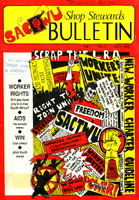 SO wrote Bertolt Brecht, a German poet of the working people, in his famous poem “In Praise Of Learningâ€. Today, many years later, South Africa's factories are filled with hungry persons, fighting for a living wage. One powerful weapon in that fight is knowledge. SACTWU hassetuptheEducationDep artm en t to meet the need for an educated worker leadership. This Bulletin is brought out to help arm worker leaders - with information, fresh ideas, new thoughts, skills - to fight the battle for a new South Africa. The Bulletin will carry articles on issues in the factory and outside of it. All issues which affect workers. Our lives are bigger than the factory only. It will carry stories on events in South Africa and also outside our country. The world today is small. Events in one country can affect people in another. Workers must take on interest in the whole world. It will seek to develop a thinking leadership, not one which follows blindly.